A wrap fee is an all-inclusive annual charge collected by a financial advisory firm that bundles portfolio management, administrative maintenance, and trade execution into a single percentage of your total invested assets.
A wrap fee is an all-inclusive annual charge collected by a financial advisory firm that bundles portfolio management, administrative maintenance, and trade execution into a single percentage of your total invested assets.
When managing a portfolio, keeping track of separate trade commissions, advisory bills, and account maintenance charges can get confusing. Bundled advisory programs aim to simplify this by replacing itemized charges with one predictable percentage fee. However, these asset-based arrangements can quietly reduce your long-term wealth if your trading activity is low. This guide explains how they work, their hidden cost layers, and how to tell if you are paying too much.
Quick Takeaways
01A wrap fee bundles advisory oversight, trade execution, and account maintenance into one annual asset-based percentage fee.
02These bundled rates cover account-level services but rarely cover underlying fund costs like mutual fund expense ratios.
03Low-activity, buy-and-hold investors face "reverse churning" risk, where paying a flat percentage charge costs far more than paying single trade commissions.
04Evaluating total 10-year cost helps you decide whether bundled advisory pricing fits your personal investment strategy.
What Is a Wrap Fee?
Answering the question of what is a wrap fee starts with understanding how wealth management fees are structured. Instead of sending you separate bills every time your advisor buys a stock, rebalances a portfolio, or conducts a quarterly review, the advisory firm charges a flat percentage based on your total assets under management.
These bundled charges typically range between 1% and 3% of your portfolio value each year. For example, on a $100,000 account, a 1.5% annual rate means you pay $1,500 each year. This fee is automatically deducted from your account balance, usually on a monthly or quarterly basis. While this structure offers predictable billing, it links your total advisor compensation directly to the size of your portfolio rather than the actual work performed in any given month.
How Wrap Fees Work
In a standard unbundled brokerage account, you pay separate fees for distinct services. You might pay a flat ticket charge per trade, an annual administrative fee, and an hourly or percentage-based charge for financial planning.
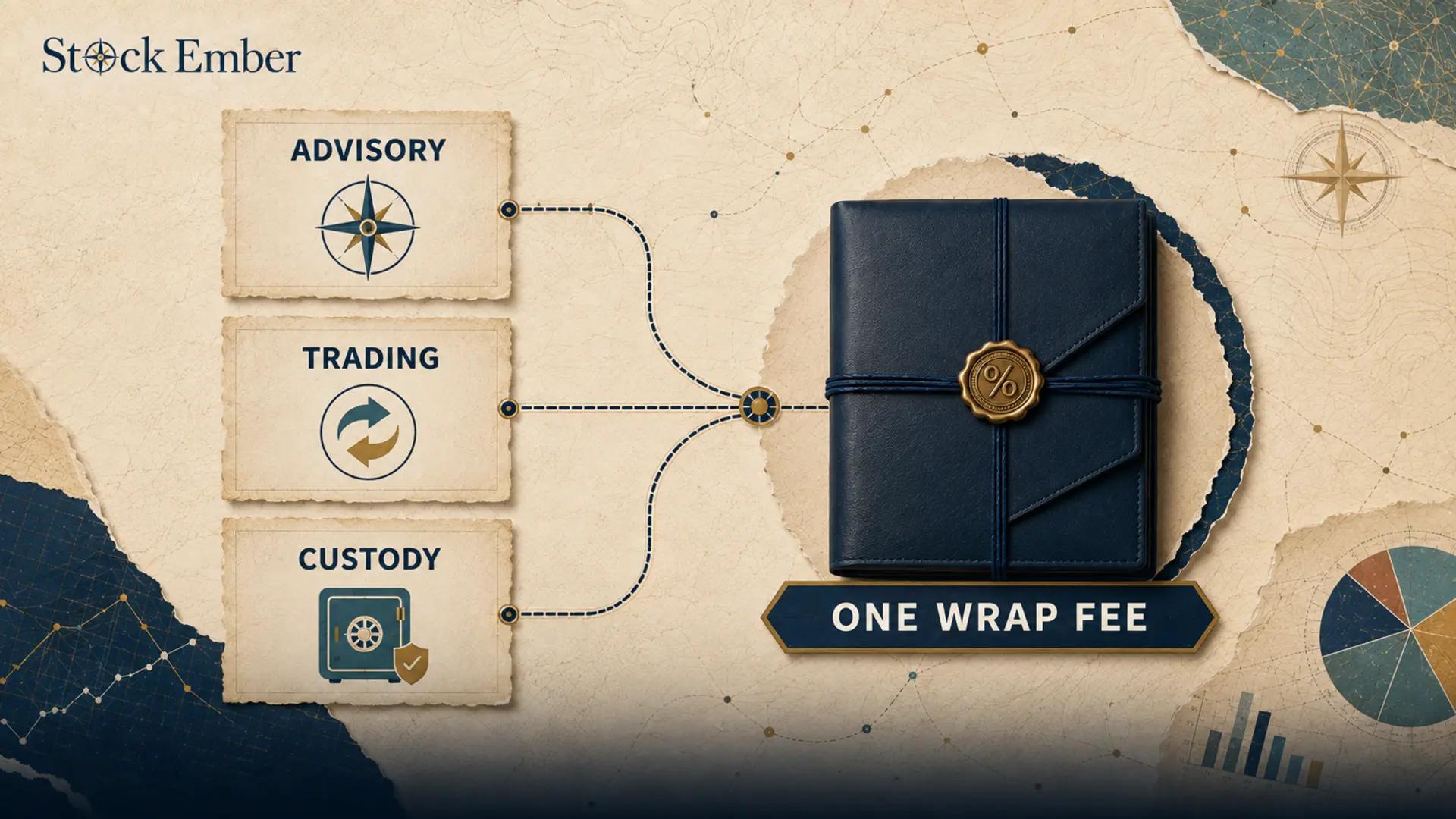
How trade execution, management, and administrative costs combine into a single wrap fee.
A bundled advisory program combines these itemized costs into a single package. Under a typical agreement, your single annual payment covers:
Portfolio Management: Professional oversight, ongoing asset allocation, and personal financial advice from your manager.
Trade Execution: The cost of buying and selling stocks, bonds, or funds within the account without paying individual trade commissions.
By consolidating these services, these programs aim to align advisor incentives with account growth. Because the advisor does not earn a commission on individual transactions, they have no financial incentive to trade excessively just to generate fees.
Underlying Costs: The Danger of Layered Fees
A frequent misunderstanding among individual investors is assuming that a bundled rate covers every single cost associated with their investments. It does not. An asset-based advisory charge only covers account-level administration and trade execution; it does not cover asset-level operational expenses.
If your advisor fills your portfolio with pooled investment vehicles, you will pay underlying product charges on top of your management fee:
Mutual Fund Expenses: Holding funds in an advisory account means paying the fund manager's internal operating costs. Understanding how mutual fund fees reduce net performance is critical when evaluating a bundled account.
12b-1 Fees: Some fund share classes include marketing and distribution fees. Learning what a 12b-1 fee is helps you spot distribution charges that sit inside fund expense ratios inside advisory accounts.
Exchange-Traded Fund (ETF) Expense Ratios: Passive ETFs carry internal management fees that are paid directly to the fund sponsor, completely separate from your advisor's firm.
When you pay a 1.5% advisory charge to your firm plus an average 0.60% expense ratio on underlying funds, your true total annual fee drag is 2.10%. This fee layering can significantly reduce your net returns over time.
The 10-Year Portfolio Impact and Reverse Churning Risk
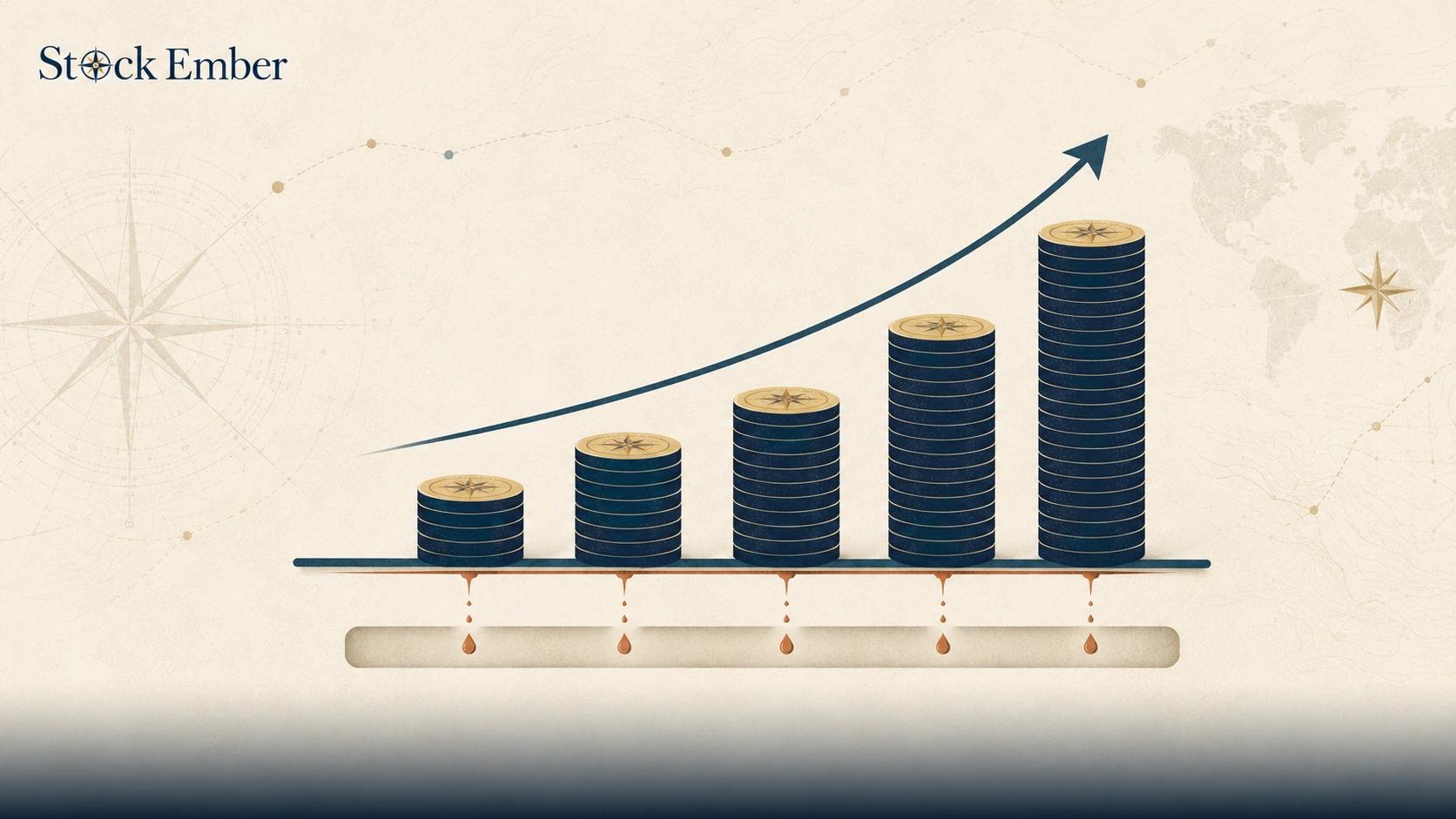
Understanding the broader cost of investing requires looking past annual percentages and measuring long-term compounding impact. Small percentage fees accumulate into large dollar amounts over a ten-year holding period.
Consider a hypothetical $100,000 portfolio that achieves a 7% average annual gross return over ten years (actual returns, fees, and market performance will vary and are not guaranteed):
Without Advisory Fees: Growing at 7% annually with zero fee drag, the portfolio reaches approximately $196,715 after ten years.
With a 1.5% Annual Advisory Fee: The net annual return drops to 5.5%. After ten years, the portfolio grows to approximately $170,814.
In this simple example, the 1.5% annual fee drag reduces final wealth by nearly $25,901 over a single decade.
The Risk of Reverse Churning While traditional "churning" involves an advisor executing unnecessary trades to collect commissions, flat-percentage accounts carry the opposite danger: reverse churning. Reverse churning occurs when an investor pays a flat annual percentage fee for an advisory account but engages in very little trading activity. If you hold a passive, low-turnover portfolio that requires only one or two rebalancing trades per year, paying $1,500 annually under a flat fee structure means you are paying hundreds of dollars per transaction. The U.S. Securities and Exchange Commission explicitly alerts investors to evaluate whether trading frequency justifies a bundled pricing structure.
Is a Wrap Fee Account Worth It for You?
Whether a bundled account is cost-effective depends on your investment strategy, account size, and portfolio turnover rate.
A wrap fee structure may be suitable if:
You maintain an active portfolio that requires frequent rebalancing, tactical asset shifts, or regular dollar-cost averaging trades.
You desire full, ongoing financial planning and active wealth management alongside trade execution.
You prefer predictable billing over variable monthly transaction bills.
A bundled arrangement is usually unsuitable if:
You follow a strict buy-and-hold strategy using long-term passive index funds or individual stocks.
You make very few transactions per year, making individual commission-free trades or flat per-ticket fees far cheaper.
Your portfolio consists primarily of fixed-income assets or cash equivalents where a 1% to 2% advisory fee would consume most of the yield.
Common Pitfalls to Watch
Before agreeing to an advisory contract, watch out for these common traps:
Assuming "All-Inclusive" Means Free Underlying Funds: Always review the prospectus of every fund in your portfolio to calculate total layered costs.
Paying Advisory Rates for Cash Balances: Ensure your advisor does not charge a full 1.5% advisory rate on uninvested cash held in sweep accounts.
Ignoring Unbundled Alternatives: Calculate what your annual costs would be under a fee-only hourly schedule or a discount commission broker before signing a management agreement.
Understanding Wrap Fees for Long-Term Portfolio Growth
A wrap fee offers convenience and predictable billing by bundling advisory oversight, administrative maintenance, and trade execution into one flat percentage. However, for low-turnover investors, high percentage fees combined with underlying fund expenses can create a heavy drag on compounding returns over time. Always weigh your expected trading volume and service needs against the 10-year total cost of ownership before choosing a bundled account structure.
When you are ready to evaluate how different fee percentages affect your long-term wealth, our calculators can help you model your exact scenario. Investing always puts your money at risk and past returns never promise the future, so treat this fee analysis as a starting point for your own research, not a recommendation.
FAQ
5 questions
What does a bundled advisory program include?
A bundled advisory program typically includes overall investment management, ongoing financial planning advice, trade execution commissions, and administrative services like account reporting. However, it does not cover internal operational costs of underlying investment funds, such as mutual fund expense ratios or exchange-traded fund management fees.
How much is a typical wrap fee?
Typical asset-based fees range from 1% to 3% of total assets under management per year. The exact percentage depends on the total size of the account, the complexity of the portfolio, and the scope of financial advisory services provided by the wealth management firm.
Does an advisory rate cover mutual fund fees?
No, an advisory rate covers account-level administration and trade execution, but it does not cover product-level fees. If your advisor holds mutual funds or exchange-traded funds in your account, you will pay the underlying fund operating expenses and potential distribution fees on top of the bundled rate.
What is reverse churning in an advisory account?
Reverse churning occurs when an investor pays a flat annual percentage fee for an advisory account but engages in very little trading activity. Because the flat fee includes trade execution, buy-and-hold investors with low portfolio turnover pay far more in management charges than they would paying individual transaction commissions.
Can you negotiate a wrap fee?
Yes, these fees are often tiered and negotiable, particularly for larger portfolios. As your total assets under management grow, advisors frequently offer discounted percentage schedules or break points that lower your effective annual rate.
Disclaimer
This guide was written with AI assistance and reviewed by the StockEmber editorial team for accuracy. StockEmber provides independent education, not personal financial advice. Some links may support our work at no additional cost to you.
The StockEmber Team is our in-house desk of independent research writers. We test brokerage platforms, read the fine print on fees and custody, and cover ETFs and long-horizon investing for people who plan to hold for decades — not days.