A currency conversion fee is the charge or exchange rate markup imposed by a platform, bank, or broker when converting base cash into a foreign currency. In retail investing, platforms usually incorporate this fee into an exchange rate spread rather than showing it as an explicit line item. Unmanaged currency conversion costs apply to purchases, dividend payouts, and sales, creating a cumulative drag on long-term compounding.
A currency conversion fee is the charge or rate markup imposed by a financial platform, bank, or broker to exchange your home cash balance into a foreign currency to complete a transaction.
When you buy international stocks, collect foreign dividends, or convert cash balances back home, this fee quietly eats into your working capital. While a fraction of a percent sounds negligible on a single trade, recurring foreign exchange friction compounds into a substantial cost over a multi-year horizon. Knowing how currency conversion fees work—and where platforms hide them—helps you protect your portfolio's long-term growth.
Quick Takeaways
01A currency conversion fee—often called an FX fee—is the price charged by a platform to convert your base cash into a foreign currency.
02Most retail brokers bury this cost inside an exchange rate markup rather than listing it as an explicit transaction commission.
03Foreign currency conversion costs apply on asset purchases, incoming dividends, and asset sales, creating a multi-layered tax on compounding returns.
04Unmanaged FX markups silently drag down long-term portfolio growth before your capital ever has the chance to compound.
What Is a Currency Conversion Fee?
A currency conversion fee, frequently referred to as an fx fee, is the transaction cost charged by a brokerage, bank, or payment processor whenever money is converted from one base currency into another.
In investment accounts, this fee appears in two distinct ways: explicit flat transaction fees or implicit exchange rate spreads. Explicit fees are transparent line items listed on your trade confirmation statement. Implicit exchange rate markups, however, are far more common in retail investing. Platforms often advertise "commission-free" foreign trading, yet they execute your currency exchange at a rate higher than the wholesale interbank market rate (the "spot rate").
For example, if the real-time interbank exchange rate between your home currency and a foreign currency is 1.000, your broker might execute your order at 1.007. That 0.70% spread is an exchange rate markup—a subtle fee subtracted directly from your capital before your order even executes. Like standard investment fees, these markups reduce the total amount of money actually put to work in the market.
How Currency Conversion Fees Work in Foreign Investing
Currency conversion fees operate during foreign investing whenever your account's base currency differs from the denomination of the asset you buy, sell, or receive income from.
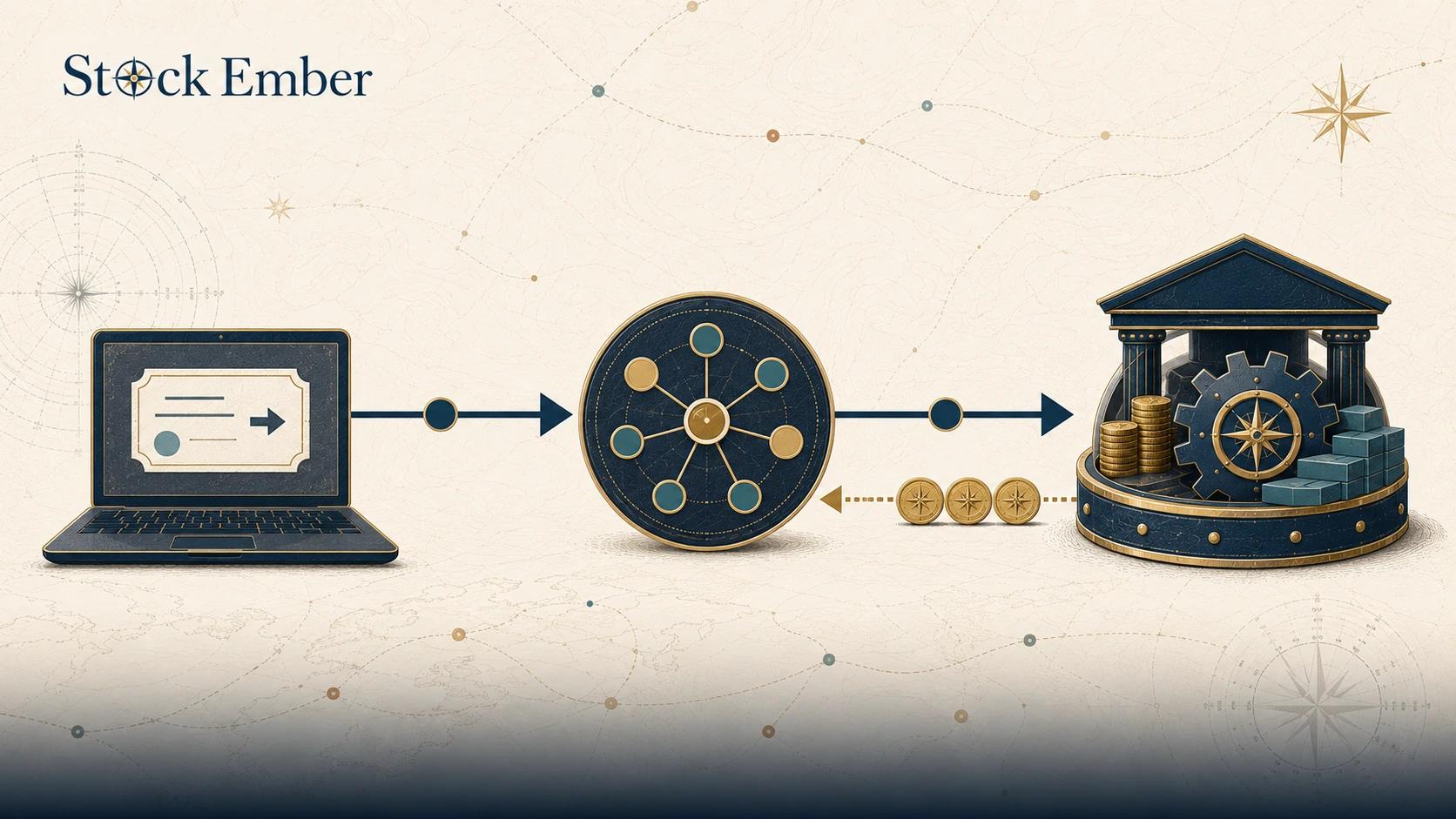
When you place an international trade using a single-currency brokerage account, the platform automatically triggers a currency conversion behind the scenes. This creates three primary friction points across your investment lifecycle:
Initial Asset Purchases: Converting home currency into foreign cash to buy shares.
Foreign Dividend Payouts: Automatically converting foreign cash dividends back to your base currency upon payment.
Asset Sales: Converting liquidation proceeds back to home currency when exiting a position.
In retail brokerage environments, auto-conversion is standard. Much like payment for order flow—a practice where brokers route trades to market makers in exchange for compensation—foreign exchange auto-conversion represents a key behind-the-scenes profit mechanism for modern platforms. If a platform auto-converts your holdings on every dividend payout and trade, you pay the retail exchange markup repeatedly across the life of your account.
The 10-Year Cost Impact: How FX Fees Drag Your Portfolio
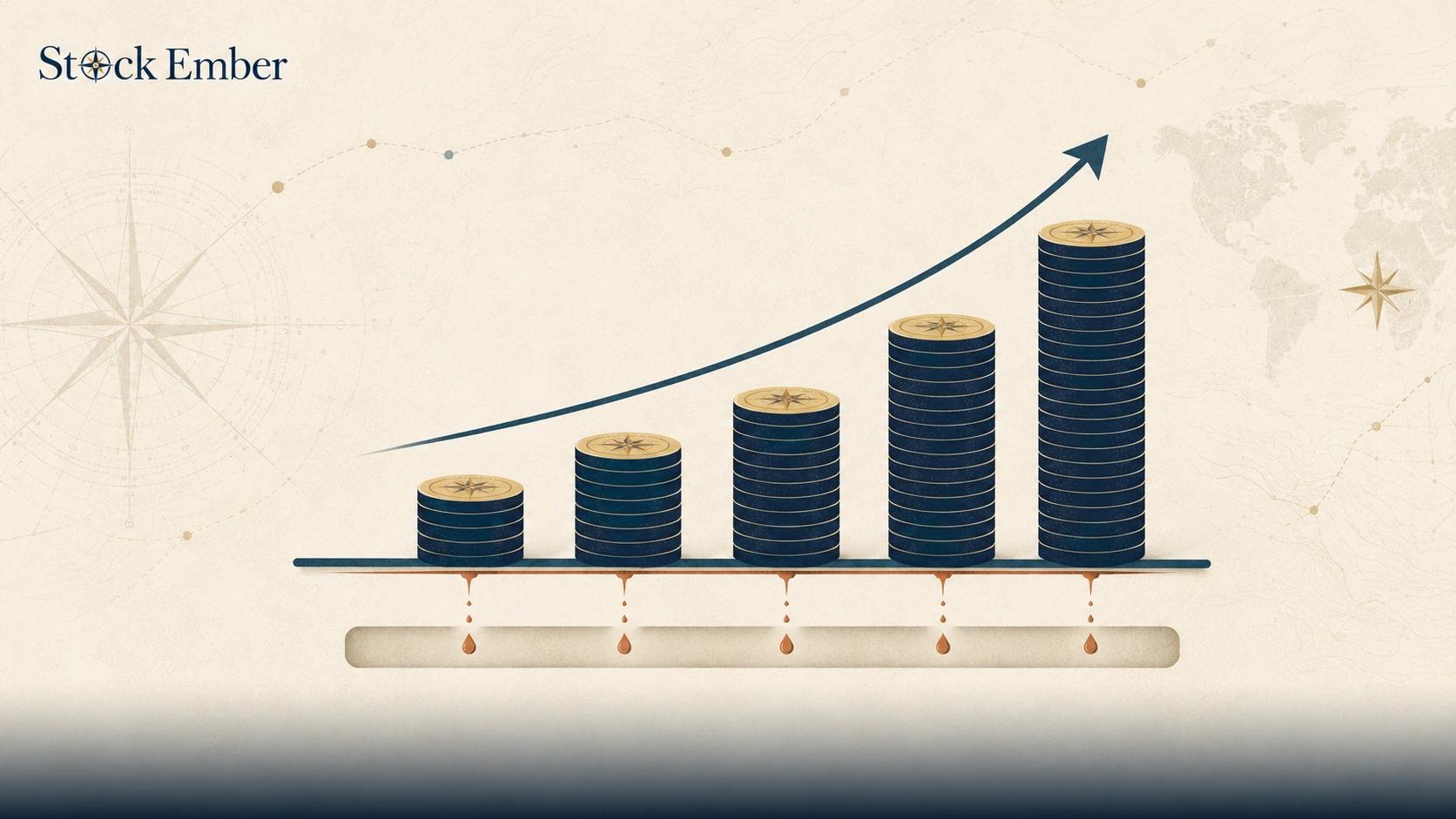
A currency conversion fee reduces your overall compounding capacity by subtracting principal from your portfolio every time money enters or leaves a foreign market.
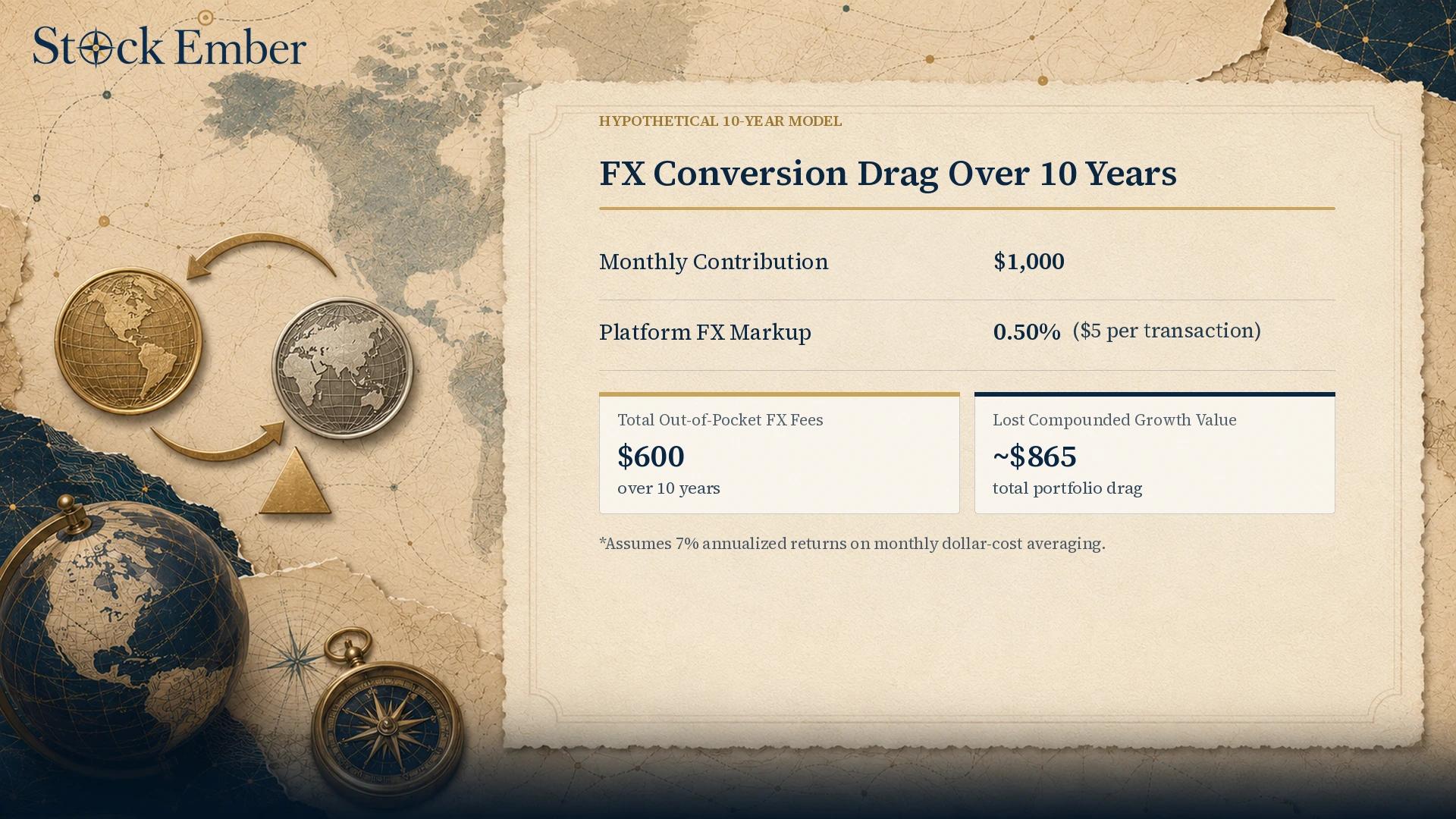
To see how this quiet tax operates over a decade, consider a hypothetical investor who deposits $1,000 every month into international assets over 10 years (totaling $120,000 in contributions).
If the investor's platform charges a modest 0.50% exchange rate markup on every conversion, the investor loses $5 in FX friction each month. Over 10 years, that amounts to $600 paid in immediate conversion costs before a single dollar earns a return. Assuming a hypothetical average annual portfolio return of 7% — a commonly cited long-run equity benchmark, not a projection — those lost $5 monthly contributions would have grown to roughly $865 over the decade.
The 10-Year Cost Impact: How FX Fees Drag Your Portfolio
Because foreign investing often involves a "round trip"—converting money on the way in and on the way out—you pay the markup twice. Adding foreign dividend FX fees to this calculation further compounds the drag, meaning total exchange costs across a decade of active international investing can erode a meaningful share of your net wealth—particularly for investors who receive frequent foreign dividends.
Currency Conversion Fee vs. Currency Risk
A currency conversion fee is a static transaction charge paid to an intermediary, whereas currency risk is the ongoing market risk created by fluctuating exchange rates between world currencies over time.
It is critical not to confuse these two concepts when analyzing foreign asset costs:
Category
Currency Conversion Fee (FX Fee)
Currency Risk (Exchange Rate Volatility)
What It Is
Platform fee or spread markup charged for exchanging money.
Macroeconomic price movement between two currencies.
Predictability
Fixed, predictable friction determined by your broker's pricing schedule.
Variable, unpredictable price movement driven by global economic forces.
Controllability
Highly controllable through broker choice and account setup.
Uncontrollable market risk inherent to holding foreign assets.
Currency risk can move in your favor or against you depending on macroeconomic trends. In contrast, a currency conversion fee always moves against you—it is a guaranteed, one-way friction cost that never works in the investor's favor.
How Long-Term Investors Manage FX Conversion Drag
Managing currency conversion drag requires minimizing unnecessary foreign exchange triggers and structuring accounts to avoid automatic retail conversions.
Long-term investors typically employ three simple strategies to mitigate unnecessary FX friction:
Utilize Multi-Currency Cash Balances: Choose accounts that allow you to hold foreign cash balances directly. By keeping foreign dividends in their original currency, you avoid paying auto-conversion markups on tiny payout amounts.
Batch Foreign Transactions: If your platform charges a flat minimum fee alongside an exchange spread, converting larger cash amounts periodically rather than executing small, frequent conversions reduces total fee frequency.
Consider Locally Listed ETFs: Investing through locally listed index funds or ETFs that hold international assets allows institutional market makers to handle currency conversions at wholesale interbank rates, passing lower structural costs down to fund holders.
Conclusion
Currency conversion fees are an easily overlooked friction point that can quietly erode a significant portion of your long-term investment returns. By understanding the difference between interbank spot rates and retail platform markups, you can take deliberate steps to minimize round-trip exchange costs across your portfolio. Treating FX fees as a manageable expense ensures that more of your capital stays invested where it belongs—compounding in the global market.
When you are ready to evaluate how different cost structures impact your personal portfolio, using accurate financial calculators can help you model the long-term drag on your wealth.
FAQ
4 questions
How can international investors minimize brokerage FX conversion fees?
Investors can limit currency costs by choosing brokerages with transparent FX spreads, converting larger amounts to avoid fixed transaction fees, or using multi-currency cash balances to avoid dynamic conversion charges on every trade.
Does holding cash in multi-currency balances eliminate FX transaction costs?
Holding funds in foreign currency balances eliminates recurring FX conversion fees when trading assets in that specific currency. However, an initial conversion fee is still incurred when moving base currency into the foreign currency balance.
Why do international dividends incur currency conversion fees upon receipt?
When a foreign stock pays dividends in its domestic currency, your broker must convert those funds into your account's base currency. Most brokers automatically apply a currency conversion markup or spot rate spread during settlement.
What is the difference between a fixed FX fee and a spread markup?
A fixed FX fee is a flat dollar charge assessed per transaction regardless of trade size. A spread markup is a percentage fee built into the exchange rate, adding a hidden cost per dollar converted.
Disclaimer
This guide was written with AI assistance and reviewed by the StockEmber editorial team for accuracy. StockEmber provides independent education, not personal financial advice. Some links may support our work at no additional cost to you.
The StockEmber Team is our in-house desk of independent research writers. We test brokerage platforms, read the fine print on fees and custody, and cover ETFs and long-horizon investing for people who plan to hold for decades — not days.