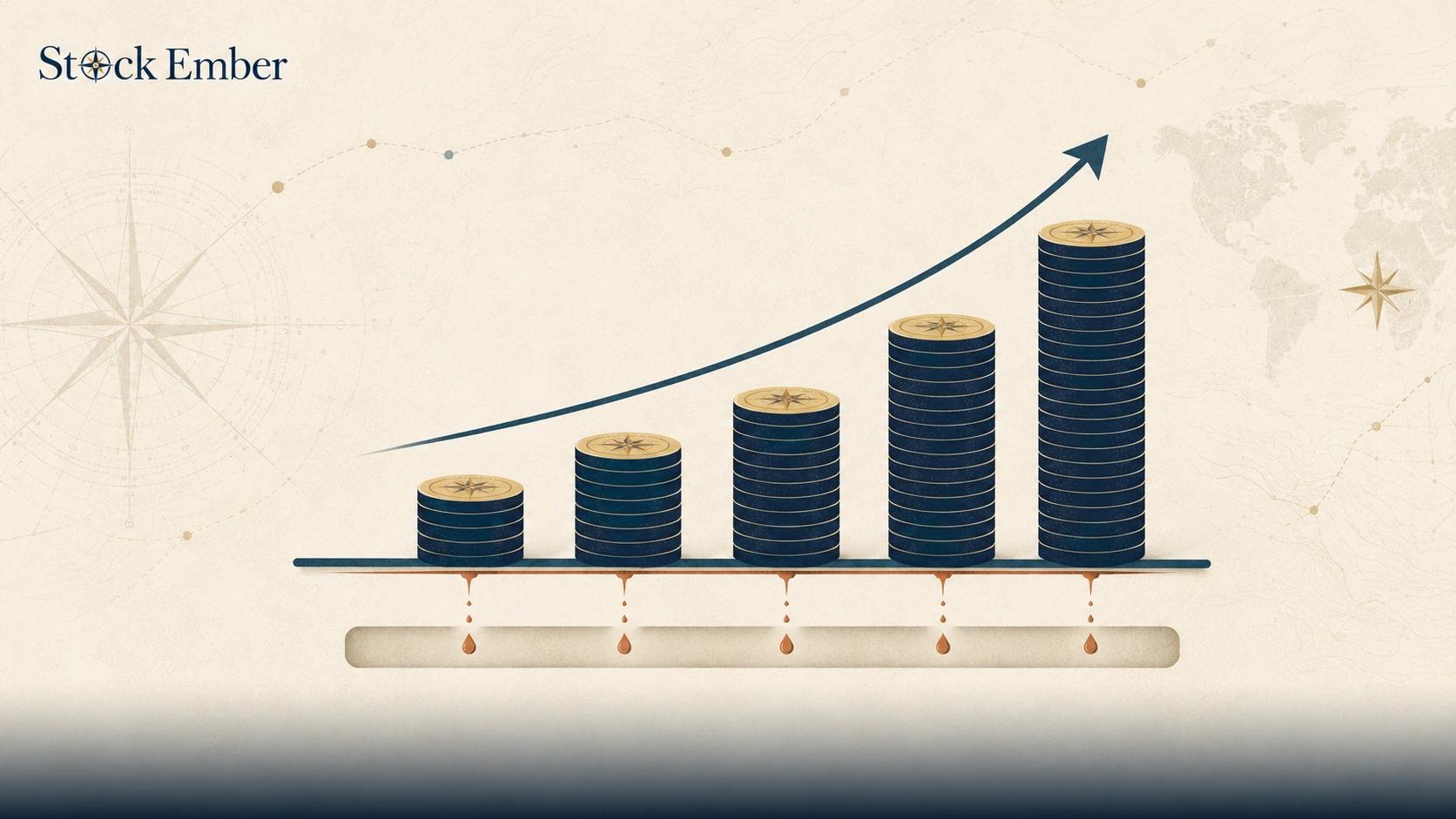
Mutual fund fees are the annual operating expenses and transactional charges paid to manage, administer, and distribute an investment fund. These costs are subtracted directly from total fund assets rather than billed to you as an out-of-pocket invoice.
When you invest for long horizons, viewing costs as a minor annual percentage hides their true impact. A small fee deducted daily compounds over time, draining a significant portion of your potential portfolio growth. This guide breaks down every fee layer, how deductions work, and what fund costs really trim over a decade.
What Are Mutual Fund Fees?
Mutual fund fees represent the total ongoing operational expenses and one-time transactional costs charged to manage and administer an investment fund. These fees compensate portfolio managers, fund administrators, legal teams, and distribution networks for running the fund.
Understanding these charges is a foundational step in managing the cost of investing, because every dollar taken out in fund overhead is a dollar that can no longer compound for your future. Even when two funds track similar market segments, differences in their internal expense structures can lead to significantly different long-term account balances.
Operating Expenses vs. Shareholder Fees: Understanding the Split
Mutual fund costs are split into two main categories: annual operating expenses, which pay for ongoing fund management, and shareholder fees, which are one-time charges triggered by specific investor transactions.
Annual Operating Expenses (The Expense Ratio)
Annual operating expenses reflect the ongoing cost of holding a fund. These are bundled into a single percentage figure known as the fund’s expense ratio, which combines three core components:
- Management Fees: The fee paid directly to the fund’s investment managers for research, asset allocation, and portfolio management.
- 12b-1 Distribution Fees: Optional fees used to cover fund marketing, promotional materials, and ongoing commissions paid to brokers who sell the fund.
- Administrative & Operational Costs: The overhead required to run the fund, including legal compliance, recordkeeping, auditing, custodian services, and customer service operations.
Shareholder Fees (One-Time Transaction Costs)
Unlike annual operating expenses, shareholder fees are administrative charges applied directly to your personal transaction when you purchase, exchange, or sell fund shares:
- Sales Loads: Commissions paid to sales intermediaries. A front-end load charges a fee when you purchase shares, whereas a back-end load (deferred sales charge) applies a fee when you sell shares within a specified multi-year window.
- No-Load Mutual Funds: Funds that do not charge any front-end or back-end sales commissions, allowing 100% of your capital to go straight to work from day one.
- Redemption Fees: Charges imposed by certain funds to discourage short-term trading and protect long-term shareholders from rapid capital inflows and outflows.
How Mutual Fund Fees Are Deducted: The Silent Daily Drag
Mutual fund fees are deducted daily from the fund’s total net assets before the official daily Net Asset Value (NAV) is calculated and published. This means you will never receive an explicit bill, invoice, or quarterly deduction line on your account statement.
Instead, the fund's custodian calculates the annual expense ratio, divides it by 365, and reduces the fund's gross daily asset value by that fractional amount. Because this subtraction occurs internally behind the scenes, the performance numbers reported on your brokerage statement are always net of operating expenses.
The 10-Year Lens: How Small Fees Eat Big Wealth
Over a ten-year horizon, mutual fund fees reduce total portfolio growth by both subtracting capital directly and eliminating the future compound growth that capital would have generated. A fee that looks negligible over 12 months becomes substantial over a decade.
Consider a hypothetical initial investment of $10,000 held for 10 years, assuming a gross market return of 7% per year before fees.
The figures below are for illustrative purposes only and do not represent actual fund performance or guarantee future results. Actual returns will vary based on market conditions, specific fund selection, and individual circumstances.:
- Low-Cost Fund (0.10% Expense Ratio): Net annual growth equals 6.90%. After 10 years, your $10,000 investment grows to approximately $19,488. Total fees paid and lost growth equal roughly $183.
- Higher-Cost Fund (1.10% Expense Ratio): Net annual growth equals 5.90%. After 10 years, your $10,000 investment grows to approximately $17,740. Total fees paid and lost growth equal roughly $1,931.
In this illustration, a seemingly modest 1 percentage point difference in annual fees cost the investor $1,748—swallowing nearly 10% of their potential overall wealth over a single decade. The drag becomes exponentially larger as account balances and investment time horizons expand.
Common Pitfalls: Cost Red Flags to Watch
Identifying hidden cost drivers within a mutual fund prospectus requires looking beyond the headline summary figure. Long-term investors should watch for several common cost red flags:
- Paying 12b-1 Marketing Fees: Many legacy fund share classes bundle 12b-1 fees into their expense ratios to compensate distribution channels. Favoring share classes or fund structures without 12b-1 fees ensures your money stays focused on investment management rather than sales marketing.
- Front-End Sales Loads: Purchasing load funds creates an immediate drag on your starting balance. A 5% front-end load means only $95 of every $100 invested begins compounding.
- Temporary Net Expense Ratio Waivers: Fund managers sometimes offer temporary fee waivers that lower the net expense ratio for an initial period. Always inspect the gross expense ratio to know what the fund will cost if those voluntary waivers expire.
- High Portfolio Turnover Rates: Frequent buying and selling of securities within a fund creates hidden internal transaction costs—such as brokerage commissions and bid-ask spreads—that are not reflected in the published expense ratio but still drag down net returns.
Conclusion
Keeping fund expenses low is one of the few variables long-term investors can directly control. Over a multi-year timeline, avoiding sales loads and favoring low expense ratios ensures that more of your return stays in your account to compound. By evaluating fund costs through a ten-year lens rather than as a single-year snapshot, you protect your portfolio against silent wealth erosion.
When you're ready to model how specific fee rates impact your personal portfolio timeline, exploring interactive investment tools can give you a clear, custom projection before you invest.