An Employee Stock Purchase Plan (ESPP) is an employer-sponsored benefit that allows workers to buy company stock at a discounted price using accumulated payroll deductions. Most plans offer discounts between 5% and 15% through qualified programs, giving staff an ownership stake while requiring careful portfolio diversification.
An Employee Stock Purchase Plan (ESPP) is a company benefit that lets workers buy employer shares through payroll deductions, often at a discount.
Buying discounted stock feels like an easy win, but holding company shares creates real portfolio risk. If your salary and your savings rely on the same business, a corporate downturn can hurt both at once. This guide explains how an ESPP works, how discounts and lookback rules function, and how long-term investors manage employer stock safely.
Quick Takeaways
01An ESPP lets employees buy company stock through payroll deductions, typically at a 5% to 15% discount.
02Lookback provisions can lower the purchase price by referencing the stock price at the start of the offering period.
03Holding company stock concentrates both your salary and your portfolio into one business.
04Selling shares quickly to fund a diversified portfolio captures the discount while cutting single-stock downside risk.
What Is an ESPP?
An Employee Stock Purchase Plan is a workplace program that lets workers buy company shares, often at a discount.
To understand what an ESPP is and the overall ESPP meaning, think of it as an automated savings plan with a price cut. During open enrollment, you choose a set percentage of your salary to set aside. Over several months, your company accumulates this cash. On the purchase date, the company uses the funds to buy shares on your behalf, often at a 5% to 15% discount below market price.
In the United States, plans fall into 2 legal categories: qualified and non-qualified. Most programs are qualified plans under Section 423 of the Internal Revenue Code (IRS). These provide tax perks if holding rules are met, but cap purchases at $25,000 worth of stock per calendar year, valued at the price on the first day of the offering period. Non-qualified plans lack statutory caps, and employers can offer them to selected staff.
Plan Feature
Qualified Section 423 Plan
Non-Qualified Plan
Purchase Discount
Up to 15% below market price
Set by employer
Annual Cap
$25,000 fair market value per year
No government limit
Tax Treatment
Mostly capital gains if rules are met
Discount taxed as ordinary income at purchase
An ESPP is an equity purchase program, not a retirement account like an IRA. It offers no matching funds, and any purchased shares trade on public exchanges.
How an ESPP Works: From Payroll to Purchase
An ESPP operates on a set schedule that repeats every 6 to 12 months.
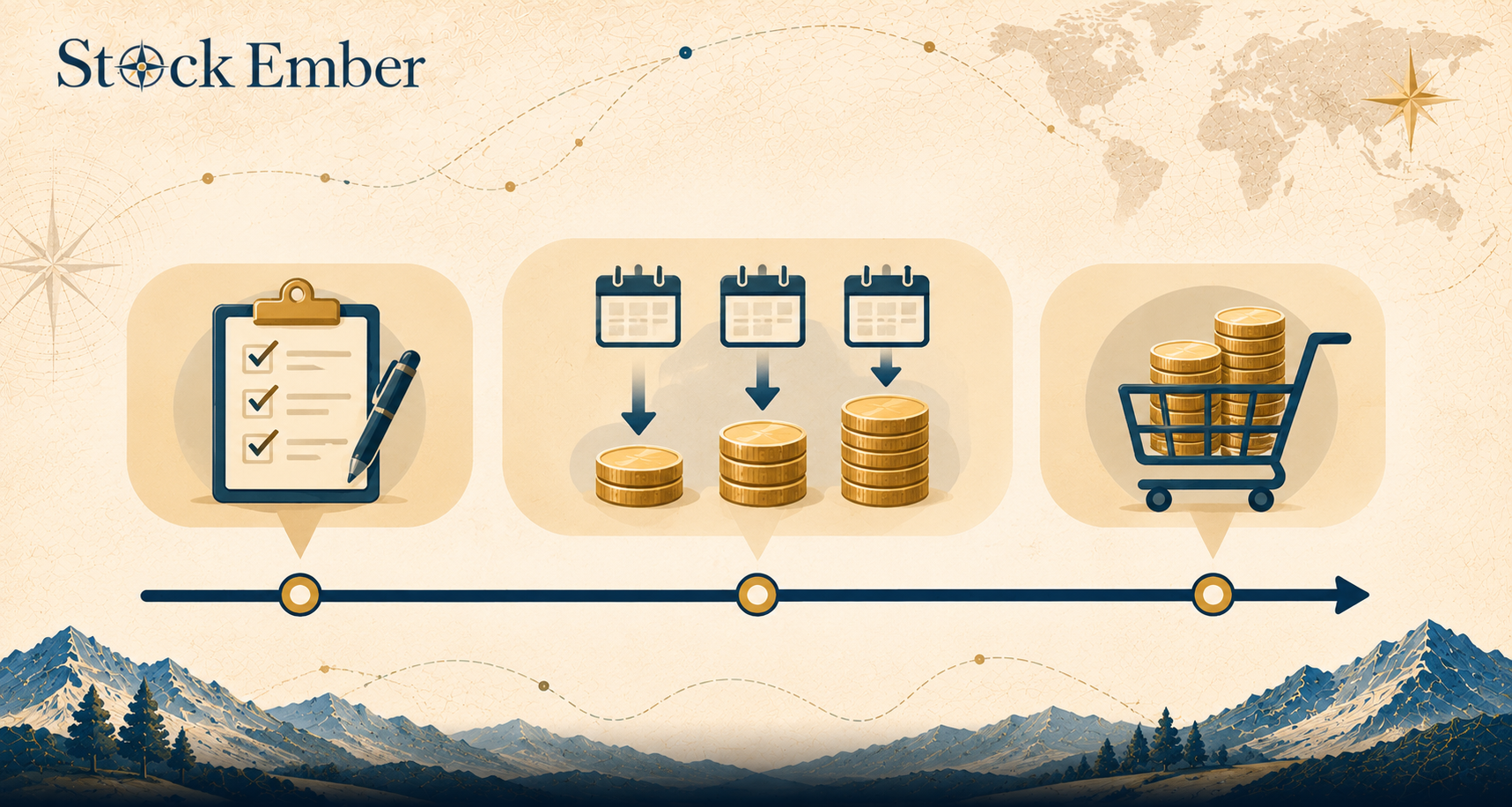
To see an ESPP explained in practice, follow how money travels from your paycheck to your brokerage account:
Enrollment Period: You enroll and select a payroll deduction rate, usually 1% to 15% of your pay.
Offering Period: Your employer holds this money across a set window, commonly 6 months.
Purchase Date: On the final day, the company buys shares using your accumulated cash.
Diagram illustrating the timeline of an employee stock purchase plan from enrollment to purchase date
Many plans include a lookback provision, which compares the stock price on the first day of the offering period with the price on the purchase date, applying the discount to the lower price.
If a stock trades at $100 on day one and climbs to $120 on the purchase date, a 15% discount applies to the lower $100 price. You pay $85 per share for stock trading at $120. If the stock drops from $100 to $80, the discount applies to the $80 price, letting you buy at $68.
The Opportunity and the Risk for Long-Term Investors
An ESPP discount offers an immediate head start, but holding company shares creates concentration risk.
Concentration risk happens when too much of your wealth depends on one business. If you keep all your company shares, you face double exposure. If your employer runs into trouble, you risk losing your job and seeing your portfolio fall at the same time.
Diversification protects against this trap. Spreading capital across different areas, such as small-cap stocks or broad-market index funds, limits the damage a single struggling business can cause.
Holding employer stock also carries an opportunity cost over 10 years. Suppose an employee holds $10,000 in company shares each year instead of investing in a broad index. Over a decade, that person leaves $100,000 tied to one company.
If that business stagnates while the wider market grows at an illustrative 7% annual return after inflation, that worker gives up over $47,000 in compounded investment gains from each year's $10,000 contribution. This is a hypothetical illustration, and actual market returns are never guaranteed.
Selling Immediately vs. Holding: The Core Strategy
When shares land in your account, you must choose whether to sell right away or hold them for the future.
Selling ESPP shares immediately locks in the purchase discount on the purchase date. This step cuts the risk of a share drop and frees up cash to fund diversified index funds or emergency savings. The discount counts as ordinary income on your pay stub, but you avoid holding an individual stock that could plunge.
Holding ESPP shares longer can lower your tax rate through a qualifying disposition. A disposition (the sale or transfer of your shares) qualifies for lower capital gains tax if you hold the stock for 2 years from the offering date and 1 year from the purchase date.
However, holding a single stock for 12 to 24 months just for tax savings is risky. If the stock falls 20%, that loss erases both your tax savings and the discount.
In practice, many long-term investors find that treating an ESPP as an automated savings engine, flipping discounted shares at purchase and reinvesting into index funds, protects them from sudden market downturns without sacrificing the upfront discount.
Common ESPP Traps to Avoid (and the Passive Investor Bridge)
Investors can avoid costly mistakes by recognizing a few common plan traps.
The first ESPP trap is letting employer stock exceed 5% to 10% of your portfolio. If company shares become a large share of your savings, a poor earnings report can damage your financial goals.
The second trap is blackout windows. Companies often block employees from selling shares around quarterly earnings reports. If the stock drops during a blackout period, you cannot sell to cut losses. The third trap is setting ESPP payroll deductions so high that you struggle to pay monthly bills.
If you are learning to invest in stocks through index funds, an ESPP can serve as an ideal savings vehicle. Selling shares at purchase lets you capture the discount and direct the cash into broad index funds that compound safely over time.
Conclusion
An Employee Stock Purchase Plan gives workers a valuable chance to buy company shares below market value, but it requires disciplined risk management. Taking a 15% discount provides an immediate operational edge, yet holding company stock long term concentrates both your income and your savings into one company. Using the plan to fund a diversified portfolio helps you capture the employer benefit without risking your financial future on a single stock.
When you are ready to open an account to manage your long-term portfolio, our broker reviews can help you compare suitable options. All investing carries the risk of losing money, and past share performance does not guarantee future results. Treat your company equity plan as one tool within a broader, diversified investing strategy.
FAQ
5 questions
What happens to my accumulated ESPP payroll deductions if I leave the company before the purchase date?
If you leave your company before the purchase date arrives, your accumulated payroll deductions are typically refunded to you in full. Because the funds have not yet been used to buy company shares, you do not receive any stock or purchase discount, and the uninvested cash returns to your bank account.
Can I lose money in an Employee Stock Purchase Plan?
Yes. Even if you purchase shares at a 15% discount, the stock price can fall by more than 15% before or after the purchase date. If you hold the stock and the company suffers business setbacks, your shares can decline significantly, resulting in a net financial loss.
What is the difference between a qualifying and a disqualifying disposition in an ESPP?
A disposition is qualifying if you sell shares at least 2 years after the offering date and 1 year after the purchase date, allowing part of the gain to receive lower long-term capital gains tax rates. A disqualifying disposition occurs when you sell earlier, causing the full purchase discount to be taxed as ordinary income.
Is participation in an ESPP mandatory for eligible employees?
No. Enrolling in an Employee Stock Purchase Plan is completely optional. You choose whether to enroll during the open enrollment window and can select what percentage of your paycheck to set aside. In most plans, you can also reduce or stop your deductions before the purchase date.
How does an ESPP differ from Restricted Stock Units (RSUs)?
With an ESPP, you use your own money from payroll deductions to purchase company shares at a discount. In contrast, Restricted Stock Units (RSUs) are outright equity grants given to you by your employer that vest over time without requiring you to pay cash to acquire them.
Disclaimer
This guide was written with AI assistance and reviewed by the StockEmber editorial team for accuracy. StockEmber provides independent education, not personal financial advice. Investing puts your capital at risk: the value of investments can go down as well as up, you may get back less than you invest, and past performance doesn’t guarantee future results. Some links may support our work at no additional cost to you.
The StockEmber Team is our in-house desk of independent research writers. We test brokerage platforms, read the fine print on fees and custody, and cover ETFs and long-horizon investing for people who plan to hold for decades — not days.