What is a 12b-1 fee? It's an annual operational charge deducted directly from a mutual fund's net assets to cover marketing, advertising, and distribution expenses. Included within the fund's overall expense ratio, it compensates brokers and advisors who sell fund shares to investors.
A 12b-1 fee is an annual operational charge deducted directly from a mutual fund's net assets to cover marketing, advertising, and distribution expenses.
When you analyze mutual fund options, ongoing costs can silently erode your portfolio growth over time. While investment managers earn a fee for stock selection, distribution costs are separate expenses rolled directly into the fund's expense ratio. This guide covers how 12b-1 charges work, regulatory caps, and how their compounding impact affects long-term buy-and-hold returns.
Quick Takeaways
01A 12b-1 fee covers fund marketing, distribution, and broker sales incentives rather than portfolio management.
02The charge is deducted automatically from net fund assets and is included inside the fund's overall annual expense ratio.
03Regulators cap total distribution and service fees at 1.00% annually, with funds capped at 0.25% if marketed as "no-load."
04Ongoing distribution charges compound over time, reducing net wealth over multi-year holding periods.
Definition and Purpose of 12b-1 Fees
A 12b-1 fee is an ongoing operational expense named after Rule 12b-1 of the Investment Company Act of 1940. Created by federal regulators in 1980, the rule permitted mutual funds to pay distribution and marketing expenses using fund assets rather than charging direct front-end sales commissions. The original goal was to help mutual funds attract more assets, theorizing that growing fund size would create economies of scale and lower overall costs for shareholders.
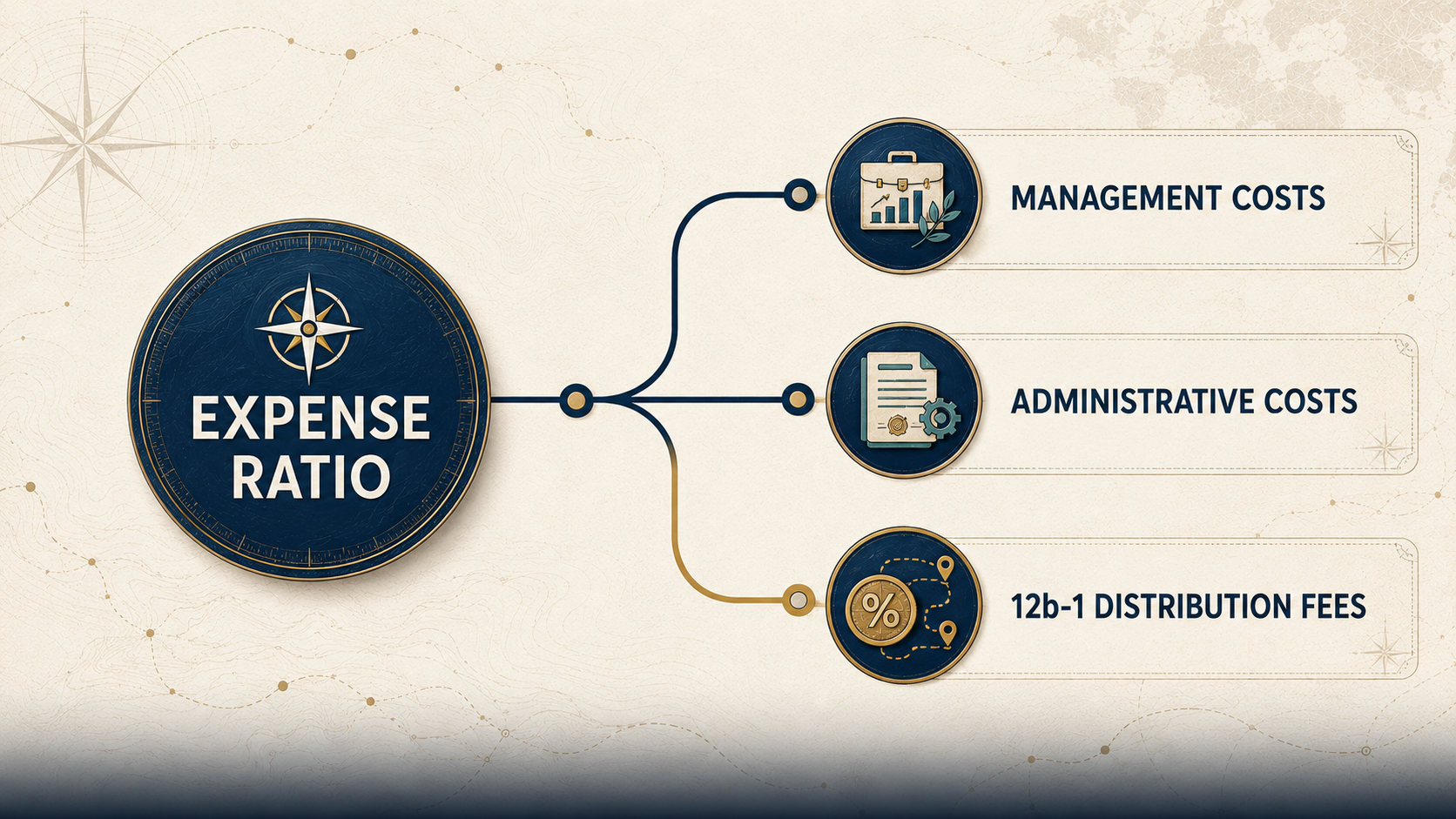
Diagram illustrating how a 12b-1 fee sits inside a mutual fund annual expense ratio.
In everyday investing, this charge is often confused with an investment management fee. While management charges pay the advisor for research and security selection, a distribution fee pays for commercial promotion. It compensates financial advisors, pays for printed prospectuses, funds advertising campaigns, and rewards brokers who sell fund shares to retail clients.
How 12b-1 Fees Work Inside Fund Expense Ratios
Investors never receive a separate paper invoice or line-item bill for a distribution fee. Instead, the fund company calculates the fee daily and deducts it automatically from the fund’s total net asset value (NAV—the per-share value of the fund's assets). Because it is deducted before share prices are calculated, the fee silently reduces the reported daily net return of the fund.
This charge is listed as a distinct line item within the fund’s standardized fee table inside the prospectus. It forms one part of the fund's total annual operating expenses, alongside management and administrative charges. Understanding total mutual fund fees requires looking at the entire expense ratio rather than just the portfolio manager's compensation.
Regulatory caps set strict limits on how much fund managers can deduct. The maximum limits are set under FINRA Rule 2341 (adopted under SEC Rule 12b-1), which caps the fee at 1.00% annually, split into a 0.75% cap for distribution and marketing, and a 0.25% cap for shareholder servicing.
Distribution and Marketing Fee Cap: Maximum 0.75% annually of average net assets. This portion funds media advertising, marketing literature, and sales incentives for brokers.
Service Fee Cap: Maximum 0.25% annually. This portion pays financial professionals for ongoing personal service and maintenance of shareholder accounts.
Total Maximum Cap: 1.00% total per year across distribution and servicing combined.
Why 12b-1 Fees Matter for Long-Term Investors
The presence of a distribution fee varies depending on the fund share class you own. Mutual funds often issue different share classes for the exact same underlying portfolio, each carrying a different fee structure:
Class A Shares: Typically charge a front-end sales commission when purchased, but maintain lower annual 12b-1 fees (usually 0.25%).
Class C Shares: Typically charge no front-end fee, but carry the maximum allowable annual 12b-1 fee of 1.00% (0.75% distribution plus 0.25% servicing). Class C shares become expensive for investors who hold them over long horizons.
Institutional Shares: Designed for large workplace accounts or high-net-worth investors, these shares usually charge 0% in 12b-1 fees.
A common point of confusion involves "no-load" mutual funds. Under regulatory rules, a fund can market itself as a "no-load" fund as long as its annual 12b-1 fee does not exceed 0.25%. Consequently, buying a no-load fund does not mean zero marketing fees. By contrast, most exchange-traded funds (ETFs) do not charge 12b-1 fees, making their structural costs lower for buy-and-hold investors.
The 10-Year Portfolio Cost Math
To see how a distribution fee drags down portfolio performance, consider a hypothetical $10,000 investment growing at an average annual market return of 7% before fees over a 10-year holding period.
If you choose a low-cost index fund with no 12b-1 fee and a minimal 0.05% expense ratio, your portfolio grows to roughly $19,580 by the end of year ten. Over that decade, you pay only about $93 in total operational fees.
If you invest in an active fund carrying a 0.80% expense ratio (which includes a 0.25% 12b-1 fee), your 10-year portfolio total reaches approximately $18,250 after paying around $1,420 in cumulative fees.
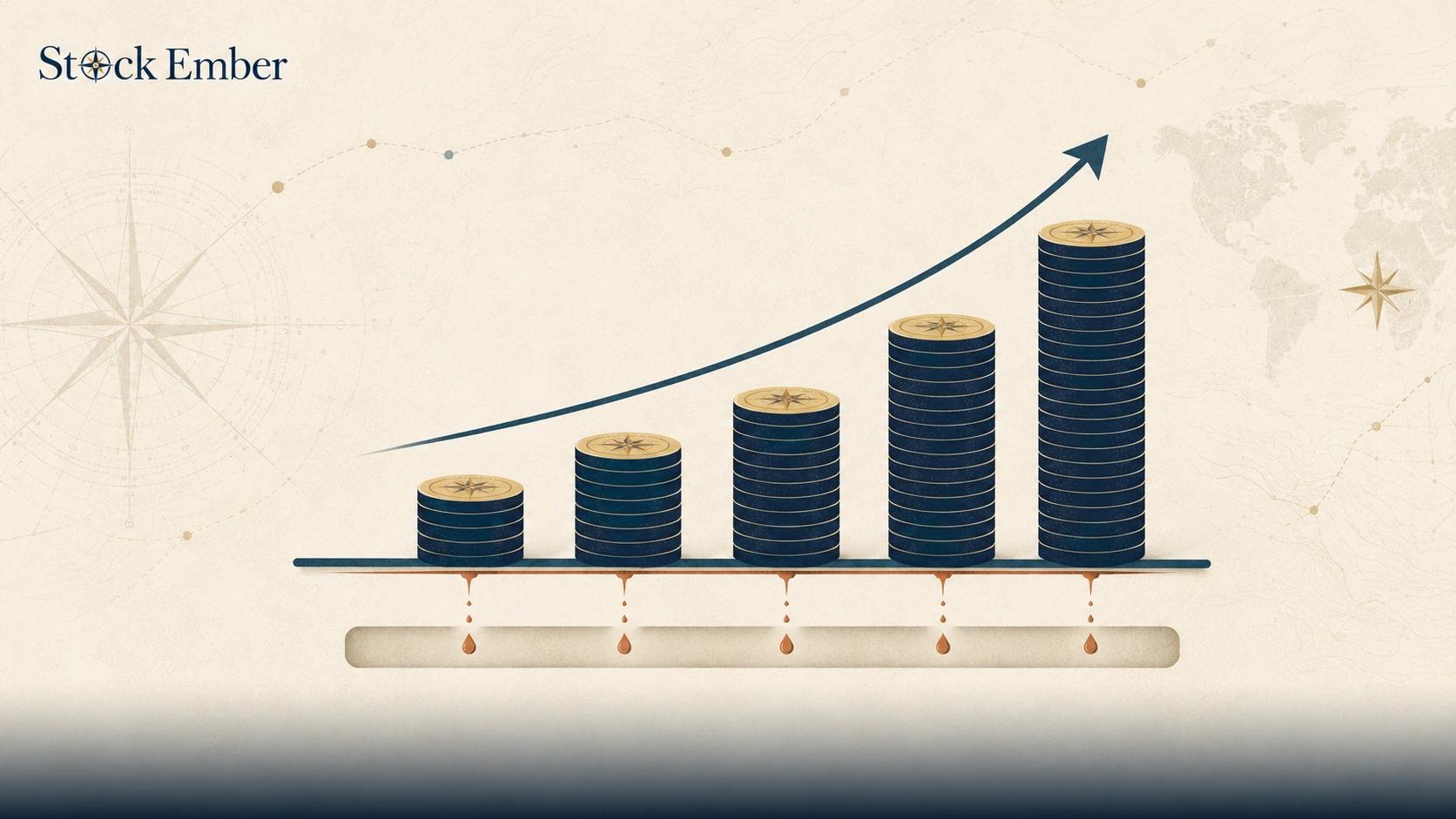
However, if you invest in a Class C share fund charging a 1.65% expense ratio—which includes a 1.00% 12b-1 fee—your final portfolio value drops to around $16,890. Over ten years, the 1.00% annual distribution fee removes nearly $2,700 in potential growth compared to the low-cost alternative. Because fees compound alongside returns, money spent on marketing expenses is capital that can no longer earn compounding interest for your portfolio.
Common Pitfalls and How to Spot 12b-1 Fees
Checking mutual fund documentation requires reviewing fee schedules carefully before investing. Long-term investors often encounter three common traps:
Assuming "No-Load" Means Zero Fee: Assuming a no-load label means no distribution cost is a frequent mistake. Always check the specific line items inside the prospectus table to see if a 0.25% fee is active.
Holding Class C Shares for Decades: Class C shares offer lower upfront costs, but their 1.00% annual fee accumulates indefinitely. Over multi-year horizons, Class C shares end up costing far more than Class A shares or institutional index funds.
Overlooking the Prospectus Fee Table: Every mutual fund prospectus includes a standardized Fee Table near the beginning of the document. Look under the "Annual Fund Operating Expenses" section for the explicit "Distribution and/or Service (12b-1) Fees" line item.
Conclusion
Understanding how distribution fees operate allows buy-and-hold investors to spot hidden operational costs before committing capital. Because these distribution charges fund marketing rather than portfolio management, minimizing or eliminating them helps keep more of your investment returns compounding over time.
When you are ready to analyze and compare specific fund expenses, our Tools(calculators) can help you model the long-term impact of expense ratios on your savings.
Investing always puts your capital at risk and past performance never guarantees future returns, so use this guide as an educational foundation for your own financial research rather than personal advice.
FAQ
4 questions
Are 12b-1 fees included in the expense ratio?
Yes, 12b-1 fees are included directly inside a mutual fund's total annual expense ratio. They are not billed separately to your investment account. Instead, the fund company deducts the fee daily from total net assets, which quietly reduces daily net asset value (NAV) and reported returns.
Do no-load mutual funds charge 12b-1 fees?
Yes, no-load mutual funds can still charge a 12b-1 fee. Under regulatory rules set by the Financial Industry Regulatory Authority (FINRA), a fund can market itself as a "no-load" fund provided its annual 12b-1 fee does not exceed 0.25% of average net assets per year.
What is the maximum 12b-1 fee allowed by regulators?
The legal maximum 12b-1 fee capped by regulators is 1.00% annually. This total cap is split into two components: a maximum of 0.75% for distribution, marketing, and advertising, and a maximum of 0.25% for shareholder servicing.
Do ETFs charge 12b-1 fees?
Generally, no. Most exchange-traded funds (ETFs) do not charge 12b-1 fees because they trade on secondary public exchanges like stocks, eliminating the need for fund sponsors to pay ongoing distribution fees to brokers.
Disclaimer
This guide was written with AI assistance and reviewed by the StockEmber editorial team for accuracy. StockEmber provides independent education, not personal financial advice. Some links may support our work at no additional cost to you.
The StockEmber Team is our in-house desk of independent research writers. We test brokerage platforms, read the fine print on fees and custody, and cover ETFs and long-horizon investing for people who plan to hold for decades — not days.