A tokenized stock is a digital security created on a blockchain network that represents ownership of an underlying share of equity in a public company. Genuine tokenized shares give holders full dividend and corporate voting rights while using smart contracts for faster settlement and round-the-clock trading potential under SEC regulation.
A tokenized stock is a digital token created on a blockchain network that represents ownership of an underlying share of stock in a public company.
As digital financial technology evolves, investors increasingly hear about trading shares on blockchain rails rather than through conventional clearinghouses. Following the SEC's September 17, 2026 Innovation Exemption, temporary conditional pathways now allow select venues to facilitate tokenized share trading under strict rules.
This guide explains how tokenized stocks work, what the regulatory changes mean, and what long-term investors should consider regarding rights and risks.
Quick Takeaways
01Tokenized stocks are digital shares recorded on a blockchain that represent real underlying equity in a public corporation.
02Under the SEC's September 17, 2026 Innovation Exemption, eligible venues can facilitate tokenized stock trading provided holders receive full dividend and voting rights.
03Blockchain technology changes how ownership is recorded and settled, but tokenized shares remain regulated securities under US federal law.
04Genuine tokenized equity differs fundamentally from synthetic crypto-linked derivatives that do not grant legal ownership of underlying shares.
05While tokenization enables round-the-clock trading potential and instant settlement, off-hours liquidity and cash payment rails present ongoing operational hurdles.
What Is a Tokenized Stock?
A tokenized stock is a traditional security whose ownership record is wrapped into a programmable smart contract on a blockchain network. Instead of holding shares solely through an electronic record at a traditional central depository, an investor holds digital tokens that correspond to equity in a public firm.
Tokenization alters the underlying ledger system rather than the security itself. Under US financial law, tokenized equities retain their legal classification as regulated securities. The underlying economic value remains tied directly to the issuing company's operating performance, earnings growth, and cash flows.
For individual investors starting out with investing in stocks, understanding asset tokenization helps separate temporary crypto market hype from long-term changes in market architecture.
How Do Tokenized Stocks Work?
To understand how tokenized stocks work, you must look at three connected layers: custody, smart contracts, and transfer agents.
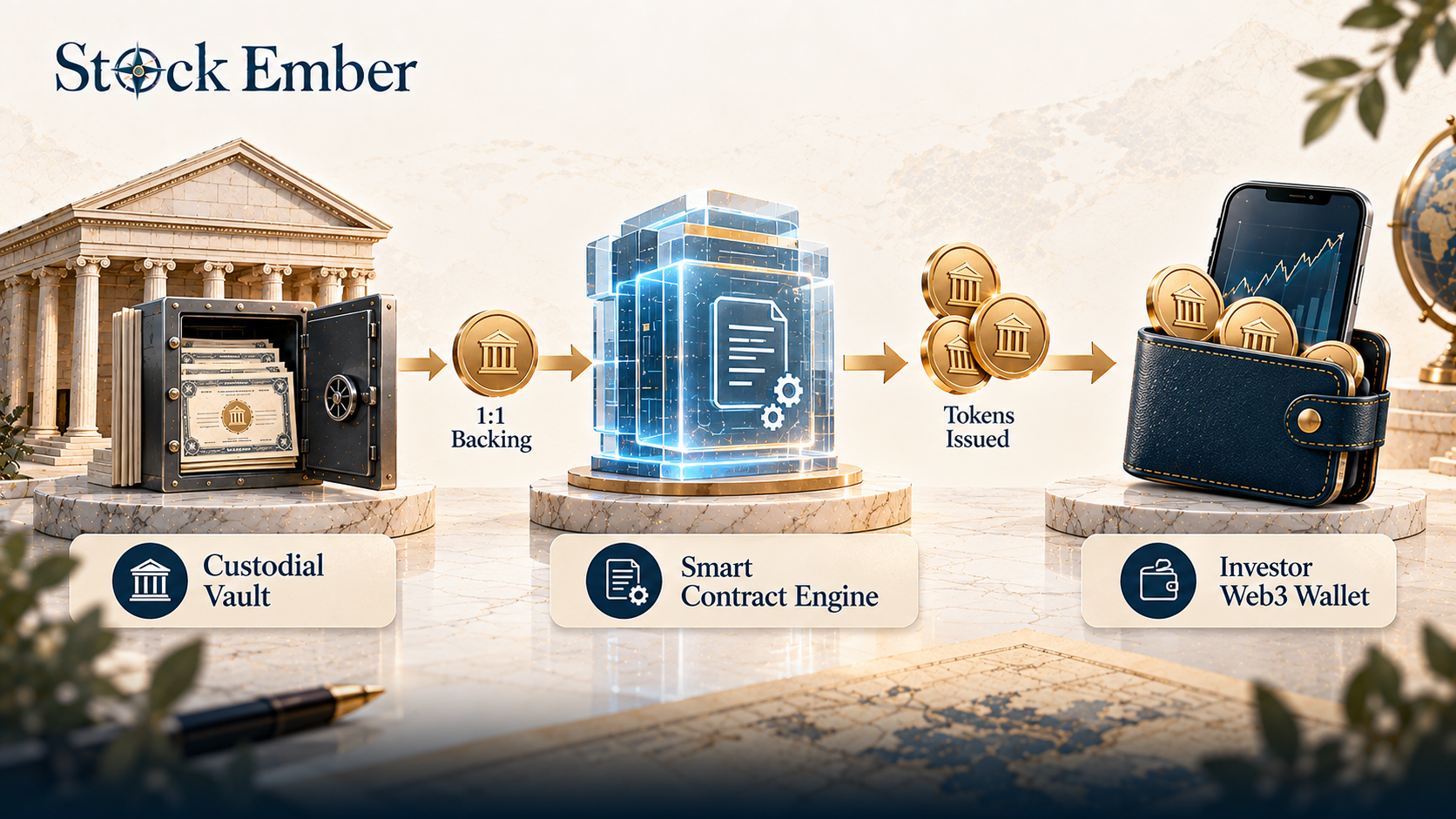
First, an approved custodian or brokerage firm purchases and holds actual shares of stock in a secure reserve. Second, an authorized entity issues matching digital tokens on a blockchain network at a strict 1-to-1 ratio against those custodial shares. Third, a registered transfer agent synchronizes the digital ledger with official corporate ownership records.
When you buy a tokenized share, the transaction updates on the public or permissioned blockchain within seconds. In standard market environments, trade clearing and settlement run on a T+1 schedule, taking one business day to finalize cash and share delivery. On-chain tokenization enables atomic settlement, where token transfer and payment happen almost instantly.
Diagram illustrating the three-step minting and settlement process for tokenized stocks.
The SEC Innovation Exemption: What Changed on September 17, 2026?
On September 17, 2026, the US Securities and Exchange Commission (SEC) issued an Innovation Exemption framework establishing a temporary, conditional path for approved trading venues to handle tokenized US equities.
In practice, many long-term investors find that major regulatory shifts appear revolutionary in headlines, but roll out in measured steps as institutions test clearing and compliance controls.
The SEC directive allows select regulated exchanges and alternative trading systems (ATS) to operate tokenized trading systems without violating legacy broker-dealer registration rules. Venues must adhere to three core conditions set out by the SEC Investor Bulletin:
Full Economic and Legal Equivalence: Tokens must grant holders identical shareholder rights as paper or electronic book-entry shares, including dividend payouts and corporate voting power.
Corporate Notice and Objection Period: Venues must provide issuing public companies at least 30 days' advance written notice before listing a tokenized version of their shares, giving corporations an explicit window to object.
Strict Recordkeeping & SEC Oversight: Approved venues must maintain detailed trading records and grant the SEC direct examination access, while disclosing custody arrangements and wallet safeguards to participants.
This exemption is not a blanket, permanent clearance for all US stocks to trade freely across unregulated global crypto exchanges. It is a conditional framework designed to observe blockchain settlement infrastructure inside regulated boundaries.
Tokenized Stocks vs. Traditional Shares: Are They the Same?
Legal classifications remain identical, but operational mechanics differ significantly between tokenized tokens and traditional brokerage shares.
Feature
Traditional Brokerage Shares
Genuine Tokenized Equities
Legal Classification
Regulated Security
Regulated Security
Record Keeper
Central Depository / Transfer Agent
Blockchain Ledger + Transfer Agent
Standard Settlement
T+1 Business Day
Instant / T+0 Potential
Trading Hours
Standard Market Hours + Extended Hours
Up to 24/7 (dependent on venue liquidity)
Dividend Delivery
Cash to Brokerage Account
On-Chain Pass-Through or Fiat Cash
Shareholder Voting
Proxy Vote via Brokerage
On-Chain Proxy or Transfer Agent Link
Under genuine tokenization models, corporate action events like cash dividends flow directly to token holders. If a company declares a dividend, the custodian receives the funds and distributes cash or stable coins directly to tokenized share balance holders proportional to their ownership.
Genuine Tokenized Equity vs. Synthetic Crypto Claims
A major hazard for individual market participants is confusing genuine asset-backed tokenized shares with synthetic crypto claims or contracts for difference (CFDs).
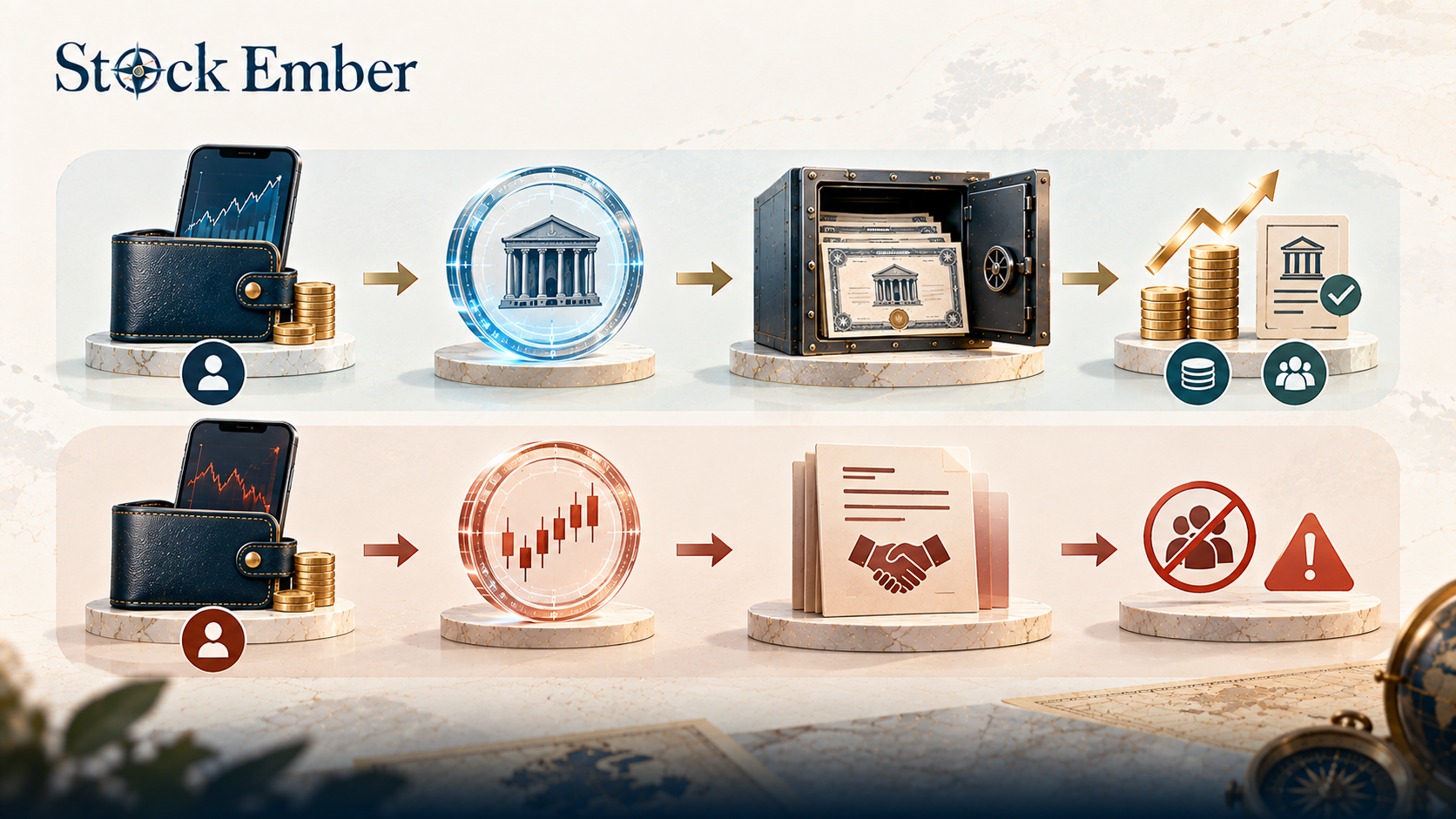
A genuine tokenized stock maintains direct 1-to-1 backing with actual company shares held in a regulated trust or custodial vault. You possess enforceable legal rights to the underlying asset, including corporate voting privileges and bankruptcy protections if the broker fails.
In contrast, synthetic derivatives are purely financial contracts issued by platforms to track a stock price index. Synthetic tokens do not purchase real underlying corporate shares. Holders possess no voting rights, no direct claim on corporate assets, and carry high counterparty risk if the issuing exchange becomes insolvent.
Benefits and Market Realities: 24/7 Trading and Fractional Access
Proponents highlight several structural benefits associated with equity tokenization:
Round-the-Clock Market Access: Traditional equity exchanges close on weekends and holidays. Blockchain ledgers run continuously, enabling potential 24/7 trading flexibility.
Granular Fractional Ownership: Smart contracts support small fractional increments, allowing investors to purchase small dollar amounts of high-priced equities without high minimum purchase floors.
However, practical market realities limit these advantages. Nonstop trading relies on deep liquidity from buyers and sellers. During overnight hours or weekends, trading volume on tokenized venues remains thin. Thin order books lead to wider bid-ask spreads, meaning you may pay a higher price when buying or receive less when selling off-hours.
Additionally, banking payment rails do not settle fiat money around the clock in every jurisdiction, creating settlement gaps between instant crypto ledgers and traditional bank transfers.
Over a ten-year holding period, recurring trading costs matter far more than instant execution speed. If wide bid-ask spreads during off-hours trading take a 0.50% toll on every transaction, those friction points compound over ten years into thousands of dollars taken out of your total wealth accumulation.
Key Risks and What Investors Should Check
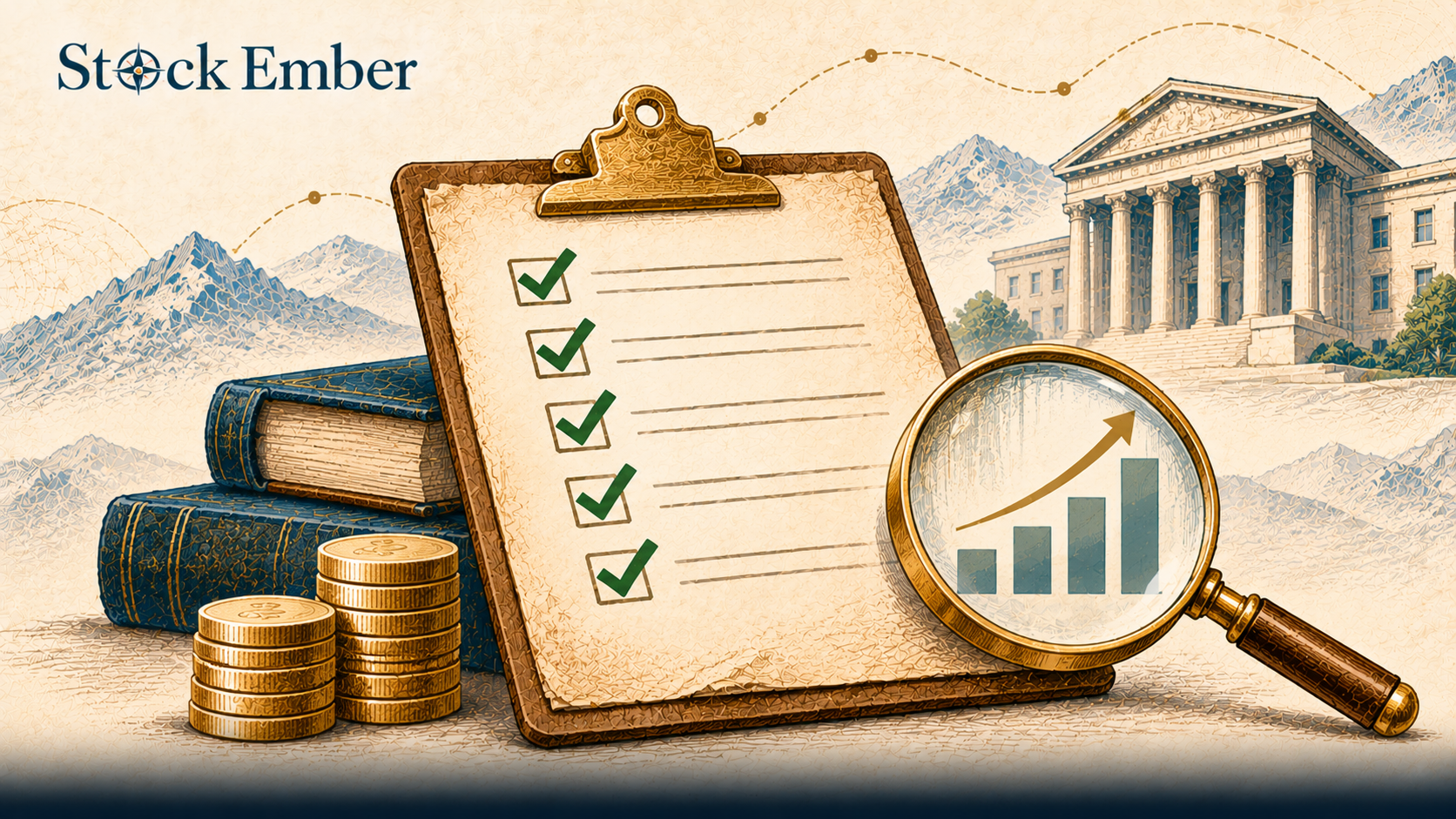
Before engaging with any tokenized asset platform, investors must evaluate four major risk areas:
Venue Regulation and Registration: Confirm whether the trading platform is registered with appropriate regulatory authorities, such as the SEC or FCA. Unregulated offshore exchanges offering "stock tokens" frequently operate without investor protection funds or legal recourse.
Custody and Insolvency Risk: Verify where the physical stock shares reside. If underlying shares are held in a segregated trust account, investor assets remain protected during platform bankruptcy. If held on the platform's balance sheet, token holders become unsecured creditors.
Smart Contract and Technical Vulnerabilities: On-chain tokens rely on computer code. Bugs or exploits in smart contract code can lead to frozen funds or unauthorized token transfers.
Liquidity and Spread Risk: Trading tokenized shares outside standard exchange hours often subjects orders to wider pricing spreads and elevated volatility compared to primary exchanges like the NYSE or Nasdaq.
Conclusion
Tokenized stocks offer a modernized method for recording asset ownership and settling transactions using blockchain ledgers. The SEC's September 17, 2026 Innovation Exemption provides a structured, conditional environment for regulated venues to test these mechanisms while preserving fundamental investor protections.
For long-term buy-and-hold investors, tokenization is an evolution in backend market infrastructure rather than a new investment asset class. The underlying economic reality of business ownership remains unchanged: long-term compound growth depends on corporate earnings, dividend durability, and competitive valuation, not the speed of the settlement ledger.
When you are ready to evaluate platforms and account options for long-horizon wealth building, our Broker reviews provide detailed breakdowns of regulated investment providers.
Investing in equities involves risk, including the possible loss of principal, and historical market returns do not guarantee future performance. Treat this guide as an educational foundation for evaluating emerging market structures rather than individualized financial advice.
FAQ
5 questions
What is a tokenized stock?
A tokenized stock is a digital token minted on a blockchain ledger that represents ownership of an underlying share of stock in a publicly traded company. It bridges traditional equity ownership with digital ledger technology.
Did the SEC approve tokenized stocks?
On September 17, 2026, the SEC issued a temporary Innovation Exemption allowing select regulated venues to facilitate tokenized stock trading under strict conditions, including mandatory corporate notice and equivalent shareholder rights.
Are tokenized stocks the same as real stocks?
Genuine tokenized stocks are legally classified as securities and grant identical rights, such as dividend payouts and corporate voting power, as traditional shares held through a brokerage.
Can tokenized stocks trade 24/7?
Blockchain networks operate continuously, allowing potential 24/7 trading. However, real-world off-hours trading remains limited by thin market liquidity, wider bid-ask pricing spreads, and traditional banking payment rail schedules.
What are the main risks of tokenized stocks?
Primary risks include trading on unregulated platforms, counterparty risk if underlying shares are not held in a segregated trust, smart contract software bugs, and lower liquidity during non-standard trading hours.
Disclaimer
This guide was written with AI assistance and reviewed by the StockEmber editorial team for accuracy. StockEmber provides independent education, not personal financial advice. Investing puts your capital at risk: the value of investments can go down as well as up, you may get back less than you invest, and past performance doesn’t guarantee future results. Some links may support our work at no additional cost to you.
The StockEmber Team is our in-house desk of independent research writers. We test brokerage platforms, read the fine print on fees and custody, and cover ETFs and long-horizon investing for people who plan to hold for decades — not days.