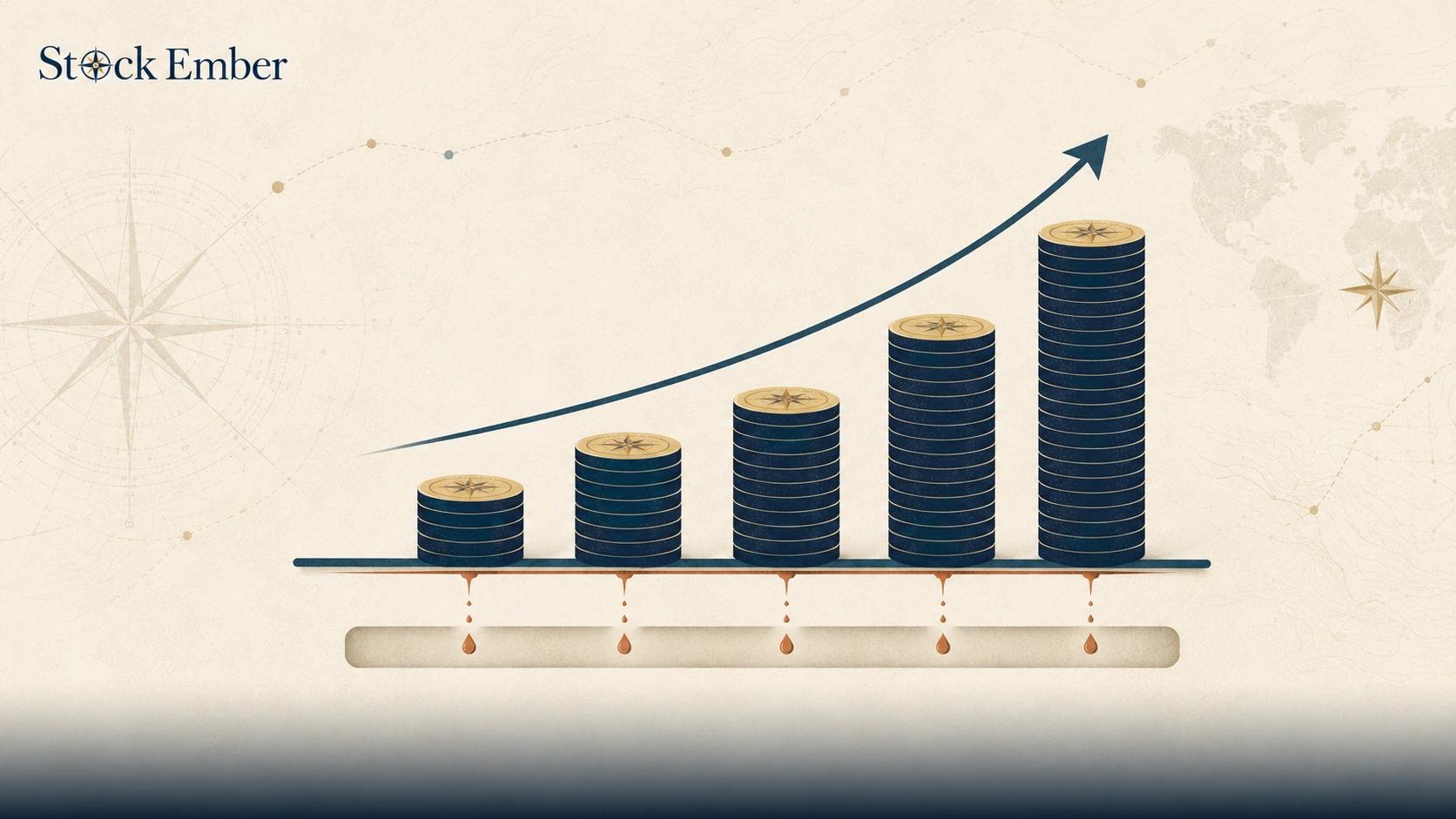
A redemption fee is a short-term trading charge collected by a mutual fund when an investor sells shares within a specified holding window, usually 30 to 90 days. Unlike broker commissions, the fee goes directly back into the fund pool to offset trading expenses and protect remaining long-term shareholders.
A redemption fee is a charge that a mutual fund collects when an investor sells shares before holding them for a minimum required period, usually between 30 and 90 days.
If you sell mutual fund shares shortly after buying them, this cost can catch you off guard. While any added expense seems unwelcome at first, these short-term trading fees serve a specific purpose in pooled portfolios. This guide explains how redemption fees work, how they differ from broker commissions, and why they help protect buy-and-hold investors.
Quick Takeaways
01Redemption fees apply only when you sell fund shares before a specified holding window, typically 30 to 90 days.
02Money collected from these penalties goes directly back into the fund pool to cover trading costs, not to the fund manager or broker.
03Under SEC Rule 22c-2, short-term trading charges are capped at a maximum of 2.00% of the redeemed amount.
04Long-term buy-and-hold investors rarely incur these costs and benefit from the protection they offer against frequent trading.
What Is a Mutual Fund Redemption Fee?
A mutual fund redemption fee is a penalty charged to shareholders who sell, or redeem, their fund shares before a minimum holding period has passed. Most mutual fund companies set this holding window between 30 and 90 days, though some specialized funds extend it up to 180 days or longer.
The primary target of this rule is short-term trading. When investors move cash in and out of a portfolio rapidly, the fund manager must constantly buy and sell underlying holdings to accommodate those transactions. That trading creates brokerage commissions, bid-ask spread expenses, and potential tax consequences for every other shareholder in the pool.
To keep these costs from hurting long-term investors, the U.S. Securities and Exchange Commission (SEC) enacted Rule 22c-2. According to the SEC, funds may charge short-term trading fees up to a maximum limit of 2.00% of the dollar amount redeemed. You can always find the exact fee percentage and required holding timeframe in the fund's formal prospectus.
How a Redemption Fee Works (And Where the Money Goes)
Understanding what is a redemption fee requires looking at where the collected money actually ends up. Unlike sales commissions or management fees, this charge is not paid to a broker, financial advisor, or investment manager. Instead, the entire fee is deposited directly back into the fund’s asset pool.
When you liquidate shares early, the fund administrator calculates the fee as a percentage of the total share value you sell.
For example, suppose you invest $10,000 into a mutual fund with a 1.00% fee on shares sold within 60 days. If you decide to sell all your shares 20 days later, the fund retains $100 and remits $9,900 to your account.
Because that $100 stays inside the fund pool, it offsets the trading and administrative expenses caused by your quick exit. Remaining shareholders do not have to absorb the costs of your short-term trade.
Redemption Fee vs. Back-End Load: What's the Difference?
Redemption fees are often confused with back-end sales loads, but they serve completely different roles in mutual fund fees. A back-end load—officially known as a Contingent Deferred Sales Charge (CDSC)—is a sales commission paid to the broker who sold you the fund. It typically applies to Class B or Class C shares and decreases over several years until it reaches zero.
In contrast, a short-term exit charge applies for a short window (usually months, not years), and zero percent of the money goes to a broker.
Importantly, even no-load funds can charge redemption fees. A fund labeled "no-load" simply means it charges no upfront or back-end sales commissions. Because these operational costs cover trading friction rather than broker compensation, they do not violate a fund's no-load status.
Fee Type
Who Receives the Fee?
Primary Purpose
Typical Duration
Redemption Fee
The mutual fund pool
Offsets trading costs caused by short-term traders
30 to 90 days
Back-End Load (CDSC)
The broker or selling agent
Pays sales commission for marketing the fund
1 to 6 years
Expense Ratio
The fund management company
Pays annual operational and management costs
Ongoing (yearly)
Why Redemption Fees Protect Long-Term Investors
For a buy-and-hold investor with a 10-year horizon, redemption fees are actually a helpful protective feature.
When active traders enter and exit a mutual fund quickly, they force the portfolio manager to take two actions that drag down overall performance:
Holding extra cash: Managers must keep a portion of the fund in cash to cover potential redemptions, leaving less money invested in growing assets.
Selling assets at bad times: Rapid cash outflows can force managers to sell stocks or bonds during market downturns to raise quick cash, locking in losses for everyone.
Over a 10-year holding period, these unnecessary trading friction costs add up.
By placing a small cost on short-term exits, these penalties discourage market timers and protect the compound growth of patient shareholders.
Common Pitfalls and How to Avoid Early Exit Penalties
Avoiding redemption fees is straightforward if you plan ahead and track your purchase dates. Consider these practical habits:
Use FIFO accounting for partial sales: Most fund companies use First-In, First-Out (FIFO) accounting when you sell a portion of your holdings. This means your oldest shares—which are most likely past the redemption fee window—are sold first.
Avoid frequent rebalancing: Rebalancing your portfolio every few weeks can accidentally trigger unexpected charges if you sell recently acquired shares. Limit portfolio rebalances to annual or semi-annual schedules.
Check the fund prospectus before buying: Review the fee table in the fund prospectus to confirm the required holding period before making short-term cash allocations.
If you know you might need cash within a few weeks or months, a high-yield savings account or money market fund is usually a safer fit than a mutual fund with a short-term trading penalty.
Conclusion
This short-term penalty is designed to deter rapid trading and protect remaining fund shareholders. By returning fee proceeds directly to the asset pool, these mechanisms ensure that short-term traders—not patient buy-and-hold investors—pay for portfolio friction. Because these fees expire after a few months, long-term investors can easily avoid them altogether.
When you are ready to evaluate how different costs impact your investment growth, our financial calculators can help you model your long-term returns. Investing always carries risk and past performance does not guarantee future results, so use this guide as an educational starting point for your research.
FAQ
4 questions
What is a mutual fund redemption fee?
A redemption fee is a penalty charged by a mutual fund company to shareholders who sell their shares shortly after purchasing them, typically within a 30- to 90-day window.
What is the main purpose of charging a redemption fee?
Fund managers use redemption fees to discourage short-term market timing and protect long-term shareholders from the high transaction costs caused by frequent trading activity.
Where do the proceeds from redemption fees go?
Unlike sales commissions paid to brokers, redemption fee proceeds go directly back into the mutual fund's asset pool to offset trading expenses for remaining investors.
How can long-term investors avoid paying redemption fees?
You can easily avoid these fees by holding your fund shares past the mandatory holding period or by choosing exchange-traded funds (ETFs), which generally do not charge early exit fees.
Disclaimer
This guide was written with AI assistance and reviewed by the StockEmber editorial team for accuracy. StockEmber provides independent education, not personal financial advice. Some links may support our work at no additional cost to you.
The StockEmber Team is our in-house desk of independent research writers. We test brokerage platforms, read the fine print on fees and custody, and cover ETFs and long-horizon investing for people who plan to hold for decades — not days.