A no-load fund is a mutual fund that does not charge sales commissions when shares are purchased or sold. Investors purchase shares directly at net asset value, ensuring their full principal is invested without upfront or back-end broker fees. However, no-load funds still charge ongoing annual expense ratios to cover fund operating expenses and management costs.
A no-load fund is a mutual fund sold without a sales commission or sales charge when you buy or redeem shares. Investors buy and sell shares directly at their net asset value without paying a broker fee.
Avoiding upfront sales commissions keeps more of your principal working from day one. However, skipping sales charges does not mean an investment is free of annual operating costs. This guide breaks down how no-load mutual funds function, why ongoing annual fees matter more over ten years, and how to spot hidden operational expenses before buying.
Quick Takeaways
01A no-load fund charges zero upfront or back-end sales commissions, allowing 100% of your money to be invested immediately.
02"No load" does not mean fee-free, as all funds charge annual expense ratios to cover operating expenses and management fees.
03Regulations allow funds to charge up to 0.25% per year in 12b-1 marketing fees while keeping the no-load label.
04Over a ten-year holding period, a fund with a high annual expense ratio often costs far more than a fund with a one-time sales load.
What Is a No-Load Fund?
A no-load fund is an open-end mutual fund that does not charge a sales commission (or "load") at the time of purchase or redemption. When asking what is a no load fund, the key detail is that every dollar you invest goes straight into purchasing shares at the fund's current net asset value (NAV).
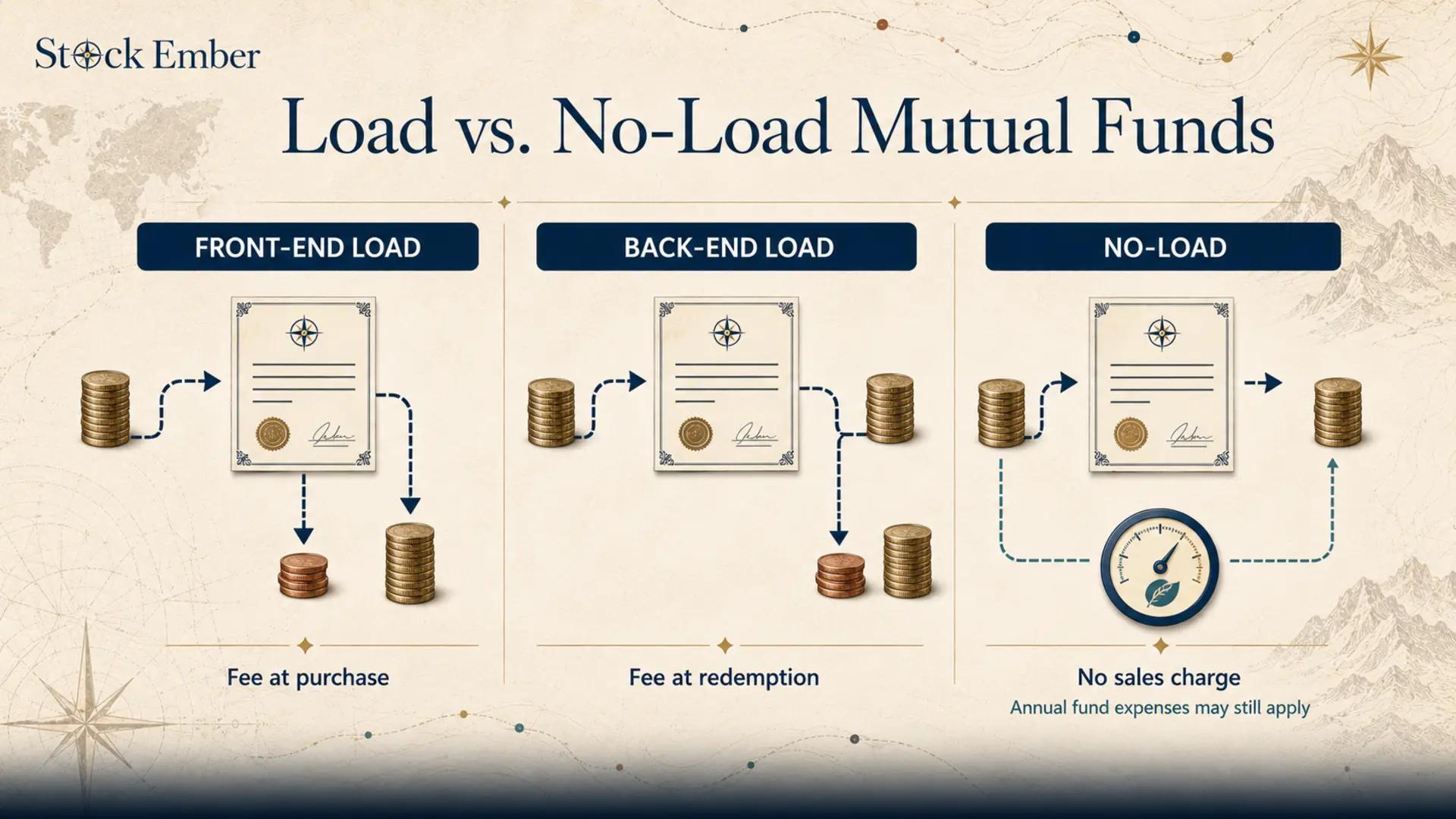
If you are exploring what is a no load mutual fund, it helps to understand that sales charges traditional brokers collect—known as front-end or back-end loads—are completely omitted. In a traditional loaded fund charging a 5% front-end load, an initial $10,000 investment immediately drops to $9,500 after paying the salesperson. In a no-load fund, the full $10,000 goes directly into the underlying portfolio.
How No-Load Mutual Funds Work
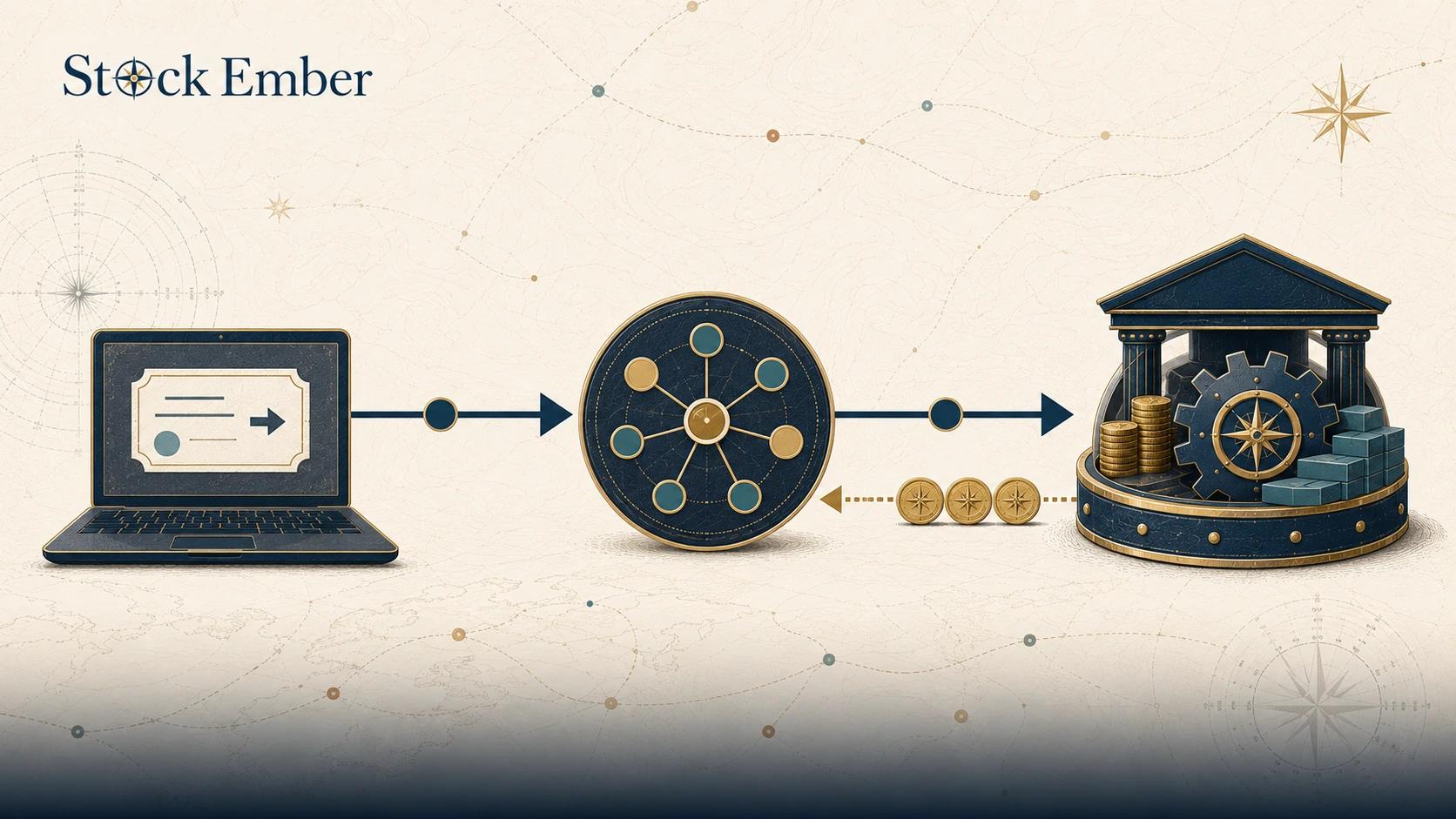
No-load mutual funds operate by distributing shares directly to investors through fund companies or discount brokerages without intermediary commissions. Instead of paying a salesperson a 3% to 5% commission, you purchase shares directly at net asset value.
Infographic showing the fee structure differences between load funds and no-load funds.
However, distribution models still require funding. Under rules monitored by the SEC, a fund can market itself as a no-load fund as long as its annual 12b-1 distribution fee does not exceed 0.25% of average net assets. While skipping upfront loads preserves capital on day one, sales charges are only a single component of total mutual fund fees.
Why Sales Charges Matter Less Than 10-Year Ongoing Costs
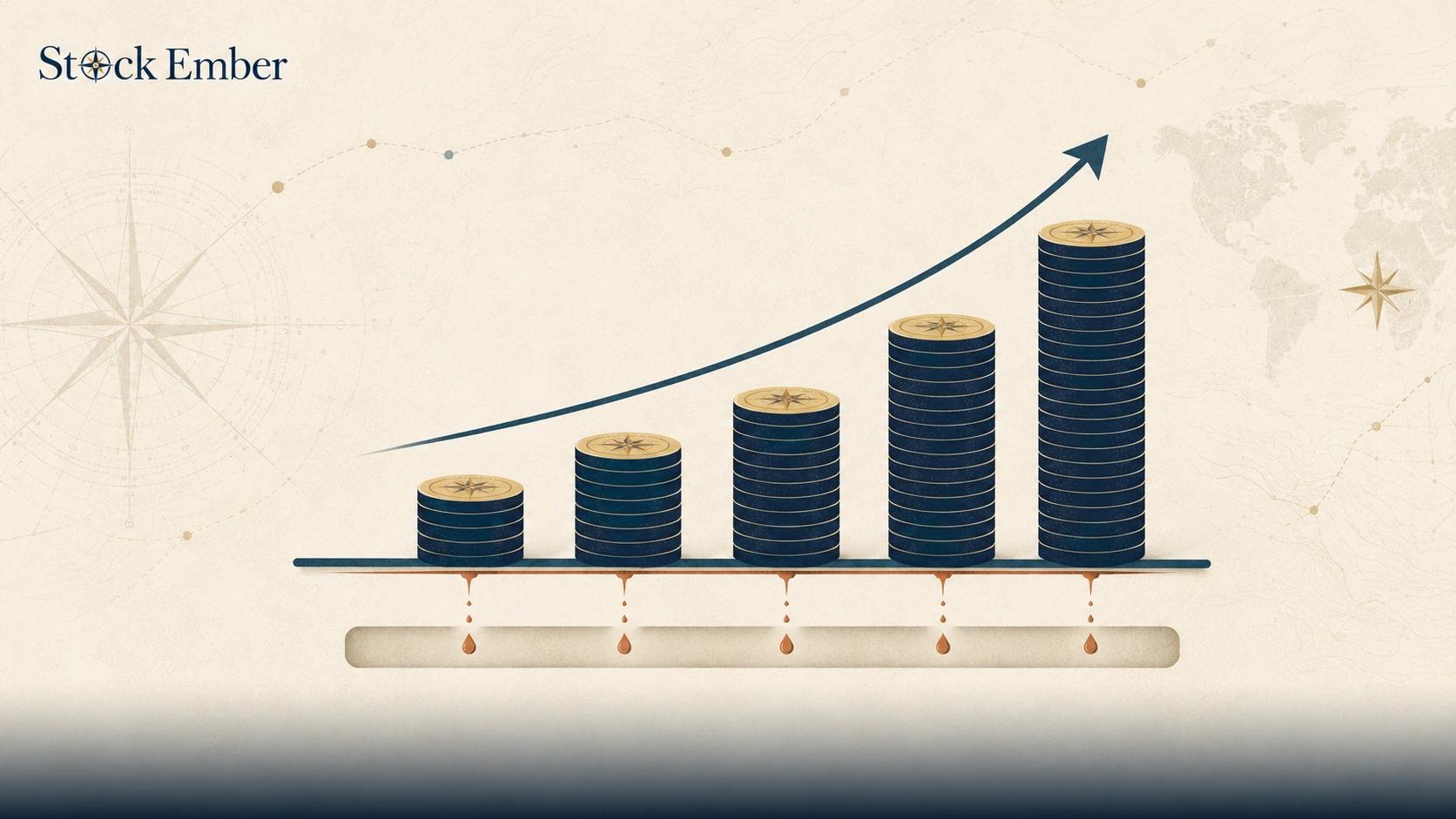
Ongoing annual expense ratios impact portfolio growth far more than one-time sales commissions over a ten-year horizon. A one-time load reduces your starting capital once, but an annual expense ratio drains returns every single year you hold the investment.
Consider two hypothetical $10,000 investments held for 10 years, assuming a 7% average annual gross return before fees:
Fund A (5% Front-End Load, 0.10% Expense Ratio): You pay $500 upfront, so $9,500 is invested. After 10 years at a net 6.90% annual return, your portfolio grows to roughly $18,510.
Fund B (No-Load, 1.25% Expense Ratio): The full $10,000 is invested on day one. But after 10 years at a net 5.75% annual return, your portfolio grows to roughly $17,490.
Despite the upfront $500 sales charge on Fund A, Fund B leaves you with over $1,000 less at year ten due to the continuous compounding drag of its 1.25% annual expense ratio.
Hidden Costs in "No-Load" Funds: What to Watch
Investors in no-load funds can still face hidden expenses from high annual operating ratios, rapid trading turnover, and platform transaction costs. The "no-load" label only guarantees the absence of sales commissions, not the absence of operational friction.
High Expense Ratios: Actively managed funds pass along research and management salaries through higher annual expense ratios, sometimes exceeding 1.00% annually.
Internal Portfolio Drag: When a fund manager frequently buys and sells holdings, high portfolio turnover (INTERNAL: portfolio-turnover) generates hidden trading commissions and bid-ask spreads (the price difference between buying and selling securities) inside the fund.
Redemption Charges: Some funds charge early redemption fees (e.g., 1% to 2%) if you sell shares within 30 to 90 days of purchase to discourage short-term trading.
Conclusion
Choosing a no-load fund is a sensible way to prevent brokers from skimming sales commissions off your investment capital. However, avoiding sales loads is only the first step in managing long-term investment costs. Evaluating a fund's annual expense ratio, turnover rate, and internal operating costs gives you a complete picture of total ownership cost.
When estimating how recurring operational charges impact your portfolio over time, our investing calculators can help you model compounding fee drag. Investing always puts capital at risk and past returns never promise future growth, so treat cost analysis as a starting point for your own research rather than personal financial advice.
FAQ
3 questions
Does buying a no-load fund mean there are zero total costs?
No. While you avoid sales commissions, you still pay ongoing operational costs, such as the fund's annual expense ratio and management fees.
How do no-load funds benefit long-term compound growth?
Because 100% of your initial capital goes to work immediately without upfront commission deductions, more money stays invested to compound over time.
Can a mutual fund charge marketing fees and still be called a no-load fund?
Yes, provided its annual 12b-1 marketing and distribution fee does not exceed 0.25% of the fund's average net assets under FINRA regulations.
Disclaimer
This guide was written with AI assistance and reviewed by the StockEmber editorial team for accuracy. StockEmber provides independent education, not personal financial advice. Some links may support our work at no additional cost to you.
The StockEmber Team is our in-house desk of independent research writers. We test brokerage platforms, read the fine print on fees and custody, and cover ETFs and long-horizon investing for people who plan to hold for decades — not days.