A platform fee is an administration or custody charge collected by an investment broker for hosting your account, maintaining digital infrastructure, and safeguarding your assets. Unlike fund expense ratios or per-trade commissions, platform fees pay strictly for account administration. Brokers charge these fees as either a percentage of assets under management or a fixed flat monthly rate.
A platform fee is an administration or custody charge collected by an investment broker for hosting your account, keeping your assets secure, and maintaining their record-keeping platform.
When you invest in stocks or exchange-traded funds (ETFs), it is easy to focus strictly on fund performance or fund-level management expenses. However, account custody costs quietly eat away at your account balance year after year. Understanding how a platform fee (sometimes searched as what is platform fee) works helps you protect your compounding wealth over a 10-year horizon.
Quick Takeaways
01A platform fee is a recurring charge paid to an investment broker for holding your assets, maintaining digital infrastructure, and managing account administration.
02Platform fees are entirely separate from fund expense ratios, which pay the fund manager, and trading commissions, which cover execution.
03Brokers structure platform charges as either a percentage of your total asset value or a fixed flat monthly fee.
04Over a 10-year period, even a modest percentage platform fee can reduce total portfolio growth by thousands of dollars through lost compounding power.
What Is a Platform Fee in Investing?
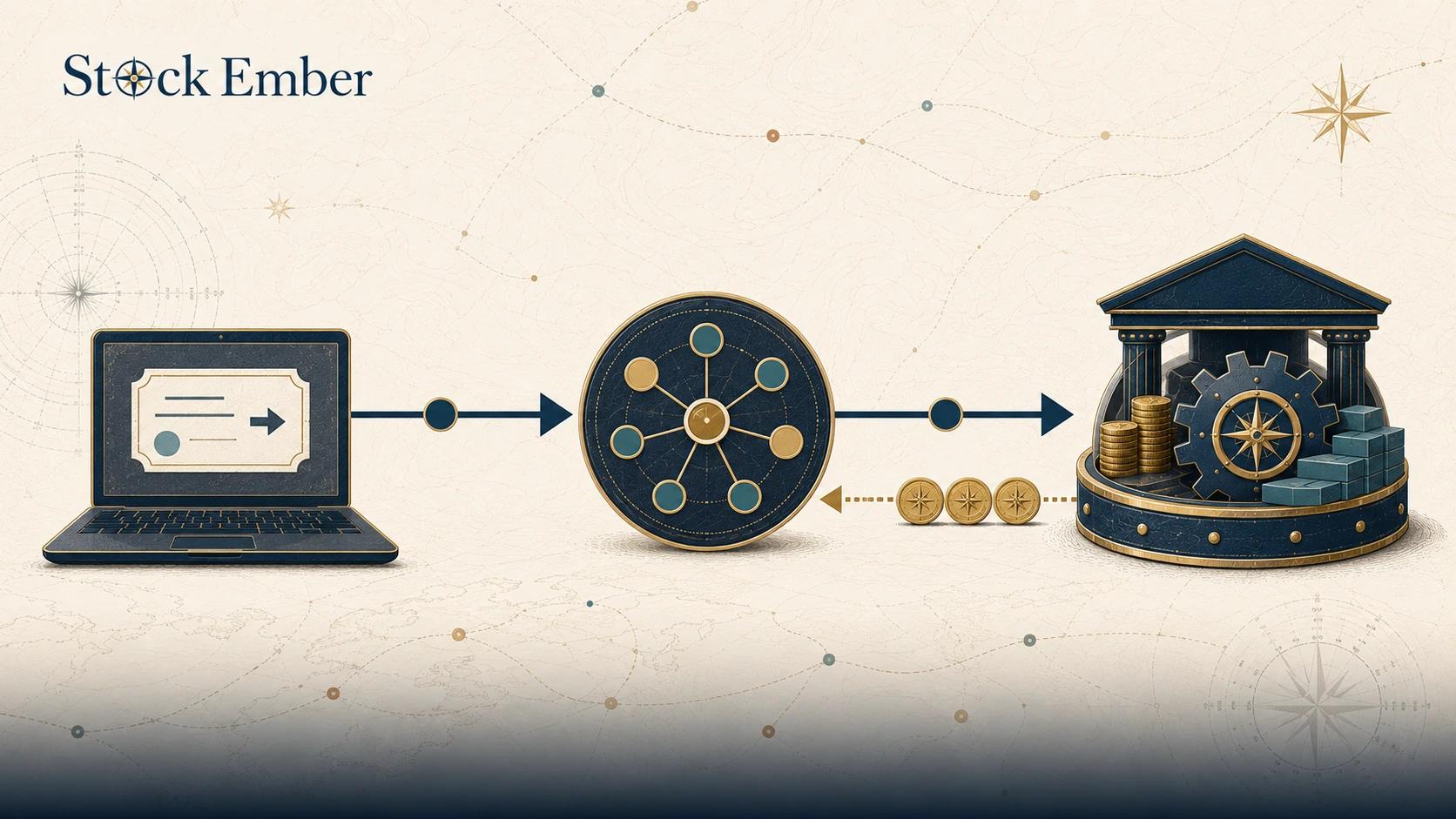
A platform fee—also referred to as an account administration or custody fee—is the price you pay an investment broker to host your portfolio, safeguard your assets, and process your transactions.
To understand platform fee meaning in everyday investing, think of it as paying rent for the digital infrastructure that stores your assets. When exploring what are platform fees, investors quickly see that brokers collect these funds to cover critical back-office functions:
Digital Custody & Asset Security: Storing your securities safely with regulated, government-approved custodians (called qualified depositories) and maintaining client asset protection protocols.
Account Maintenance & Software: Developing digital platform portals, mobile applications, and trading tools.
Customer Support: Running compliance, identity verification, and client service desks.
Without a platform, you cannot buy, sell, or hold public equities or funds. However, how a platform calculates this fee drastically changes how much money stays in your portfolio over time.
Platform Fees vs. Expense Ratios and Trading Commissions
Understanding what is a platform fee is the essential first step toward calculating your true total cost of ownership — because platform costs sit in a separate layer from both fund expenses and trading commissions.
A platform fee is paid directly to your brokerage for maintaining your account, making it distinct from internal fund expenses and individual transaction costs.
To evaluate your total cost of ownership, you need to separate three distinct fee layers:
Fee Layer
Who Receives It
What It Covers
How It Is Charged
Platform Fee
The Investment Broker
Account administration, custody, software, and reporting.
Percentage of assets or flat monthly fee.
Expense Ratio
The ETF / Fund Manager
Portfolio management, fund operations, and compliance.
Internal deduction from fund net assets.
Trading Commission
The Broker / Market Venue
Executing individual buy or sell transactions.
Per-trade fee or indirect bid-ask spread (the small gap between the buying price and selling price of a security, which acts as a hidden transaction cost)
Confusing these layers can distort your total investment costs. For example, selecting an ETF with a rock-bottom expense ratio does not shield you from paying an expensive platform custody fee to your broker. To see how these charges combine, review our detailed guide to overall investment fees.
Flat Fee vs. Percentage Fee: How Platform Pricing Works
Investment platforms charge for administration using either a percentage-based model tied to your portfolio balance or a fixed flat-rate monthly fee.
Understanding how these pricing structures differ is vital when choosing an administration model for long-term holding:
1. Percentage-Based Platform Fees
Under a percentage structure, the broker charges a fixed annual fee based on your total Assets Under Management (AUM)—typically ranging between 0.15% and 0.45% per year — though rates vary significantly between platforms, so always verify the current fee schedule directly with your broker before investing..
Pros: Very affordable for small portfolios (e.g., 0.25% on $2,000 is only $5.00 per year).
Cons: Scales up proportionally as your portfolio grows — a larger balance generates a higher dollar fee each year, quietly eroding the compounding power your wealth would otherwise accumulate over time.
2. Flat / Fixed-Rate Platform Fees
Under a flat-rate model, the platform charges a set dollar amount each month or quarter (e.g., $10 per month or $120 per year), regardless of portfolio size.
Pros: Highly cost-effective for mature, larger portfolios, effectively capping your administration overhead.
Cons: Punitively expensive for small portfolios (e.g., $120 annual fee on a $2,000 balance equals a staggering 6.00% annual cost drag).
The 10-Year Cost Lens: How Platform Fees Compound Against You
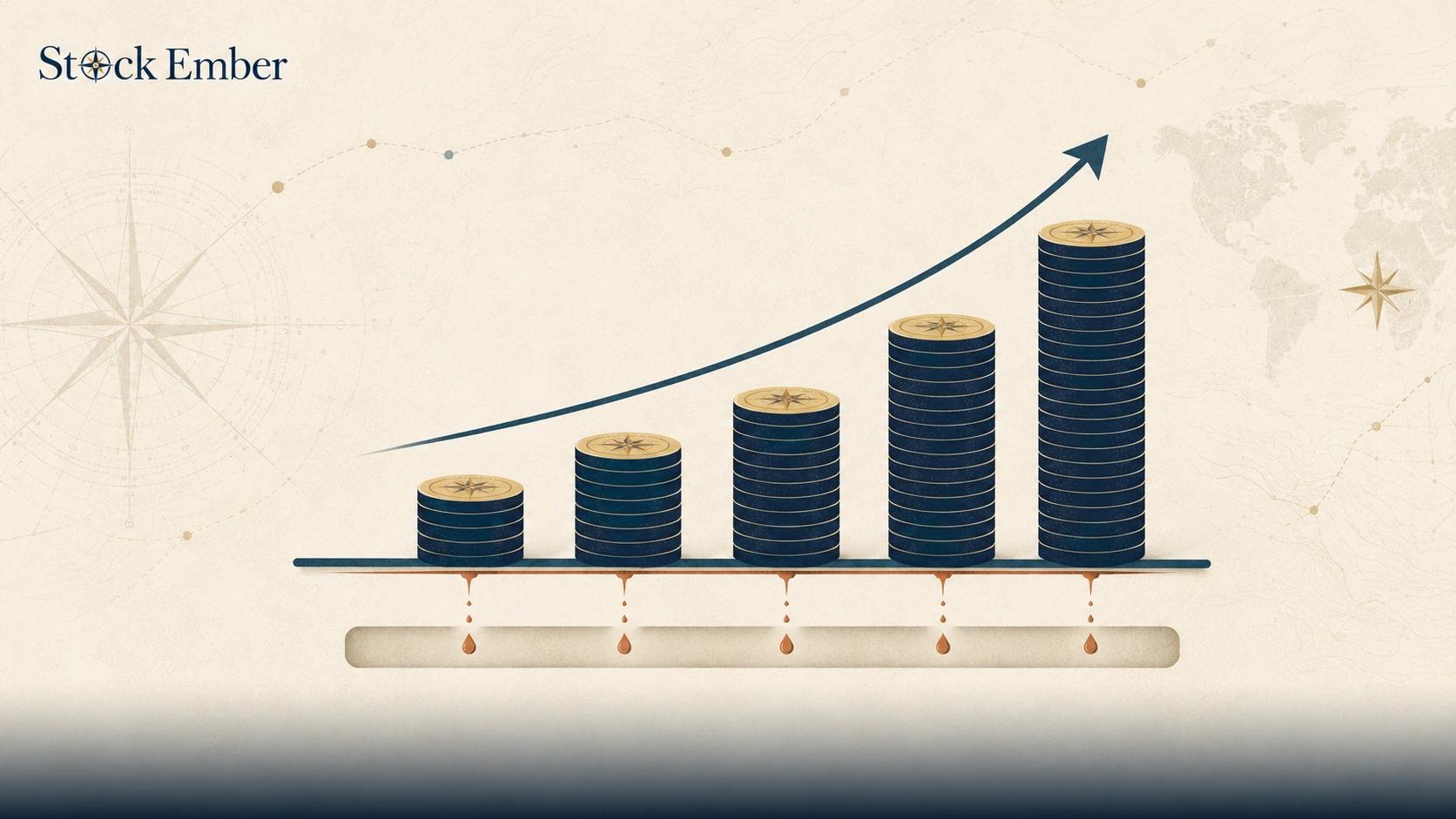
A recurring percentage platform fee compounds negatively against your wealth over time by removing capital that would otherwise generate long-term investment returns.
Fees act like compound returns in reverse. Money paid out in administration costs is money that can no longer earn dividend income or market growth over the next decade.
Consider an illustrative example of a buy-and-hold index portfolio:
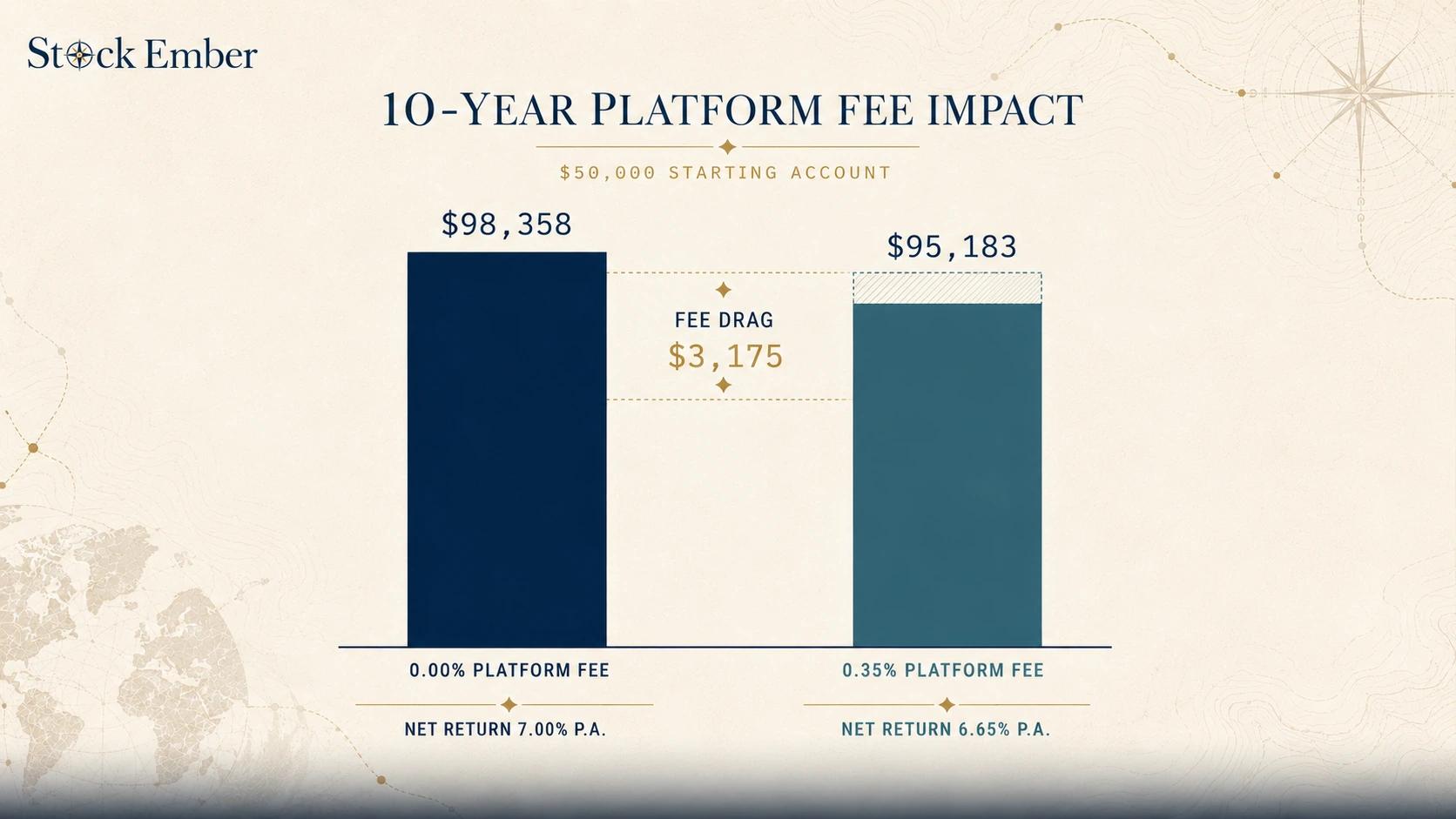
Option A (0.00% Platform Fee): At a net 7.00% annual return, your $50,000 grows to roughly $98,358 after 10 years.
Option B (0.35% Annual Platform Fee): At a net 6.65% annual return, your $50,000 grows to roughly $95,183 after 10 years.
That seemingly modest 0.35% platform fee costs you $3,175 over a single decade. Over a 20- or 30-year horizon, that fee drag expands exponentially, taking a substantial chunk of your final nest egg.
How Platform Fees Are Deducted (and What to Watch For)
Brokers typically deduct platform fees directly from your uninvested account cash on a monthly or quarterly schedule, or liquidate fractional shares if cash balances are insufficient.
When monitoring your account administration, keep an eye out for three common operational friction points:
Cash Drag: If your broker requires you to maintain a cash balance to cover quarterly administration fees, that cash earns minimal interest instead of working in the market.
Tiered Thresholds: Some brokers offer lower percentage fees once your portfolio crosses specific financial milestones (e.g., 0.35% on the first $100,000, dropping to 0.20% on assets above $100,000).
Minimum Inactivity Charges: Certain platforms impose monthly account maintenance minimums if you do not perform a minimum number of trades, punishing long-term buy-and-hold investors.
Conclusion
Platform fees represent the basic cost of admission for holding investments digitally, but their long-term impact depends heavily on your portfolio size and fee structure. Separating platform custody costs from fund-level expense ratios gives you complete clarity over your true cost of ownership. Ultimately, knowing what is a platform fee — and which pricing structure aligns with your portfolio size — is one of the most impactful cost decisions a self-directed investor can make before choosing a broker. Evaluating fee drag across a 10-year timeline ensures small recurring deductions do not silently derail your compounding goals.
When you are ready to model how these administration costs affect your wealth accumulation over time, our investment fee calculators provide an easy way to compare fee structures.
FAQ
4 questions
Is a platform fee the same as an expense ratio?
No. A platform fee is paid directly to your brokerage for maintaining your account, providing digital infrastructure, and managing custody. An expense ratio is an internal fee deducted by an ETF or mutual fund manager to cover the operating costs of managing the underlying fund assets. You pay both when investing through a broker.
Are flat platform fees better than percentage platform fees?
It depends on your total portfolio balance. Percentage platform fees are generally more cost-effective for smaller starting accounts because the fee scales down with lower asset values. Flat monthly fees are better for larger, mature portfolios because the fixed cost remains capped as your asset base grows, reducing your overall percentage drag.
How do brokers deduct platform fees from an account?
Most investment brokers deduct platform fees directly from the uninvested cash balance in your account on a monthly or quarterly basis. If your account lacks sufficient uninvested cash to cover the fee, the platform may automatically sell fractional shares of your holdings to settle the outstanding administration charge.
What is cash drag caused by platform fees?
Cash drag occurs when an investor keeps uninvested cash sitting idle in their brokerage account specifically to cover upcoming quarterly or annual platform administration fees. Because that cash is not invested in equities or earning competitive yield, it misses out on long-term market compounding, slightly reducing total return potential.
Disclaimer
This guide was written with AI assistance and reviewed by the StockEmber editorial team for accuracy. StockEmber provides independent education, not personal financial advice. Some links may support our work at no additional cost to you.
The StockEmber Team is our in-house desk of independent research writers. We test brokerage platforms, read the fine print on fees and custody, and cover ETFs and long-horizon investing for people who plan to hold for decades — not days.