The choice between a mutual fund and an index fund is a comparison of asset management styles rather than distinct legal structures. An actively managed mutual fund employs human professionals to select individual securities to beat a market benchmark, whereas a passive index fund uses an automated algorithm to copy a benchmark's holdings exactly at a significantly lower cost.
A mutual fund is a pooled investment vehicle that aggregates capital from multiple individual investors to purchase a diversified portfolio of securities. When you evaluate a mutual fund vs index fund, the decision does not center on two entirely different legal entities, but rather on two fundamentally distinct philosophies of asset management: active human selection versus passive algorithmic replication. Choosing the correct path is one of the most critical structural decisions you will make to protect your long-term capital from unnecessary fee drag.
Many buy-and-hold investors confront this specific dilemma when selecting core holdings for a retirement shell or a traditional brokerage account. The strategy you implement dictates not only your day-to-day exposure to volatile asset classes but also the compounding costs that quietly absorb your wealth over a multi-decade horizon. This guide isolates the vehicle from the strategy, helping you identify which approach aligns with your structural goals.
Quick Takeaways
01The mutual fund vs index fund decision is primarily a comparison of active versus passive management styles.
02An index fund is an investment strategy, not a unique product wrapper; it can exist structurally as either a mutual fund or an ETF.
03Active mutual funds employ professional managers to select securities in an attempt to beat a benchmark, resulting in higher operational costs.
04Passive index funds systematically copy a target benchmark, passing the structural cost savings directly back to you.
05Minor differences in annual expense ratios compound aggressively over a ten-year horizon, reclaiming a substantial portion of your terminal wealth.
Mutual Fund vs Index Fund: The Structural Overlap
A mutual fund is a specific corporate and legal structure that pools investor capital to purchase underlying securities, settling its transactions at the conclusion of each trading day based on a calculated Net Asset Value (NAV). The industry frequently creates a category error by pitting mutual funds against index funds as if they were entirely separate species.
In reality, an index fund is simply an investment strategy, a mathematical ruleset designed to mirror a market benchmark like the S&P 500.
Because indexing is a strategy, it requires a structural vehicle to hold the assets. An index fund can be packaged inside a traditional mutual fund structure, or it can be packaged inside what is an etf. Therefore, when mainstream financial media contrasts a mutual fund vs index fund, they are actually contrasting an actively managed mutual fund with a passively managed index fund. One pays a human coordinator to make subjective judgments; the other employs a programmatic asset collector to follow a rigid script.
Active Selection vs. Passive Replication
Actively managed mutual funds rely on human portfolio managers and institutional research analysts to continuously analyze, select, and trade individual securities to outperform a target index. The active management thesis rests on human ingenuity: the belief that deep research, macroeconomic forecasting, and tactical timing can identify underpriced equities or shield a portfolio from cyclical market contractions.
Passive index funds operate on the exact opposite assumption. To understand what index funds are, you must visualize an automated mirror. A passive fund drops human intuition completely. If an equity accounts for exactly 4% of a broad market index, the fund's computer algorithm automatically allocates 4% of the fund’s assets to that specific security, regardless of market sentiment or economic projections.
This algorithmic mirroring applies systematically across all asset classes; just as an equity fund mirrors stock indices, exploring what is a bond etf highlights how fixed-income benchmarks are programmatically replicated without active manager intervention.
In practice, many long-term investors find that matching the market's steady, consistent trajectory via passive replication is far more reliable and significantly less exhausting than continuously evaluating active managers for sustained outperformance.
The 10-Year Cost Lens: How Fees Compound Against You
The structural mechanics of how a fund is managed dictate the baseline costs you must pay to hold it. Active management requires substantial institutional overhead, including analyst salaries, expensive corporate data access, and high internal transaction costs driven by frequent portfolio turnover. These expenses are calculated into the fund's annual expense ratio and deducted directly from your returns. Passive indexing eliminates almost all of this operational friction, allowing providers to charge nominal fractions of a percent.
When you examine the structural cost of investing, annual fee variances look deceptively small. However, over a multi-decade buy-and-hold horizon, fees compound against your principal with the exact same mathematical weight that returns compound for it.
Consider a standard long-term scenario illustrating the ten-year total cost of ownership (TCO) difference between an active mutual fund and a low-cost passive index fund:
Portfolio Component
Active Mutual Fund
Passive Index Fund
Initial Capital Investment
$100,000
$100,000
Assumed Gross Annual Market Return
8.0%
8.0%
Annual Expense Ratio (Fee Drag)
1.0%
0.1%
Net Compounding Annual Return
7.0%
7.9%
Terminal Portfolio Value (Year 10)
~$196,715
~$213,908
Wealth Lost to Compounded Fees
$17,193
$0 (Baseline Comparison)
A 1% annual management charge sounds harmless in an advertisement. But when held for a decade, that quiet percentage slice strips more than $17,000 out of your final wealth capital that is permanently prevented from compounding further. You are not merely losing the fee itself; you are losing everything that fee would have earned over the rest of your life.
Mutual Fund vs Index Fund: The Long-Term Performance Gap
Paying a premium for an active mutual fund would be logical if the manager consistently delivered outperformance ("alpha") sufficient to cover their elevated expense ratio. While some active managers achieve this over short periods, multi-decade data from sources such as the SPIVA Persistence Scorecard reveals that sustaining outperformance is statistically rare.
Year after year, institutional rating scorecards such as the SPIVA U.S. Scorecard (S&P Global, 2024) confirms that over holding periods of ten years or longer, the vast majority of actively managed large-cap mutual funds fail to beat standard passive indexes. By choosing an active fund, you are paying a structural premium for a management style that historically carries a high probability of underperforming a simple, automated computer program.
Common Traps: How to Invest Wisely
When organizing your personal portfolio architecture, look out for these specific behavioral and structural pitfalls:
Chasing Past Performance: Selecting an active mutual fund simply because it beat its benchmark last year is a classic recency bias. Active outperformance rarely persists, and yesterday’s winning manager frequently becomes tomorrow’s underperformer.
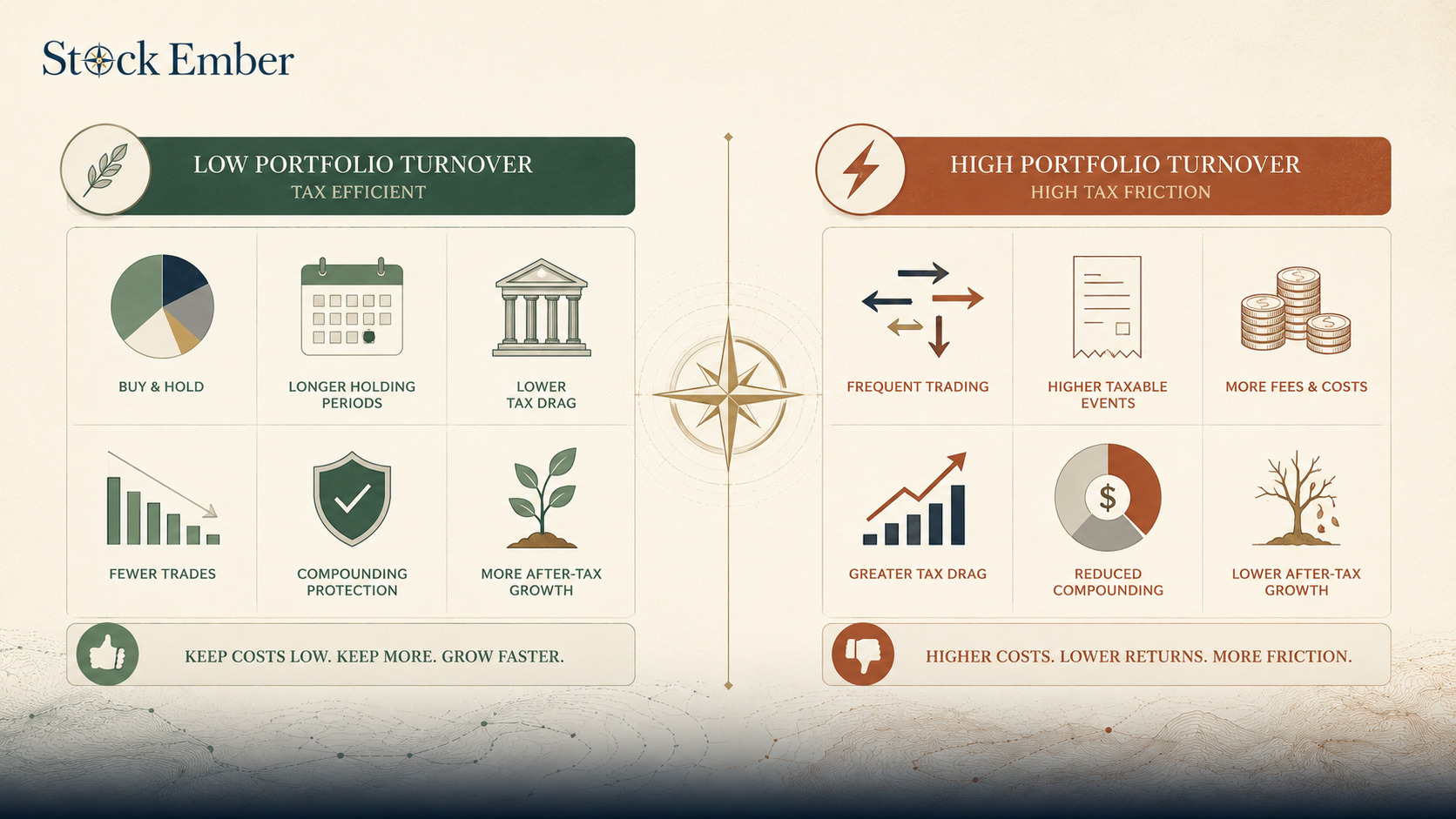
Tax Friction in Brokerage Accounts: Active mutual fund managers trade frequently, which triggers internal capital gains distributions. If you hold these funds inside a taxable account, you will face an annual tax bill on those gains, even if you never sold a single share of the fund itself. This structural friction is an essential variable when mapping out how to invest in mutual funds vs. how to invest in index funds.
Style Drift: Active managers can subjectively pivot their strategy to chase market trends, meaning the risk balance you originally selected can silently shift into a completely different risk profile over a long horizon.
When Active Strategies May Offer an Advantage
Passive index funds cannot sidestep broad market downturns, they are structurally required to hold every constituent of their benchmark. In niche asset classes, illiquid markets, or periods of severe market dislocation, a skilled active manager retains the flexibility to rotate defensively, reduce equity exposure, or target specific opportunities that a rules-based algorithm cannot. Investors with concentrated risk in specific sectors or those seeking downside mitigation may find targeted active strategies a complementary component of a diversified allocation, provided the manager's net-of-fee track record justifies the premium.
Diagram contrasting the transaction friction and tax events of active funds with the efficiency of index tracking
Conclusion
Deciding the mutual fund vs index fund question requires a clear-eyed choice between two paths: paying an operational premium to pursue market outperformance, or accepting a systematic, low-cost approach to tracking general economic growth over time. For long-horizon, buy-and-hold investors, the historical probability strongly balances in favor of broad market index strategies that structurally minimize fee drag. When you are ready to evaluate the specific low-cost vehicles required to anchor your personal asset allocation, our independent ETF reviews provide the ideal place to start.
FAQ
5 questions
Can a mutual fund also be an index fund?
Yes. A mutual fund is a legal vehicle that pools capital and settles transactions at the end of the day, while an index fund is an investment strategy. Therefore, an index fund can structurally exist packaged as either a traditional mutual fund or an exchange-traded fund (ETF).
Why do index funds typically have lower fees than active mutual funds?
Index funds require almost no human overhead or costly stock research because an algorithm handles the asset collection. Because they simply replicate an index rather than constantly trading to beat it, they avoid the heavy transactional and management expenses passed down by active managers.
Is an index fund safer than an actively managed mutual fund?
Neither option eliminates market risk. An index fund exposes you directly to the volatility of the entire underlying index, whereas an active mutual fund manager holds the ability to rotate sectors or raise cash during contractions, though history shows active managers rarely time these moves perfectly.
Do index funds outperform most active mutual funds over time?
Long-term empirical data consistently reveals that over holding horizons of a decade or longer, the vast majority of actively managed equity mutual funds fail to beat standard passive indexes after their high management fees are subtracted from performance.
How do I invest in index funds versus actively managed mutual funds?
To invest in either vehicle, you must open an investment shell such as a traditional brokerage account or a tax-advantaged retirement account (like an Individual Retirement Account (IRA) or 401(k)). From there, you can buy index funds or active mutual funds directly through your provider's platform.
Disclaimer
This guide was written with AI assistance and reviewed by the StockEmber editorial team for accuracy. StockEmber provides independent education, not personal financial advice. Some links may support our work at no additional cost to you.
The StockEmber Team is our in-house desk of independent research writers. We test brokerage platforms, read the fine print on fees and custody, and cover ETFs and long-horizon investing for people who plan to hold for decades — not days.