A ticker symbol is a standardized arrangement of letters or numbers assigned to a publicly traded security on a stock exchange. Investors and electronic trading systems use these unique identifiers to track pricing data and execute order requests accurately.
A ticker symbol is a unique arrangement of letters or numbers used to represent a specific publicly traded security on a financial exchange.
When you search for a stock or fund, relying on a full company name can lead to confusion because similar corporate names exist across global markets. Getting the ticker symbol right ensures your money flows into the exact security you intended to buy. This guide explains how ticker symbols work, how exchange conventions differ, and how to avoid costly order entry errors.
Quick Takeaways
01Ticker symbols act as universal identifiers for stocks, ETFs, and mutual funds across financial markets.
02Exchange conventions vary, using short letter arrangements in the US and numeric codes in many international markets.
03Share class suffixes distinguish between different voting rights or dividend structures of the same company.
04Double-checking ticker symbols before placing trades prevents costly execution errors in your portfolio.
What Is a Ticker Symbol?
A ticker symbol serves as a precise identifier for investments traded on public markets. Just as a postal code directs mail to a specific street address, a ticker symbol directs trading orders and pricing data to a specific security.
The term originates from 19th-century mechanical ticker tape machines. These early devices printed short letter codes alongside stock prices onto continuous ribbons of paper. The mechanical noise generated as the printer stamped each character created a ticking sound, giving rise to the name "ticker."
Today, modern electronic exchanges use these short symbols to route trillions of dollars in orders across global markets. Official definitions and trading frameworks maintained by the U.S. Securities and Exchange Commission ensure every listed asset maintains a distinct trading code.
How Stock Ticker Symbols Work
Understanding what is a stock ticker symbol requires looking at how different stock exchanges assign these shorthand identifiers. While all symbols serve the same tracking purpose, individual exchange rules dictate their exact length and structure.
In major US stock markets, symbol length historically signaled where a stock traded. Standard exchange conventions follow specific patterns:
Short Letter Tickers (1 to 3 letters): Traditionally associated with the New York Stock Exchange (NYSE), such as F for Ford Motor Company.
Four-Letter Tickers: Historically designated for companies listed on the Nasdaq exchange.
Five-Letter Tickers: Often denote mutual funds (which end in the letter 'X') or foreign stocks traded over-the-counter (OTC).
International stock exchanges use different identification methods. For instance, European and Asian markets often use numeric codes or exchange extensions instead of pure letter arrangements.
Share Classes and Ticker Suffixes
Companies sometimes issue multiple share classes, which appear as variations of the primary ticker symbol. For example, Alphabet trades under two main ticker symbols: GOOGL for Class A shares with voting rights, and GOOG for Class C shares with no voting rights. Similarly, Berkshire Hathaway offers Class A shares (BRK.A) and Class B shares (BRK.B) to allow investors access at different price points.
Ticker Symbols and Your Brokerage Account
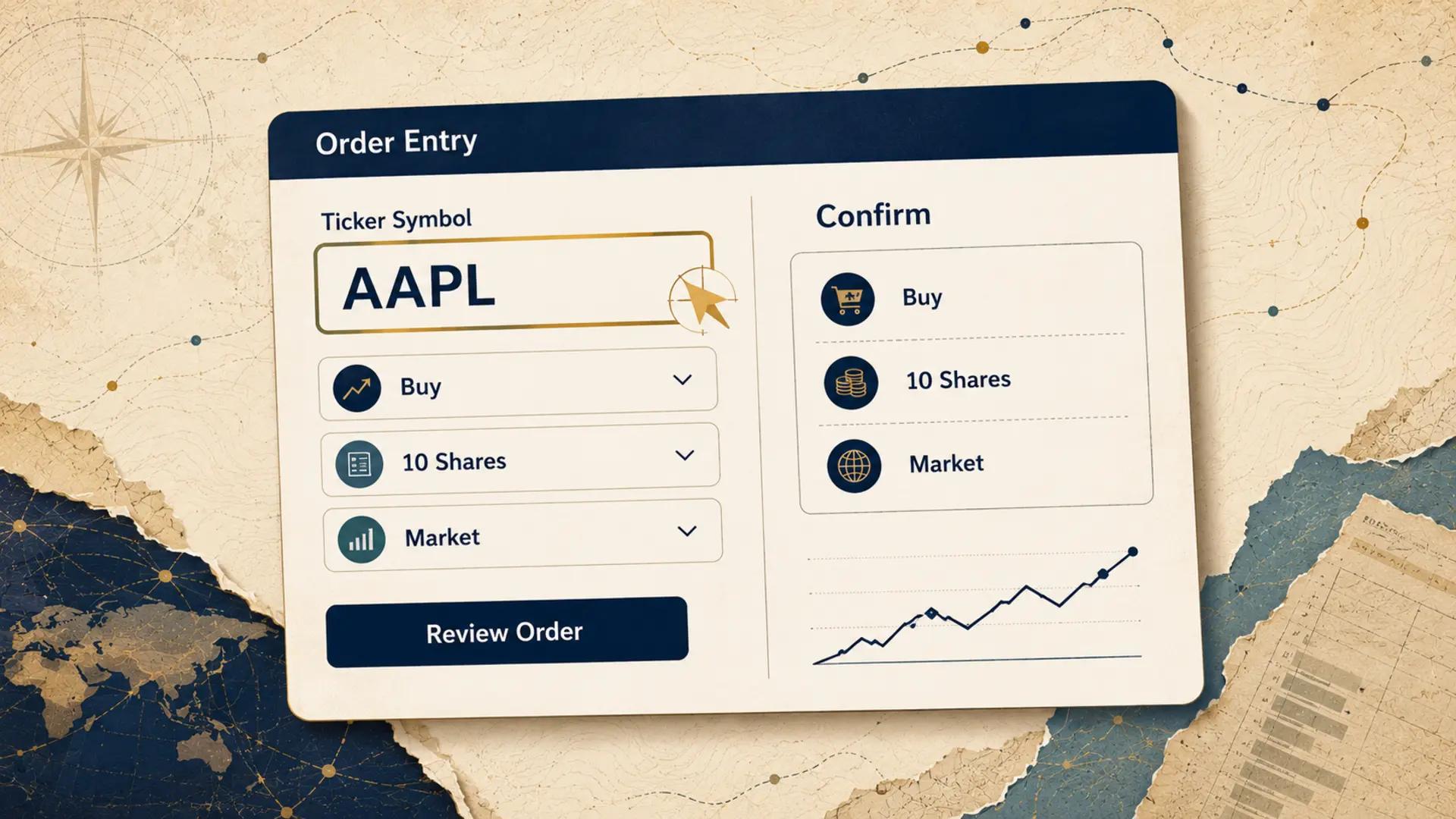
When you log into your brokerage account to invest, the search bar relies primarily on ticker symbols rather than full legal corporate names. Entering a ticker symbol retrieves real-time pricing data, historical charts, and financial reports for that specific asset.
Diagram showing a stock ticker symbol entered into a brokerage order screen.
Common Ticker Mistakes to Avoid
Because ticker symbols are short, typing mistakes can lead to unexpected execution errors. Paying close attention to ticker details protects your portfolio from avoidable mistakes.
Typographical Errors
A single incorrect letter can route your order to a completely unrelated company. During periods of high public attention, investors have accidentally purchased shares of obscure companies simply because their ticker symbols closely resembled a popular stock name.
Corporate Rebranding and Symbol Changes
When companies change their name or undergo major restructuring, their ticker symbols often change as well. For example, Facebook updated its ticker symbol from FB to META following its corporate name change.
When a symbol changes, your existing holdings update automatically in your account records. While SIPC (Securities Investor Protection Corporation) insurance protects customer cash and securities if a brokerage firm fails financially, it does not cover losses resulting from order entry mistakes or purchasing the wrong company.
Conclusion
A ticker symbol is the foundational tool investors use to locate, track, and buy public securities accurately. Understanding how exchange symbols, share classes, and fund codes operate keeps your order entry smooth and error-free. By verifying both the ticker symbol and the full corporate name before completing a transaction, you protect your long-term capital from simple entry mistakes.
When you are ready to select a platform to place your trades, our Broker reviews & rankings guide can help you evaluate account options. Always remember that investing involves risk to your capital, so treat this guide as educational context rather than personal financial advice.
FAQ
4 questions
What is a ticker symbol and why is it useful?
A ticker symbol is a unique arrangement of letters used to identify a publicly traded security on a stock exchange quickly and accurately.
Why do some ticker symbols have three letters while others have four or five?
Historically, stocks listed on the New York Stock Exchange (NYSE) used one to three letters, while stocks listed on the Nasdaq exchange used four or five letters.
Can two different companies share the exact same ticker symbol?
No. Each ticker symbol is unique to a single company on its given exchange, preventing confusion when placing buy or sell orders.
What happens to a stock ticker if a company rebrands or merges?
A company may request a new ticker symbol to reflect a new brand name, or it may keep its existing ticker. The exchange updates the symbol across all trading platforms.
Disclaimer
This guide was written with AI assistance and reviewed by the StockEmber editorial team for accuracy. StockEmber provides independent education, not personal financial advice. Some links may support our work at no additional cost to you.
The StockEmber Team is our in-house desk of independent research writers. We test brokerage platforms, read the fine print on fees and custody, and cover ETFs and long-horizon investing for people who plan to hold for decades — not days.