A stop-loss order is an automated instruction that tells a broker to sell a stock or ETF once its price drops to a designated trigger level, known as the stop price. When triggered, it automatically converts into a standard market order to sell at the best currently available market price.
This order type is an automated instruction given to a broker to sell a security once its market price drops to a designated trigger level, known as the stop price.
When holding stocks or ETFs, watching prices drop can trigger emotional, impulsive decisions. Automating an exit point helps set clear boundaries for downside risk without requiring constant market monitoring inside your brokerage account. This guide explains how this order type works, how it converts into market orders, and key risks to consider before using it.
Quick Takeaways
01A stop-loss order stays dormant until a stock hits your chosen stop price.
02Once triggered, it converts into a standard market order to sell as quickly as possible.
03It helps automate risk management and removes emotion from exit decisions.
04Fast-moving markets or overnight price gaps can cause execution prices to differ from your stop price.
What Is a Stop-Loss Order?
This order type is designed to limit an investor's potential loss on a stock or ETF position. Instead of checking stock prices every day, you pre-select a price floor where you are no longer comfortable holding the asset.
When you place the order, it sits quietly in your account system. It does not trade or affect your holdings as long as the stock remains above your chosen trigger price. If the stock falls to or below that threshold, the order activates automatically.
It helps to remember how financial safeguards work. For instance, SIPC insurance protects cash and securities if a brokerage firm fails, but it does not protect against investment losses from market drops. Investors use risk management tools like stop losses to manage market risk on their own terms.
How a Stop-Loss Order Works in Practice
A stop-loss order remains inactive until the market price reaches or falls below the designated stop price. Once the threshold is touched, the brokerage system immediately converts it into a standard market order.
A market order instructs the broker to sell the shares at the best price currently available in the market. According to official trading guides from Investor.gov, a stop order guarantees an execution attempt once triggered, but it does not promise an exact final sale price.
Here is a simple example of how the process unfolds:
Purchase: You buy 100 shares of Company ABC at $100 per share.
Order Placement: You set your order with a stop price of $90.
Trigger: Bad market news drives the share price down to $90.
Execution: The order converts into a market order and sells your 100 shares at the next available market price (such as $89.95 or $90.00).
Stop-Loss vs. Stop-Limit: What Is the Difference?
The primary difference between a stop-loss order and a stop-limit order is execution certainty versus price certainty. Both order types use a stop price trigger, but they process the sale differently once activated.
Stop-Loss Order: Prioritizes filling the order. Once triggered, it converts to a market order. You get guaranteed execution, but the fill price may end up slightly lower than your stop price in a fast-dropping market.
Stop-Limit Order: Prioritizes controlling the price. Once triggered, it converts into a limit order with a specified price limit. The order will only execute at your limit price or better. If the stock continues falling past your limit price, the trade will not execute, leaving you holding a declining asse
Key Risks and Drawbacks for Long-Term Investors
The primary risks of using this order type are market gapping, price slippage, and getting forced out of high-quality positions during brief market volatility.
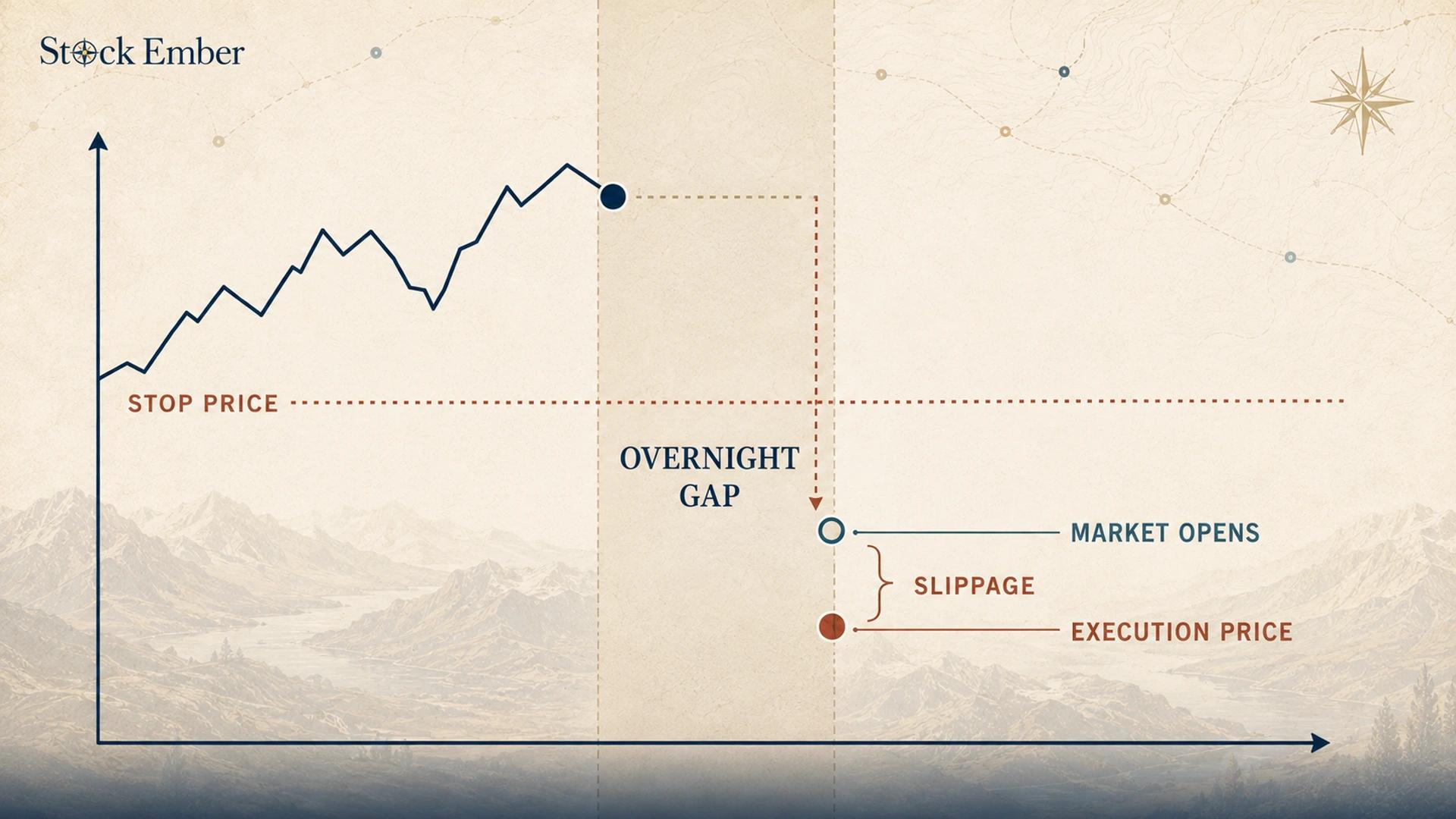
Diagram illustrating price gapping and execution slippage below a stop price
Market Gapping and Slippage
Market gapping happens when a stock price jumps sharply from one price to another without trading in between. This frequently occurs overnight between market close and market open. If you set a stop loss at $45, but major earnings news causes the stock to open the next morning at $40, your stop loss activates at $40. The difference between your stop price ($45) and your execution price ($40) is known as slippage.
The Volatility Trap (Getting Whipsawed)
For long-horizon investors holding diversified index ETFs or stable dividend stocks, short-term price fluctuations are common. A sudden, temporary market drop might hit your stop price and trigger an unwanted sale. If the market rebounds shortly after, you are left sitting in cash, having locked in a permanent loss while missing out on the recovery.
Conclusion
A stop-loss order is a practical, automated tool for managing portfolio drawdowns without constantly watching daily market tickers. While it automates your exit plan when a target price is reached, fast-moving markets can lead to price slippage or force you out of strong long-term assets during temporary market swings.
When you are ready to evaluate trading platforms that support flexible order types, our Broker reviews & rankings are a great place to start.
Investing always carries the risk of capital loss and past performance does not guarantee future results, so use this guide as a foundation for building an order strategy aligned with your long-term goals.
FAQ
4 questions
What is a stop-loss order and how does it work?
A stop-loss order is an instruction to buy or sell a stock once its price hits a specified target level. Its primary purpose is to limit an investor's potential loss on a position.
What happens when a stop-loss price is triggered?
Once the stock price reaches or passes the specified stop price, the stop-loss order automatically turns into a standard market order and executes at the next available price.
What is price slippage in a stop-loss order?
Slippage occurs when the final execution price differs from the set stop price. This frequently happens in fast-moving markets or when a stock price gaps down overnight.
Do long-term buy-and-hold investors need stop-loss orders?
Long-term investors often avoid stop-loss orders because temporary market swings can trigger unwanted stock sales, locking in temporary paper losses unnecessarily.
Disclaimer
This guide was written with AI assistance and reviewed by the StockEmber editorial team for accuracy. StockEmber provides independent education, not personal financial advice. Some links may support our work at no additional cost to you.
The StockEmber Team is our in-house desk of independent research writers. We test brokerage platforms, read the fine print on fees and custody, and cover ETFs and long-horizon investing for people who plan to hold for decades — not days.