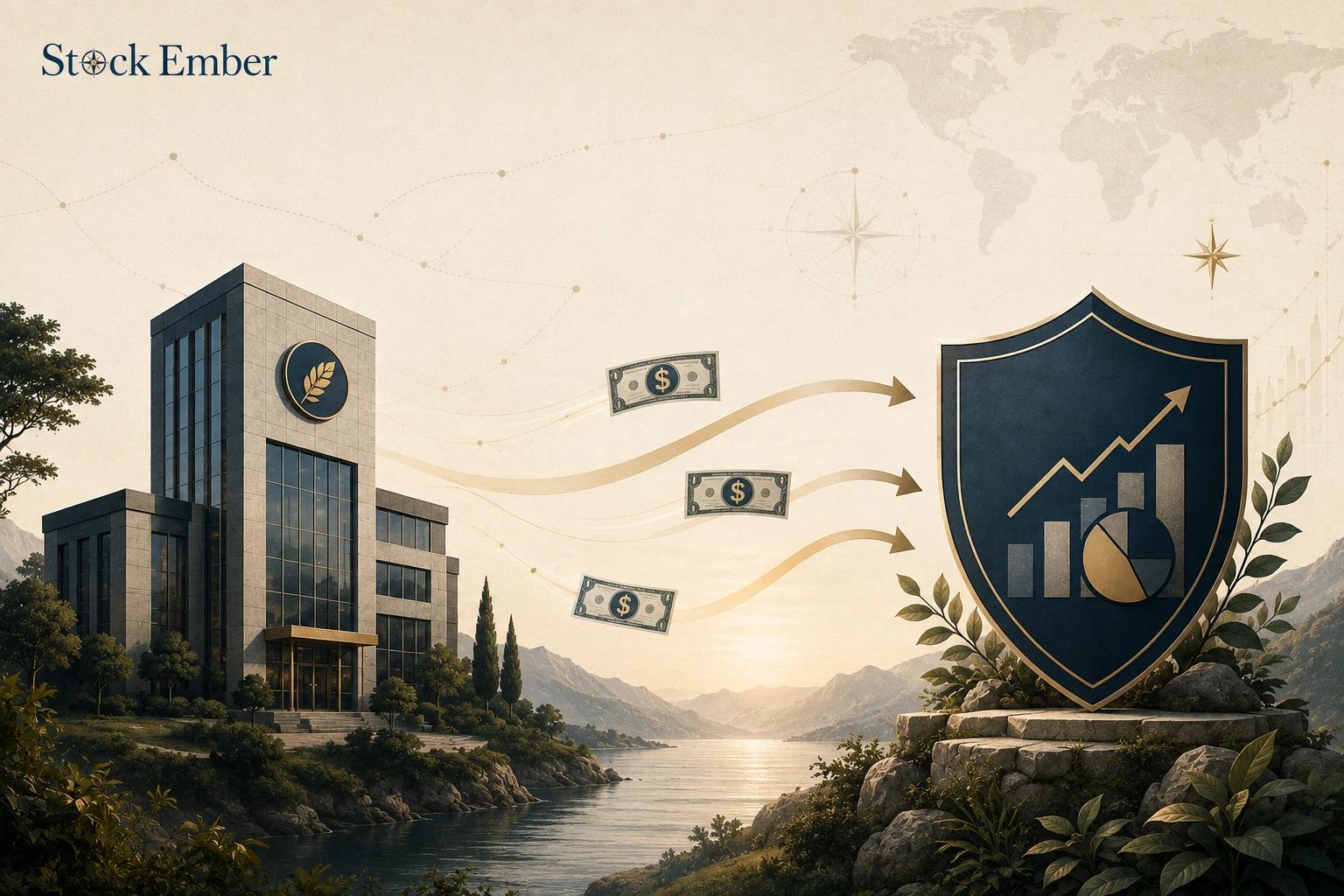
A share buyback is a corporate transaction where a company repurchases its own stock from the open market or shareholders, reducing its total outstanding share count. This reduction increases remaining shareholders' proportional ownership of the business and boosts earnings per share (EPS) without requiring an increase in net income.
A share buyback occurs when a public company repurchases its own stock from the open market or directly from shareholders, reducing its total number of outstanding shares.
When a business generates excess profits, corporate leaders must choose how to deploy that capital. Reinvesting in business operations or distributing cash payouts are common paths, but repurchasing stock offers another method to build per-share value over time. This guide breaks down how share repurchases work, how they affect your ownership stake, and when they build—or destroy—shareholder value over a ten-year horizon.
Quick Takeaways
01A share buyback reduces the total number of shares, increasing your proportional ownership of the company without requiring you to purchase additional stock.
02Stock repurchases boost earnings per share (EPS) by dividing net income across fewer shares, even if total company profits remain flat.
03Repurchasing stock allows investors to defer capital gains taxes until selling, unlike cash distributions which trigger immediate income taxes.
04Buying back shares above intrinsic business value destroys corporate capital, making management valuation discipline essential.
What Is a Share Buyback and How Does It Work?
A share buyback—also known as a share repurchase—is a transaction where a company uses corporate cash to buy its own stock back from the public market or via a tender offer (a formal public offer to buy shares from stockholders at a set price).
Once purchased, management can formally retire the stock or hold it as treasury stock (shares held in the corporate treasury that carry no voting rights and receive no payouts). Either way, these shares leave the active public trading pool.
Think of a business as a pizza cut into eight slices. If the company buys back two slices, the remaining six slices represent larger proportions of the entire business. If you own 100 shares in a company with 1,000 outstanding shares, your stake is 10%. If the business repurchases and retires 200 shares, total shares fall to 800. Your 100 shares now represent 12.5% of the company—without you spending an extra dollar.
Share Buybacks vs Dividends: Two Ways to Return Capital
Both stock repurchases and cash payouts return excess profits to investors, but they operate through different financial mechanisms and tax rules.
When a business distributes cash dividends, every shareholder receives a direct cash payment into their brokerage account, which usually triggers an immediate income tax event for that tax year. In contrast, a repurchase returns value by increasing your percentage ownership of future business earnings.
Aspect
Share Buyback
Cash Dividend
Tax Timing
Deferred until you sell your shares
Taxed in the year it's received
Commitment
Flexible — management can pause anytime
Cuts or cancellations often spook the market
Effect on Ownership
Increases your % stake in the company
No change to ownership percentage
From a tax perspective, share repurchases allow you to defer capital gains taxes until you choose to sell your holdings, allowing your investment to compound without annual tax drag.
The Financial Impact: Earnings Per Share (EPS) and Compounding
Executing a share repurchase improves per-share financial metrics by reducing the total share count used in accounting calculations.
Earnings Per Share (EPS) = Net Income / Total Outstanding Shares
Consider a business earning $10 million in annual net income with 5 million outstanding shares. Its EPS is $2.00 per share ($10 million / 5 million). If the company uses cash reserves to buy back 1 million shares, total outstanding shares drop to 4 million. Even if total net income stays flat at $10 million, the new EPS increases to $2.50 per share ($10 million / 4 million)—a 25% boost in per-share earnings.
Over a ten-year holding period, consistent share reductions create a compounding effect. A company growing its net income by 5% annually while reducing its share count by 3% each year yields per-share earnings growth that far outpaces its top-line business expansion.
When Buybacks Destroy Value: Valuation and Executive Misalignment
Share repurchases only create intrinsic value for long-term owners when stock is bought at a price below the underlying worth of the business.
If corporate management repurchases shares when the stock price is overvalued, it wastes cash that could have been reinvested in product research, operational expansion, or debt reduction.
Regulatory oversight from bodies like the U.S. Securities and Exchange Commission (SEC) requires public reporting of corporate repurchase programs. However, executive incentives can lead to poor capital allocation. Executives whose compensation or performance bonuses depend on reaching target EPS figures may execute repurchases simply to trigger bonus thresholds, even when stock prices are inflated.
Companies also use repurchases to offset equity dilution caused by executive stock option plans, using corporate cash to soak up new shares rather than permanently shrinking the share count.
Common Investor Pitfalls to Avoid
Evaluating stock repurchases requires examining how they are funded and separating long-term capital discipline from short-term financial engineering.
Watch out for businesses borrowing money to fund stock repurchases. Taking on high-interest debt to buy back shares during market peaks leaves the corporate balance sheet exposed during economic downturns.
Avoid treating repurchase announcements as short-term trading signals. A repurchase program is an authorization, not a binding contract; management is not legally required to buy back the full declared amount.
Conclusion
For buy-and-hold investors, evaluating a share buyback requires looking beyond headline press releases to assess price discipline and balance sheet strength over a ten-year horizon.
A 1% annual reduction in outstanding shares may seem modest in a single year. But over ten years, that consistent shrinkage reduces total shares by nearly 10%, giving your remaining shares a larger claim on future earnings without requiring new investment capital.
When you are ready to evaluate how corporate capital allocation fits within a diversified portfolio, exploring our ETF reviews offers a practical next step. All investing carries the risk of loss, and past corporate capital decisions do not guarantee future stock performance, so use this guide as an educational foundation for your independent research.
FAQ
3 questions
What is a share buyback and why do companies do it?
A share buyback occurs when a business uses corporate cash to purchase its own stock from the public market. Companies execute buybacks to return capital to shareholders, increase per-share earnings, signal market undervaluation, or offset equity dilution from executive stock options.
Are share buybacks better than cash dividends for long-term investors?
Neither capital allocation strategy is inherently superior; their value depends on stock valuation and individual tax needs. Buybacks provide tax flexibility by allowing capital to compound without triggering immediate income taxes, while cash dividends deliver liquid income but create annual taxable events.
What happens to shares after a company repurchases them?
Once repurchased, shares are either formally retired or held in the corporate treasury as treasury stock. In both cases, these shares no longer trade publicly, carry voting rights, or receive future cash dividend payments.
Disclaimer
This guide was written with AI assistance and reviewed by the StockEmber editorial team for accuracy. StockEmber provides independent education, not personal financial advice. Some links may support our work at no additional cost to you.
The StockEmber Team is our in-house desk of independent research writers. We test brokerage platforms, read the fine print on fees and custody, and cover ETFs and long-horizon investing for people who plan to hold for decades — not days.