A beneficiary designation is a legally binding account instruction that directs a financial custodian to transfer assets to named individuals upon the account owner's death. Setting up a designation allows securities and cash to pass directly to beneficiaries without going through probate court. This direct transfer mechanism applies to retirement accounts and taxable brokerage accounts using Transfer on Death registrations.
This type of account instruction is a formal legal directive attached to a financial account that names who will receive those assets when the owner dies.
Building an investment portfolio takes years of patience, but failing to set payout instructions can leave your holdings stuck in legal delays. Knowing what is a beneficiary designation ensures your investments pass directly to your loved ones without costly court proceedings. This guide covers how these instructions work in brokerage accounts, why they override general wills, and key mistakes to avoid.
Quick Takeaways
01This form is a legal contract with your custodian that directs who inherits your account.
02Account designations bypass the probate court process, allowing faster and cheaper wealth transfer to heirs.
03Primary beneficiaries are first in line to receive assets, while contingent beneficiaries serve as backups.
04These designations legally override conflicting instructions written in a general will.
What Is a Beneficiary Designation?
At its core, it is a legal agreement between an account holder and a financial custodian that specifies who owns the account assets upon the holder's death.
When people ask about the beneficiary designation meaning, they are looking at how financial institutions handle account transfers outside of court. Also referred to as a designation of beneficiary, this form allows you to name one or more individuals, trusts, or organizations to receive your cash and securities.
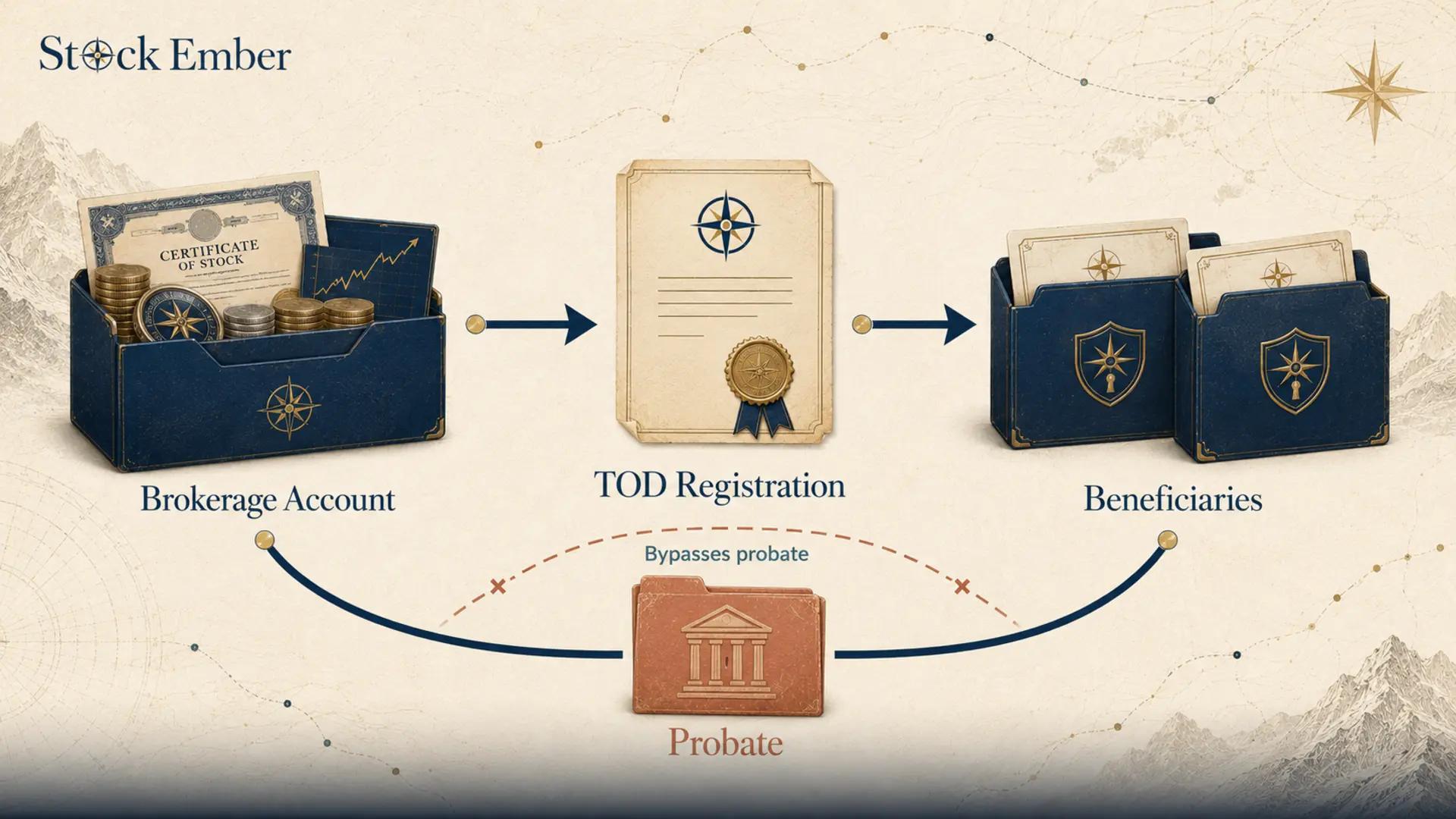
Diagram showing Transfer on Death brokerage account assets bypassing probate to reach beneficiaries directly.
Understanding what is beneficiary designation choices requires looking at how financial accounts differ from general property. Unlike physical possessions, financial assets held at brokerages can transfer directly by contract. When you complete a beneficiary form, you create a direct legal instruction that the brokerage must follow when you pass away.
How a Beneficiary Designation Works in Brokerage Accounts
This arrangement works by attaching a payout instruction directly to your account profile. In a standard individual brokerage account, this arrangement is usually set up using a Transfer on Death (TOD) registration.
For retirement accounts like IRAs or 401(k)s, similar forms are filled out when the account is opened. When the account holder dies, the beneficiary presents a death certificate and identification to the custodian. The custodian then transfers the holdings into a new account established for the beneficiary.
These transfers include all held assets, whether held in cash or individual stocks and funds. Each asset, tracked by its unique CUSIP (Committee on Uniform Securities Identification Procedures) number, transfers either as whole shares or as cash if the beneficiary chooses to liquidate. According to guidance from regulatory bodies like the SEC Investor.gov, TOD registrations allow account owners to retain full control over their investments during their lifetime while establishing a direct line of transfer for the future.
Primary vs. Contingent Beneficiaries: Two Levels of Protection
Financial custodians allow you to name two distinct levels of beneficiaries: primary and contingent. Naming both creates a complete safety net for your account.
Primary Beneficiaries
A primary beneficiary is first in line to receive your account assets. You can name a single primary beneficiary or split your account among several people by assigning percentage allocations (for example, 50% to a spouse and 25% to each of two adult children). The total primary allocation must equal 100%.
Contingent Beneficiaries
A contingent beneficiary acts as a secondary backup. This person or entity receives the assets only if all named primary beneficiaries pass away before or at the same time as the account owner. If a primary beneficiary is alive at the time of your death, contingent beneficiaries receive nothing.
If you name only one primary beneficiary and that person passes away before you, your account loses its direct transfer instruction. If you have not updated your form or named a contingent beneficiary, the account defaults to your general estate.
Why Beneficiary Designations Override Instructions in a Will
A common area of confusion in estate planning is how beneficiary forms interact with traditional wills. These account-level instructions legally override anything written in a general will.
This precedence exists because account designations are private contracts, whereas a will is a legal document that must pass through probate (the legal process where a court validates a will and settles an estate). Because contract law takes priority over testamentary documents (wills), the brokerage must honor the named account beneficiary regardless of what a will says.
For long-term investors, this legal boundary is a clear advantage. Probate timelines vary by state, but the process can often take anywhere from six months to two years, along with significant legal fees taken out of the estate. This direct instruction bypasses probate entirely, allowing investments to pass to heirs in weeks rather than months without court costs.
However, this legal priority also creates a real hazard. If you name an ex-spouse on a brokerage account form ten years ago and later write a will leaving all assets to a new partner, the brokerage is legally obligated to give the investment account to the ex-spouse named on the account form.
Common Beneficiary Designation Mistakes to Avoid
Proper account maintenance requires reviewing beneficiary forms whenever your life changes. Three common errors cause the most friction for heirs:
Leaving Accounts Unassigned: Failing to submit a beneficiary form causes your investment account to fall into your general estate upon death. This forces your heirs into probate court, delaying asset access and incurring legal costs.
Forgetting to Update After Major Life Changes: Events such as marriage, divorce, the birth of a child, or the death of a named beneficiary require immediate form updates. Custodians cannot interpret your intentions; they only follow the last signed form on file.
Naming Minor Children Directly: Financial brokerages cannot transfer securities directly to minor children. Naming a minor without establishing a legal guardianship or custodial trust can freeze the assets in court until a legal guardian is appointed.
Conclusion
Setting up this beneficiary form is a simple, high-impact step for any investor. By maintaining accurate beneficiary forms on your investment accounts, you ensure that your portfolio transfers smoothly to the people or organizations you choose without costly court delays.
Take time to review your account settings across all brokerages at least once a year or whenever you experience a major life event. Verify that your primary and contingent choices still reflect your current wishes.
When you are ready to evaluate different trading platforms and account features, our broker reviews & rankings provide a clear look at account setup options and fee structures. Investing always involves risk to your capital, so treat account planning as one part of a thoughtful long-term strategy.
FAQ
4 questions
What is a beneficiary designation?
A beneficiary designation is a legal instruction attached to a financial account that names the specific person or entity that will receive the account's assets upon your death.
Does a beneficiary designation override a last will and testament?
Yes. Beneficiary designations on retirement accounts, life insurance, and payable-on-death accounts take legal precedence over instructions written in a will.
What is the difference between a primary and contingent beneficiary?
A primary beneficiary is first in line to inherit the account assets. A contingent beneficiary inherits the assets only if all primary beneficiaries pass away before the account holder.
How often should beneficiary designations be reviewed?
You should review your designations annually or after major life events, such as marriage, divorce, the birth of a child, or the death of a named beneficiary.
Disclaimer
This guide was written with AI assistance and reviewed by the StockEmber editorial team for accuracy. StockEmber provides independent education, not personal financial advice. Some links may support our work at no additional cost to you.
The StockEmber Team is our in-house desk of independent research writers. We test brokerage platforms, read the fine print on fees and custody, and cover ETFs and long-horizon investing for people who plan to hold for decades — not days.