An inflation hedge is an asset or investment strategy designed to protect purchasing power as consumer prices rise across the economy. While contractual hedges like inflation-indexed bonds provide direct price adjustments, real assets like equities with pricing power deliver multi-decade real capital growth.
An inflation hedge is an asset or strategy designed to preserve real purchasing power when general price levels rise across the economy. It helps offset the eroding impact of inflation on money over extended holding periods.
When consumer prices rise, holding cash or standard fixed income means your money buys less every year. For long-term investors, protecting wealth requires balancing assets that keep pace with price growth against those that deliver structural capital growth. This guide breaks down how different asset classes perform during inflationary periods, their ten-year trade-offs, and how to build lasting portfolio resilience.
Quick Takeaways
01No single asset class provides a perfect, immediate shield against short-term inflation spikes.
02Equities with strong pricing power offer multi-decade growth that historical inflation rarely outpaces.
03Treasury Inflation-Protected Securities (TIPS) lock in contractual inflation adjustments but carry lower growth potential.
04Holding non-yielding assets like spot commodities can create significant drag during low-inflation regimes.
What Is an Inflation Hedge?
An inflation hedge is an investment that maintains or increases its value during periods of rising consumer prices. When the purchasing power of paper currency declines, real assets and inflation-indexed securities adjust to protect the real value of your capital.
Investments fall into two primary hedging categories: contractual adjustments and real asset economic growth. Contractual hedges, such as Treasury Inflation-Protected Securities (TIPS), directly tie their principal values to consumer price indexes calculated by agencies like the U.S. Bureau of Labor Statistics.
In contrast, real asset hedges like stocks, real estate, and commodities rely on economic forces. Companies raise product prices to protect profit margins, real estate owners increase rents, and raw material values track immediate supply constraints.
In practice, many long-term investors find that trying to eliminate every trace of purchasing power loss often introduces unnecessary complexity and trading costs.
How to Hedge Against Inflation in a Long-Term Portfolio
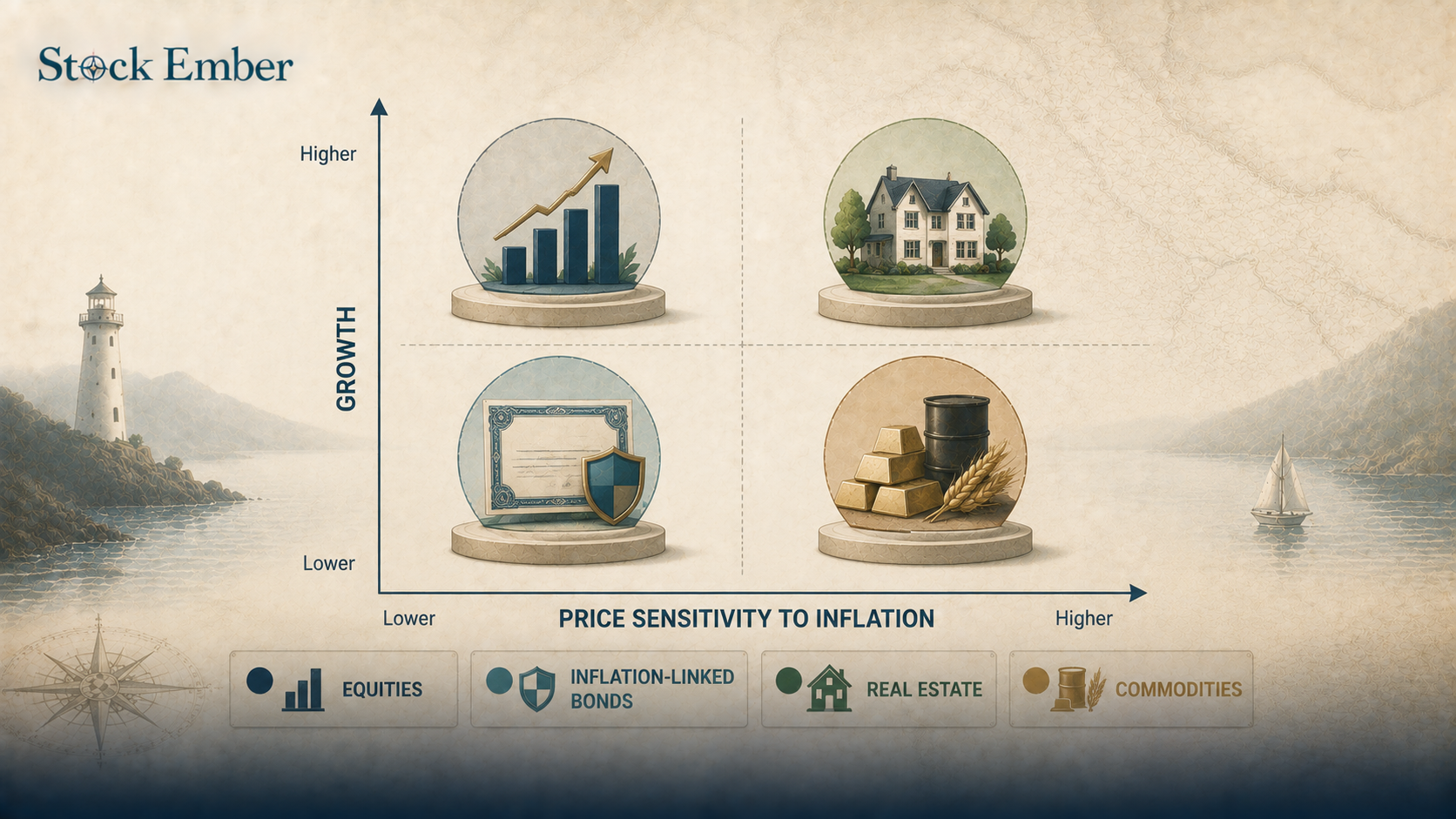
Knowing how to hedge against inflation requires evaluating how different asset classes react when general prices rise. Building a resilient portfolio involves choosing investments that balance inflation sensitivity with baseline capital growth.
Equities with Pricing Power: Businesses that can raise prices without losing customer volume tend to protect their earnings during inflationary regimes. These high-margin companies pass increased costs to consumers, allowing their underlying business value to grow alongside general inflation over multi-year periods.
Inflation-Indexed Bonds: Government bonds like TIPS adjust their principal value based on official inflation figures. When inflation rises, the bond principal increases, raising the dollar amount of periodic interest payments. While they offer direct price adjustments, their overall yields are lower than equity markets over long horizons.
Real Estate Investment Trusts (REITs): Real estate provides a dual response to inflation through rising property values and increasing rental income. Property leases often include annual rent escalations linked to price indexes, helping real estate income match broader cost increases.
Broad Commodities: Raw materials such as oil, industrial metals, and agricultural products usually experience rapid price spikes during unexpected inflation surges. However, commodities do not generate income or dividends, making them volatile short-term tools rather than long-term compounders.
Diagram comparing four main asset classes used to hedge against inflation.
Why Inflation Hedging Matters for a 10-Year Portfolio
Inflation acts as a quiet, constant drag on long-horizon portfolios. A baseline annual inflation rate of 3% reduces purchasing power by roughly 26% over ten years. If inflation averages 4% annually, that purchasing power loss grows to approximately 32% across a single decade.
Holding cash or low-yielding nominal bonds guarantees a loss of real purchasing power during sustained price increases. To counteract this decay, long-term wealth building relies heavily on passive investing strategies that build long-run equity growth rather than attempting to predict monthly price index releases.
Attempting to time inflation spikes by constantly buying and selling individual commodities or specialized funds increases tax friction and trading expenses. Over a decade, a simple, low-cost asset allocation designed for steady real expansion remains far more reliable than reactive trading.
Comparing Inflation-Hedging Asset Classes
Evaluating asset classes over a ten-year horizon highlights the contrast between short-term price buffering and multi-decade wealth creation. During a broad bull market, growth assets like equities expand capital rapidly, whereas dedicated hedges may lag.
Asset Class
Historical Real Return
Income Yield
Short-Term Volatility
10-Year Structural Drag
Equities
High (6–7% real)
Low to Moderate
Moderate
Very Low
TIPS
Low (1–2% real)
Tied to CPI
Low
Moderate (lower growth)
REITs
Moderate (4–5% real)
High
Moderate to High
Low to Moderate
Commodities
Near Zero long-term
Zero
Very High
High (carrying costs)
Source: Long-run historical asset-class return ranges based on data compiled from the Federal Reserve and publicly available capital markets research.
Note: These figures are historical estimates for illustration only and are not guarantees of future performance; actual results vary by market cycle.
Holding dedicated inflation hedges carries a clear ten-year trade-off. For example, allocating a large portion of a portfolio to TIPS or raw commodities during periods of low, stable inflation creates ongoing structural drag. Low yields and zero dividend growth mean your capital grows much slower than an equity-focused core strategy.
Common Mistakes When Hedging Against Inflation
Long-term investors frequently make three mistakes when responding to inflation warnings:
Panic-Buying Hedges After Spikes Occur: Purchasing spot commodities or gold after media headlines report high inflation usually means buying at peak prices. Inflation hedges work best when already held as part of a baseline asset allocation strategy, not when purchased reactively.
Over-Allocating to Low-Yielding Bonds: Shifting too much capital from equities into inflation-protected bonds protects short-term principal but sacrifices multi-decade compound growth. Over ten years, equity earnings expansion generally outpaces bond adjustments.
Ignoring Holding Costs and Fund Fees: Specialized commodity funds and actively managed real-asset portfolios often carry high expense ratios. A 1% annual management fee takes roughly 10% of total portfolio value over ten years, eroding the very purchasing power protection the investment was intended to provide.
Conclusion
Protecting a portfolio from rising prices requires balancing short-term price sensitivity with long-term compound growth. While TIPS and real assets offer specific protection mechanisms, core equities with pricing power remain the primary engine for building purchasing power over extended horizons. Avoid reactive trading after price spikes occur, and focus on maintaining a low-cost, diversified portfolio.
When you are ready to explore low-cost index funds that hold these real assets, our ETF reviews offer a clear starting point. Investing always involves market risk and past performance does not promise future results, so use this guide as an educational foundation for your own research.
FAQ
5 questions
What is the single best asset to hedge against inflation?
No single asset acts as a perfect shield across all market regimes. Over multi-decade horizons, broad equities with pricing power historically outperform inflation by the widest margin. However, for short-term price stability, Treasury Inflation-Protected Securities (TIPS) offer direct contractual price adjustments tied to consumer price indexes.
Do stocks beat inflation over a 10-year period?
Historically, broad stock market indexes have generated positive real returns above inflation over rolling 10-year periods. While stock prices can be volatile in the short term, corporate earnings and revenues generally expand alongside rising price levels, helping preserve purchasing power for buy-and-hold investors.
How do Treasury Inflation-Protected Securities (TIPS) work?
TIPS are government bonds whose principal value adjusts automatically based on changes in consumer price indexes. When inflation rises, the bond principal increases, resulting in higher dollar interest payouts. At maturity, investors receive either the adjusted principal or the original face value, whichever is greater.
Is gold a reliable short-term inflation hedge?
Gold is often viewed as a traditional inflation hedge, but its price behavior in short timeframes can be unpredictable. Spot gold does not generate income or dividends, and its price is influenced by currency fluctuations, real interest rates, and investor sentiment, making it volatile over short horizons.
How does real estate protect against rising consumer prices?
Real estate hedges inflation through property valuation growth and rising rental income. Property owners can raise rents periodically during inflationary cycles, allowing rental income to keep pace with broad cost increases while underlying physical asset values tend to appreciate over time.
Disclaimer
This guide was written with AI assistance and reviewed by the StockEmber editorial team for accuracy. StockEmber provides independent education, not personal financial advice. Some links may support our work at no additional cost to you.
The StockEmber Team is our in-house desk of independent research writers. We test brokerage platforms, read the fine print on fees and custody, and cover ETFs and long-horizon investing for people who plan to hold for decades — not days.