A bull market is a sustained financial market trend characterized by rising asset prices, standardly measured as a 20% or greater increase in a broad stock market index from a recent trough. It is typically driven by expanding economic activity, growing corporate earnings, low unemployment, and widespread investor optimism.
A bull market is a period in financial markets when stock prices rise continuously over time, typically marked by a 20% or greater gain in a broad market index from a recent low point.
When headlines broadcast rising stock indexes, deciding how to handle your investment plan can feel challenging. Staying quiet while prices climb or feeling urged to buy high are common reactions. This guide explains how market rallies function, how extended upward cycles differ, and how long-term investors handle asset growth without losing portfolio balance.
Quick Takeaways
01The bull market definition is standardly set at a 20% or greater rise in a broad market index like the S&P 500 from its most recent low.
02Market expansions are driven by broader economic growth, rising corporate profits, low unemployment, and expanding investor confidence.
03Structural bull markets can last many years, but short pullbacks and volatility remain normal throughout the upward cycle.
04Long-term investors protect their portfolios during rallies by systematically rebalancing rather than chasing recent market winners.
What Is a Bull Market?
A bull market is a sustained timeframe in which financial asset prices trend upward across major stock indexes.
In equity markets, the technical bull market definition generally requires a broad index to rise by 20% or more over at least a two-month period. This upward movement is not just a single-day spike; it represents an extended phase lasting months or years.
For a bull market simple definition, imagine a period where optimism dominates investor thinking and buyers outnumber sellers. As confidence builds, share values rise across most sectors.
Understanding market cycles helps investors build realistic expectations. When sticking to a strategy of passive investing, recognizing that market rallies and temporary pullbacks are standard economic phases keeps your long-term plan on track.
How a Bull Market Works in the Stock Market
A bull market functions through a combination of strengthening economic data, corporate revenue growth, and expanding market sentiment.
The core bull market definition stock market analysts focus on involves steady fundamental growth. When businesses report higher earnings, stock prices naturally gain support. Lower borrowing costs and low unemployment often boost consumer spending, creating a positive background for business expansion.
As stock prices rise, valuation metrics like price-to-earnings (P/E) ratios often stretch. Investors become willing to pay more for every dollar of corporate earnings because they anticipate future growth. This optimism creates a self-reinforcing loop: rising stock prices encourage more buying, which pushes overall market values even higher.
However, market rallies do not move upward in a straight line. Brief price drops, often called corrections, frequently occur within a longer upward trend without ending the overall bull market.
Secular vs. Cyclical Bull Markets
The primary distinction between secular and cyclical bull markets lies in their duration and underlying economic drivers.
A secular bull market is a long-term structural expansion that can span one to two decades. These extended cycles are powered by deep demographic shifts, broad technological breakthroughs, or fundamental changes in global productivity. Even if economic recessions occur during a secular period, the overarching multi-year market trend remains upward.
By contrast, a cyclical bull market is a shorter phase tied directly to standard business cycles. These rallies typically last from a few months to several years and often reflect temporary economic recoveries or interest rate cuts.
Different asset classes react uniquely during these multi-year trends. For example, dividend-focused real estate funds and REIT ETFs may experience distinct cash flow patterns depending on prevailing interest rates and commercial property demand during an expanding market.
Bull Market vs. Bear Market: Key Differences
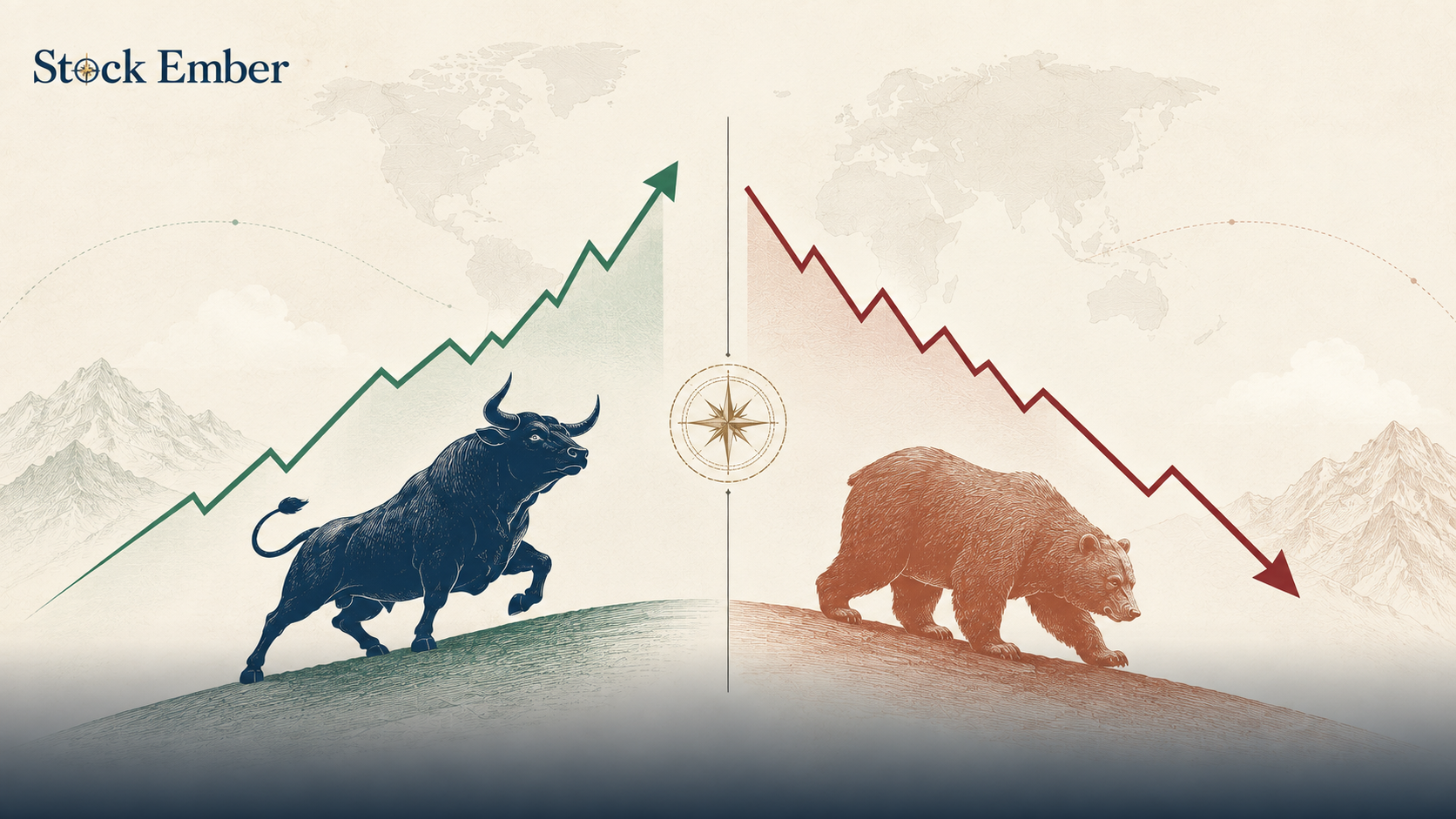
Bull markets feature long periods of rising asset prices and investor optimism, whereas bear markets are characterized by widespread price declines and economic anxiety.
Line chart contrasting a rising bull market trend with a falling bear market trend.
Market cycles shift between expansion, decline, and temporary pullbacks. Comparing these phases clarifies how market conditions differ:
Market Phase
Price Threshold
Typical Duration
Dominant Sentiment
Bull Market
Gain of +20% or more from low
3 to 5+ years
Optimism and expansion
Bear Market
Loss of -20% or more from peak
1 to 1.5 years
Anxiety and contraction
Market Correction
Drop of -10% to -20% from peak
A few weeks to months
Caution and short-term concern
Historically, market expansions that meet the bull market definition have lasted significantly longer than downturns. This asymmetry is a key reason long-term market indexes have trended higher over decade-long horizons.
Common Mistakes to Avoid During a Bull Market
Avoiding emotional decision-making is essential during extended market rallies, as widespread optimism can hide growing portfolio risks.
Prolonged price gains can lead even experienced investors to make predictable portfolio errors:
Chasing Recent Winners (FOMO, or Fear Of Missing Out): Buying hot stocks or specific market sectors after major price surges often leads to purchasing assets at peak valuations.
Ignoring Asset Drift: As stocks rise faster than conservative assets, your stock allocation expands naturally. A portfolio intended to hold 70% stocks might drift to 85% or higher, quietly increasing overall portfolio risk.
Stopping Systematic Rebalancing: Skipping regular portfolio rebalancing prevents you from trimming overvalued holdings and redirecting cash into lagging asset classes.
In practice, many long-term investors find that setting calendar-based rebalancing dates removes emotion from market rallies, ensuring portfolio risk stays aligned with original financial goals.
Conclusion
Understanding bull market mechanics helps investors remain disciplined during periods of strong market performance.
Market expansions offer strong tailwinds for long-term wealth building, but they require consistent maintenance to prevent asset drift and overexposure to high-valuation sectors. Sticking to low-cost broad index funds, maintaining a planned asset split, and rebalancing regularly are key tools for managing long-term risk.
When you are ready to review diversified index funds and holding costs for your portfolio, exploring ETF reviews provides a clear next step for your research. Stock market cycles inevitably shift between growth and decline, so always ensure your portfolio matches your personal risk tolerance and time horizon.
FAQ
5 questions
What is the technical definition of a bull market?
The standard technical definition of a bull market is a sustained rise of 20% or more in a major stock market index, such as the S&P 500, from its most recent trough or low point. Historically, bull markets have lasted roughly 3 to 5 years on average, although individual cycles vary.
What is the difference between a bull market and a bear market?
A bull market occurs when stock indexes rise by 20% or more from a recent low, accompanied by economic expansion and optimism. A bear market is the opposite, defined as a decline of 20% or more from a recent peak, usually accompanied by economic contraction and market anxiety.
How long does a typical bull market last?
Historically, bull markets last significantly longer than bear markets. While exact durations vary across economic cycles, historical broad stock market expansions average roughly 3 to 5 years, whereas bear markets typically average about 1 to 1.5 years.
What is the difference between a secular bull market and a cyclical bull market?
A secular bull market is an overarching, multi-decade structural trend driven by major technological or demographic shifts. A cyclical bull market is a shorter-term expansion lasting several months to a few years, tied to short-term business cycles and economic conditions.
What is asset drift during a bull market?
Asset drift occurs when rising stock prices cause your equity holdings to grow faster than conservative assets like bonds or cash. As a result, your stock allocation increases beyond your original target percentage, quietly exposing your overall portfolio to higher risk if the market turns.
Disclaimer
This guide was written with AI assistance and reviewed by the StockEmber editorial team for accuracy. StockEmber provides independent education, not personal financial advice. Some links may support our work at no additional cost to you.
The StockEmber Team is our in-house desk of independent research writers. We test brokerage platforms, read the fine print on fees and custody, and cover ETFs and long-horizon investing for people who plan to hold for decades — not days.