You can buy U.S. Treasury bonds directly from the federal government fee-free at TreasuryDirect.gov or through a commercial brokerage account. Direct primary auction purchases require a $100 minimum increment and guarantee principal return if held to maturity, whereas brokerages provide secondary market trading flexibility before maturity.
Buying U.S. Treasury bonds involves purchasing debt securities issued by the federal government, either directly through the official TreasuryDirect portal or indirectly through a commercial brokerage platform.
When interest rates shift, finding a steady place for cash reserves becomes a top priority. United States Treasuries offer predictable income and backstop security for conservative portfolios. This step-by-step guide walks through platform selection, purchasing mechanics, tax treatment, and key risks to avoid when building a fixed-income allocation.
Quick Takeaways
01You can buy U.S. Treasuries directly fee-free via TreasuryDirect or trade them through a standard brokerage account.
02Minimum purchase increments start at $100 for all treasury maturities.
03Interest income from Treasuries is exempt from state and local income taxes, but remains subject to federal income tax.
04Holding individual Treasuries to maturity returns your original principal, whereas bond funds fluctuate in value without a fixed payout date.
What Are US Treasury Bonds and How Do They Work?
U.S. Treasury securities are debt obligations backed by the full faith and credit of the United States government. When you buy a Treasury bond, you lend money to the government in exchange for regular interest payments and the return of your principal at maturity. Among the various types of bonds available in fixed income markets, Treasuries carry the lowest credit risk.
Treasury securities are split into three main categories based on maturity length:
Treasury Bills (T-Bills): Short-term debt maturing in 4 to 52 weeks. They are sold at a discount to face value rather than paying periodic coupons. Understanding how to buy short term treasury bonds like T-bills allows cash managers to park reserves for brief periods while earning fixed income.
Treasury Notes: Medium-term debt maturing in 2, 3, 5, 7, or 10 years. They pay a fixed coupon rate every six months. Learning how to buy 10 year treasury bonds is a common benchmark for investors looking to balance yield and intermediate duration.
Treasury Bonds: Long-term debt maturing in 20 or 30 years, paying semi-annual coupon interest.
Interest earned on all Treasury securities is exempt from state and local income taxes, though it is subject to federal income tax. This tax treatment increases the effective yield for investors living in high-tax states.
Two Ways to Buy: TreasuryDirect vs. Brokerage Accounts
Investors wanting to know how to buy us treasury bonds must choose between two primary channels: the primary market auction via TreasuryDirect or the secondary market via a commercial brokerage account.
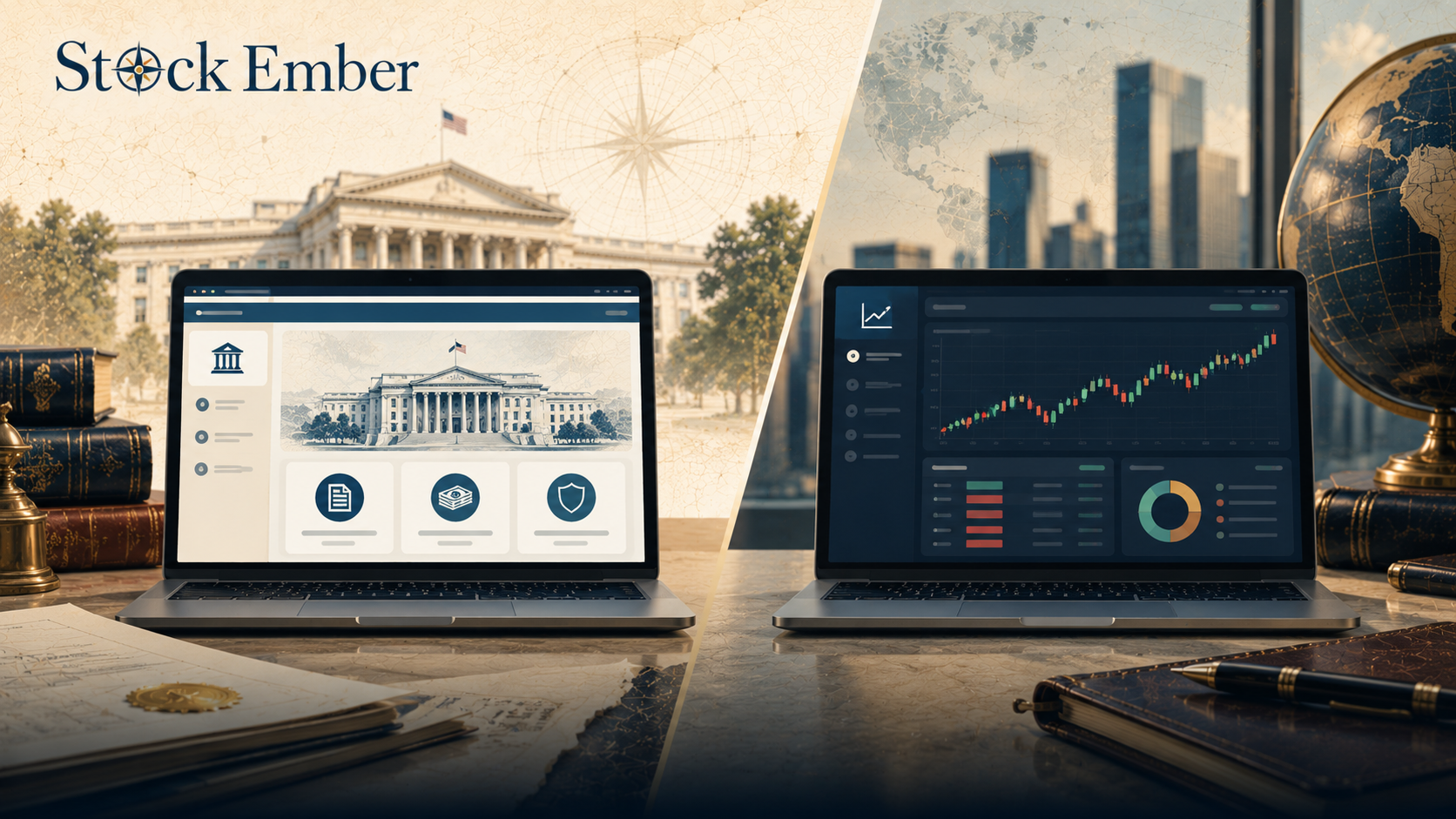
Graphic comparing TreasuryDirect primary portal against commercial brokerage accounts.
Option 1: TreasuryDirect.gov
TreasuryDirect is the official portal run by the U.S. Department of the Treasury.
Pros: Zero commissions, direct access to primary auctions, automatic reinvestment features.
Cons: Dated website interface, strict account verification steps, unable to sell bonds easily before maturity without transferring them to a brokerage.
Option 2: Commercial Brokerage Accounts
Major investment platforms allow clients to participate in new-issue Treasury auctions or buy existing bonds on the secondary market.
Pros: Modern trade execution, consolidated portfolio reporting, easy secondary market selling before maturity.
Cons: Secondary market bid-ask spreads can add subtle transaction friction.
Purchase Feature
TreasuryDirect.gov
Commercial Brokerage
Primary Auctions
Yes
Yes
Secondary Market Trading
No (must transfer out)
Yes
Account Interface
Basic / Legacy
Modern
Fee Structure
$0 Fees
$0 Commission (spreads apply)
Minimum Order
$100
$100
How to Buy Treasury Bonds Step-by-Step
Purchasing your first Treasury security takes four simple steps, whether using TreasuryDirect or a broker.
Step 1: Open and Fund Your Account
If using TreasuryDirect, register a personal account with your Social Security Number, mailing address, and bank routing details. If using a brokerage, log into your existing account and ensure uninvested cash is cleared for trading.
Step 2: Choose Primary Auction or Secondary Market
Decide whether to buy a newly issued security at auction or purchase an existing bond from another investor. Primary auctions sell bonds at face value or discount without markup. According to official rules from TreasuryDirect, non-competitive auction bids ensure you receive the final yield set by the market.
Step 3: Select Maturity and Order Size
Pick your desired time frame, ranging from 4-week bills to 30-year bonds. For instance, investors reviewing how to buy 1 year treasury bonds can select 52-week T-bills during their monthly auction cycle. Enter your order amount in increments of $100.
Step 4: Execute and Hold
In primary auctions, non-competitive bids accept whatever yield the auction determines. Once confirmed, funds are drawn from your linked bank account on settlement day.
In practice, many long-term investors find setting up automatic reinvestment in TreasuryDirect or through brokerage auto-roll programs helps maintain fixed income exposure without manual monthly entries.
Individual Treasury Bonds vs. Treasury ETFs
Many investors debate whether to buy individual Treasury bonds or access government debt through exchange-traded funds (ETFs). While both hold Treasury debt, their structural behavior is fundamentally different.
When you buy an individual Treasury bond and hold it until its maturity date, you receive your full principal back, barring a sovereign default. Your income rate is fixed, and market price fluctuations along the way do not change your terminal payout.
In contrast, Treasury ETFs hold a broad basket of bonds to maintain a target duration (such as 7 to 10 years). As underlying bonds mature, the fund manager sells them and buys new ones. Because an ETF has no fixed maturity date, its share price continuously fluctuates with prevailing interest rates. If interest rates rise, the ETF net asset value declines, and you may suffer capital loss if you sell your shares.
For investors seeking credit yield rather than sovereign backing, comparing Treasury stability against high-yield bonds highlights the trade-off between price volatility and income return.
Common Mistakes to Avoid When Buying Treasuries
While Treasuries are backed by government credit, investors still face market and inflation risks.
1. Selling Before Maturity in a Rising Rate Environment
If interest rates rise after you purchase a Treasury bond, its market value falls on the secondary market. If you hold the bond to maturity, this market price drop does not affect you. However, if you need cash and sell early on the secondary market, you will realize a capital loss.
2. Overlooking Inflation Erosion
Fixed coupon payments do not adjust upward with living costs. Over a 10 to 30 year horizon, inflation can reduce the real purchasing power of fixed interest payouts.
3. Confusing Bond Fund Yields with Individual Bond Return
Assuming a Treasury ETF operates identically to an individual bond is a frequent error. Bond funds do not promise principal return at a set date, exposing long-term holders to persistent market risk.
Conclusion
Learning how to buy Treasury bonds allows you to build a stable income floor tailored to your financial timeline. Buying direct through TreasuryDirect avoids commercial fees, while brokerage accounts offer greater liquidity if you need to trade before maturity. Remember that holding individual Treasuries to maturity protects your principal against secondary market price drops, though long-term fixed payouts remain vulnerable to inflation.
When you are ready to evaluate broader fund structures for your portfolio, our ETF reviews provide a practical next step.
Investing always involves market risk and past yields do not promise future returns, so treat this guide as educational context rather than personalized financial advice.
FAQ
5 questions
How much money do you need to buy a U.S. Treasury bond?
The minimum purchase amount for U.S. Treasuries is $100 across all maturities, including short-term Treasury bills, medium-term Treasury notes, and long-term Treasury bonds. Additional purchases can be made in $100 increments.
Is it better to buy Treasuries on TreasuryDirect or through a broker?
TreasuryDirect is best for investors who plan to hold individual bonds to maturity with zero fees and automatic reinvestment. A commercial brokerage is better if you value modern platform design, consolidated portfolio reporting, or the ability to sell bonds easily on the secondary market before maturity.
Are U.S. Treasury bonds exempt from state and local taxes?
Yes. Interest earned on U.S. Treasury securities is exempt from state and local income taxes, though it remains subject to federal income tax.
What happens if you sell a Treasury bond before it matures?
If you sell a Treasury bond on the secondary market before its maturity date, its sale price will depend on prevailing market interest rates. If market rates have risen since you bought the bond, its resale price will drop, potentially resulting in a capital loss.
What is the main difference between buying individual Treasury bonds and Treasury ETFs?
Individual Treasury bonds pay a fixed interest rate and return your full original principal when held to maturity. Treasury bond ETFs maintain a constant fixed-income duration by continually replacing maturing bonds, meaning they have no fixed maturity date and their principal value continuously fluctuates with market interest rates.
Disclaimer
This guide was written with AI assistance and reviewed by the StockEmber editorial team for accuracy. StockEmber provides independent education, not personal financial advice. Some links may support our work at no additional cost to you.
The StockEmber Team is our in-house desk of independent research writers. We test brokerage platforms, read the fine print on fees and custody, and cover ETFs and long-horizon investing for people who plan to hold for decades — not days.